From El Palmar to Villena: How Ferrero’s Equelite Shaped Alcaraz
Carlos Alcaraz did not just appear fully formed. He left El Palmar for Juan Carlos Ferrero’s boutique Equelite Academy, lived on site, trained with intent, and moved step by step from Futures to Challengers to ATP. Here is the real pathway and how families can adapt it.
 Tommy
Tommy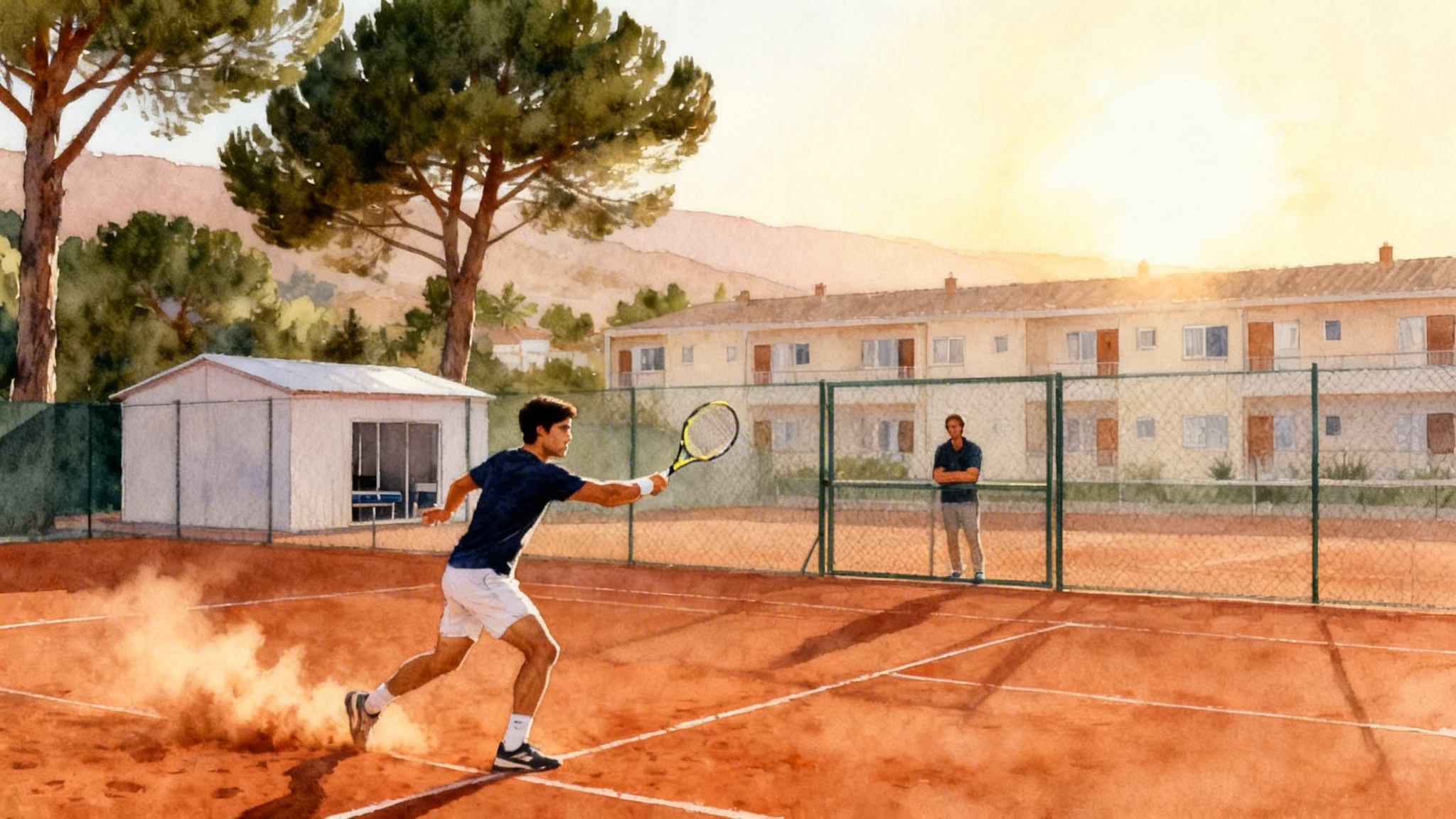
El Palmar to Villena: a real move with real stakes
Carlos Alcaraz’s rise looks inevitable in hindsight. It was not. The turning point was a concrete decision to leave home comforts in El Palmar and live at Juan Carlos Ferrero’s Equelite Academy in Villena. That choice compressed the feedback loop around him. Coaches, fitness staff, and hitting partners were steps away, not a commute away. Sessions could extend, shorten, or shift from court to gym within minutes. In tournament weeks, the academy could tilt the entire schedule to match what he needed the most. For career context, see the Carlos Alcaraz ATP profile.
Relocating is never only about more hours. It is about fewer frictions between the hours. That is the first lesson for parents and juniors. The right move is the one that reduces energy leaks. If a player’s day is split across three locations, the effort that should go into forehands, sprints, and recovery gets spent on traffic and logistics. Villena solved that for Alcaraz.
What a boutique academy does differently
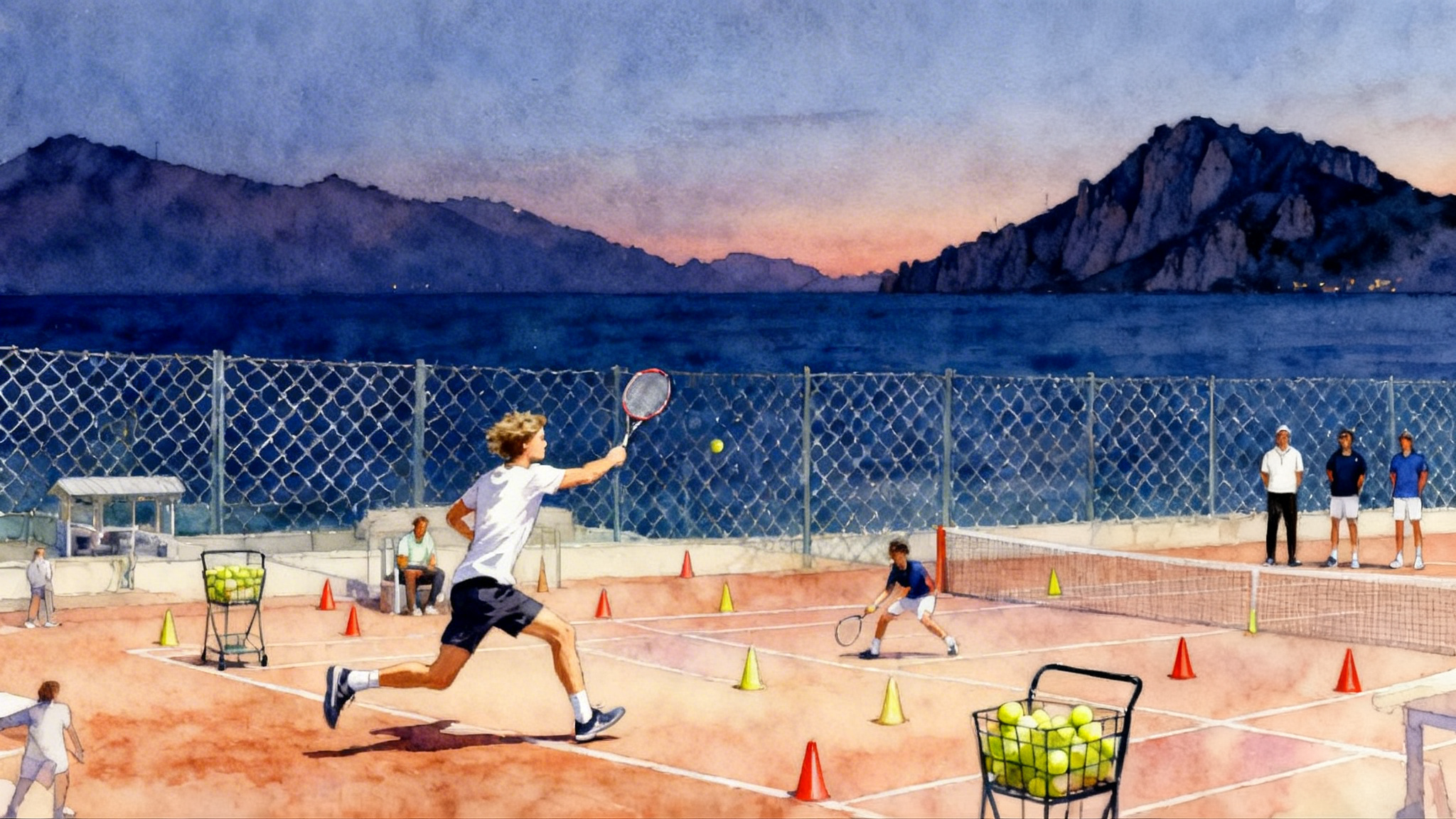
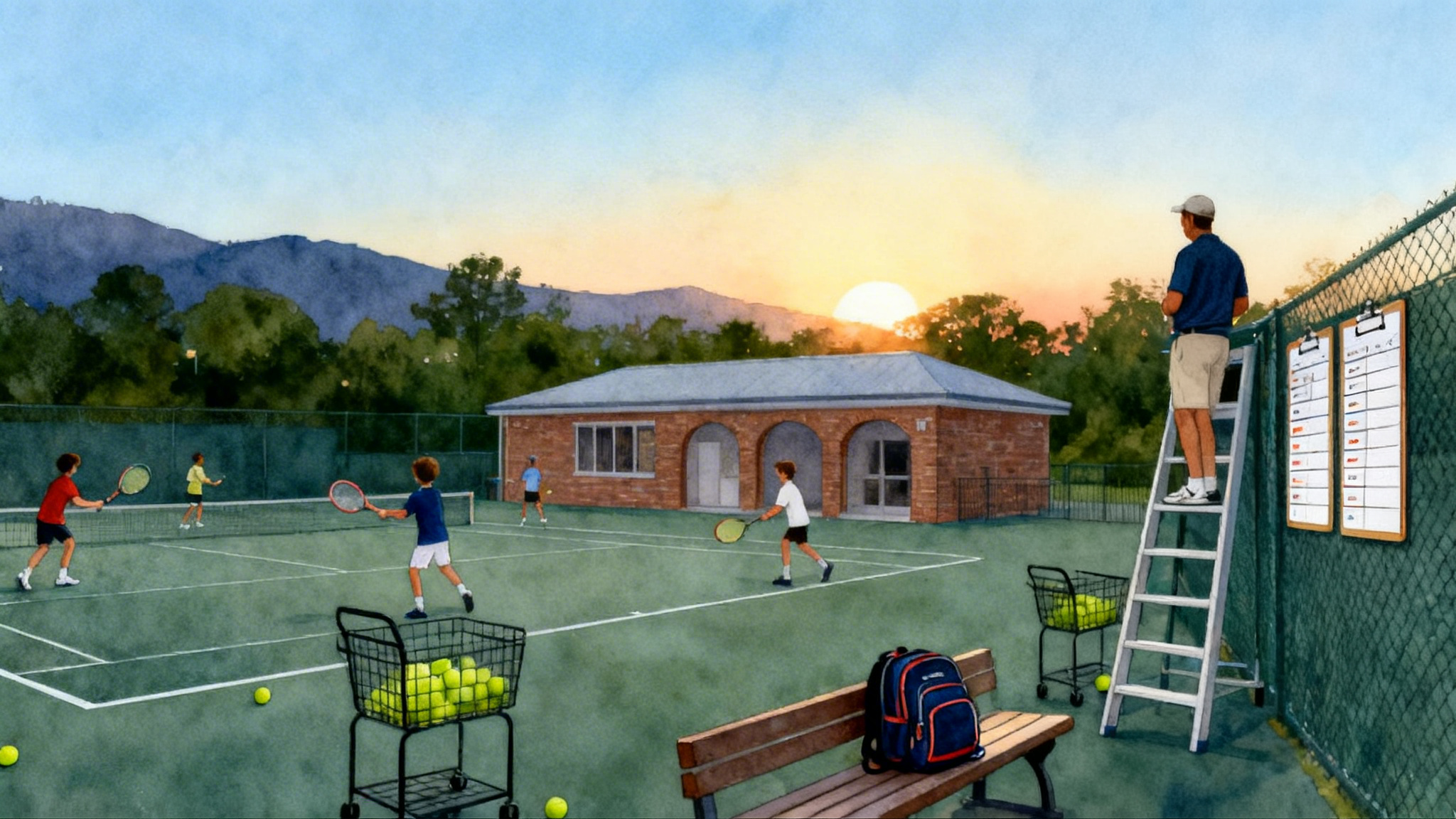
Equelite works like a compact sports town. Players live on site, share meals, cross paths with coaches at breakfast, and get eyes on them all day. That intimacy is a feature, not a luxury. Large academies can feel like airports. A boutique program can feel like a small control room. Examples like the Ljubicic Tennis Academy model show how a tight campus raises daily touch points.
At Equelite, the daily cadence had three anchors:
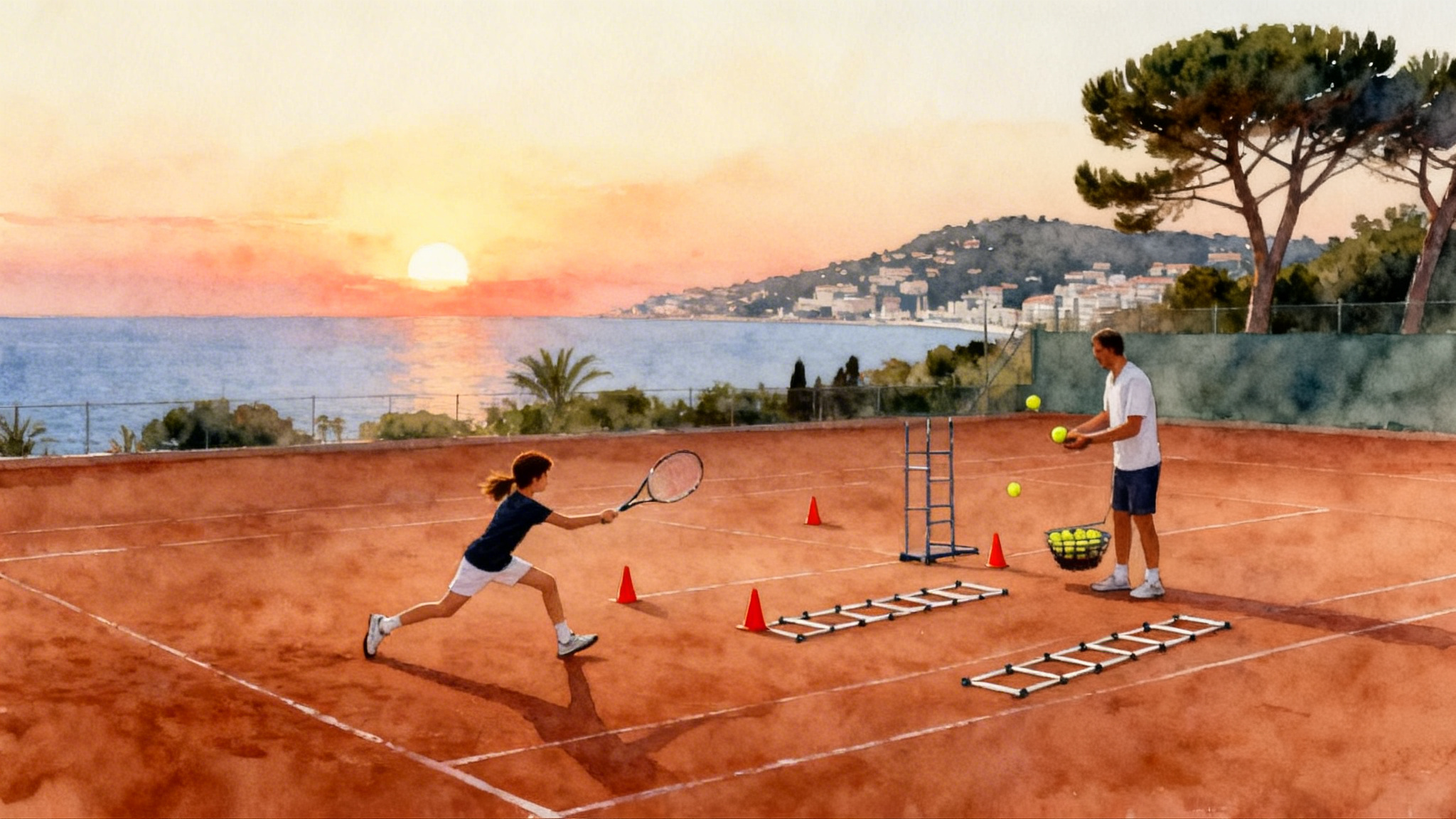
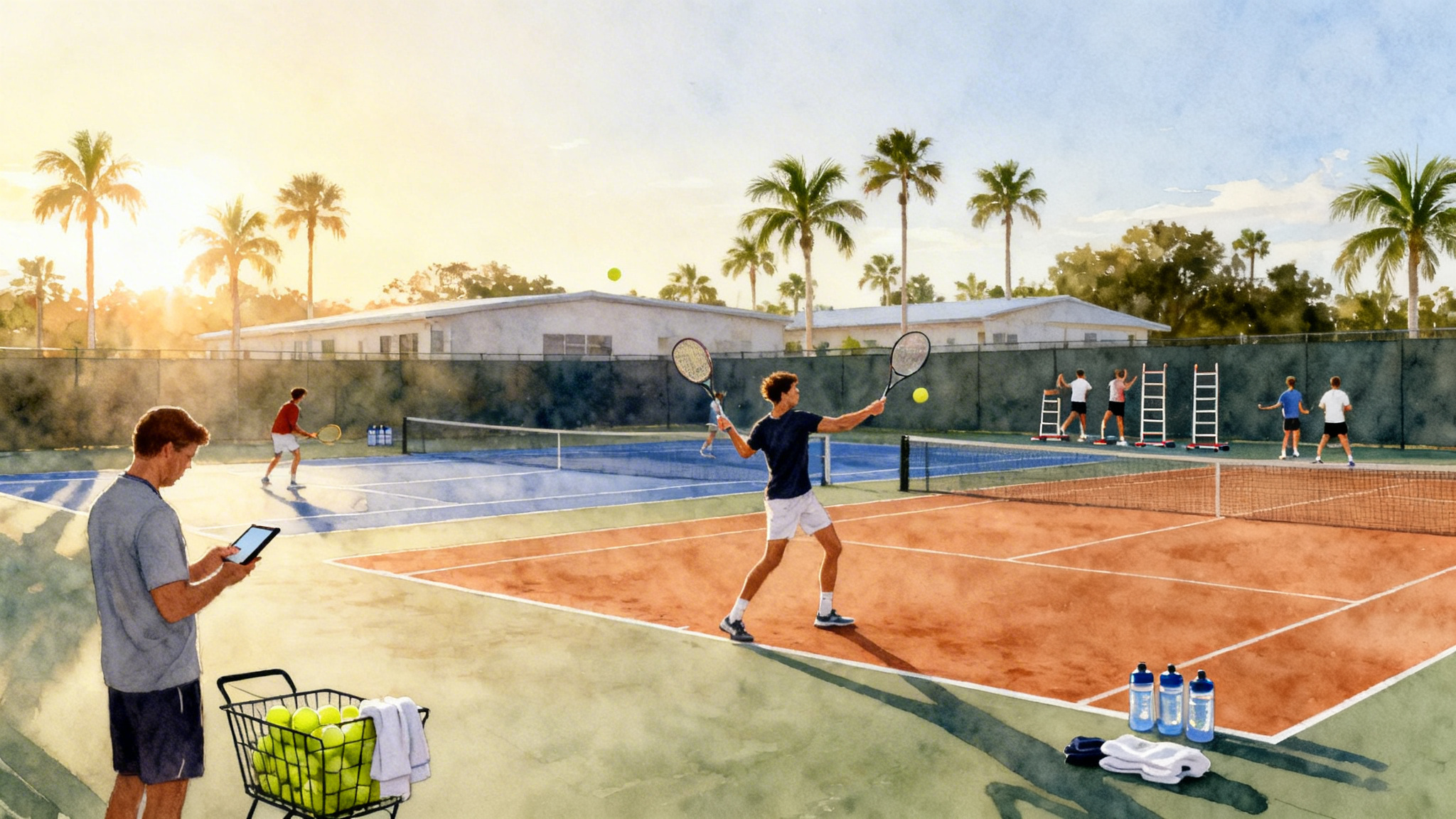
- A technical block on court that squeezed value from every ball. Coaches did not feed baskets forever. They used short, themed drills to target one pattern at a time.
- A movement and strength block with tennis in mind. Footwork series bled into medicine ball throws, then back into open‑stance forehands. Nothing lived in isolation.
- A competitive dose most days. Points, sets, and tie breakers showed whether the morning’s idea held up at speed.
The effect is repetition without boredom. The drills changed, the intention did not. Players learned to connect technique to tactics to fitness in the same hour, which is how matches work.
The mentor effect: Ferrero’s presence and clarity
Juan Carlos Ferrero did more than hold a basket. A former world number one who won Roland Garros and reached two other major finals knows the map and its traps. With a teenager, that knowledge shows up in small calls, not grand speeches.
- He set a clear north star: become an all court threat, not just a clay bully. That mattered in rackets chosen, in patterns drilled, and in which tournaments to play.
- He insisted on disciplined aggression. Play forward when the ball invites it, not when the crowd does. That line guided Alcaraz’s shot selection on big points.
- He made the tough trade of short term discomfort for long term gain. If the week called for serving under pressure or redlining the forehand, the schedule tilted toward it, even if it meant losing a practice set that day.
Mentorship at a boutique academy feels like having a pilot in a small cockpit. There is no mystery about who is in charge and what the plan is. For a parallel on elite mentorship culture, study how Piatti forged Jannik Sinner.
Refining the forehand: patterns, not just power
Alcaraz’s forehand is a highlight machine, but the day to day work focused on patterns. Power came after aim and shape. Three patterns stood out.
-
Inside out plus inside in choice. Coaches fed or rallied to his backhand corner and asked for two ball sequences. First ball heavy cross to the opponent’s backhand to pin. Next ball chosen on feel. If the defender leaned early, go inside in up the line to take time. If the defender held ground, roll another heavy inside out to drag them wide again. The drill trained eyesight as much as arm speed.
-
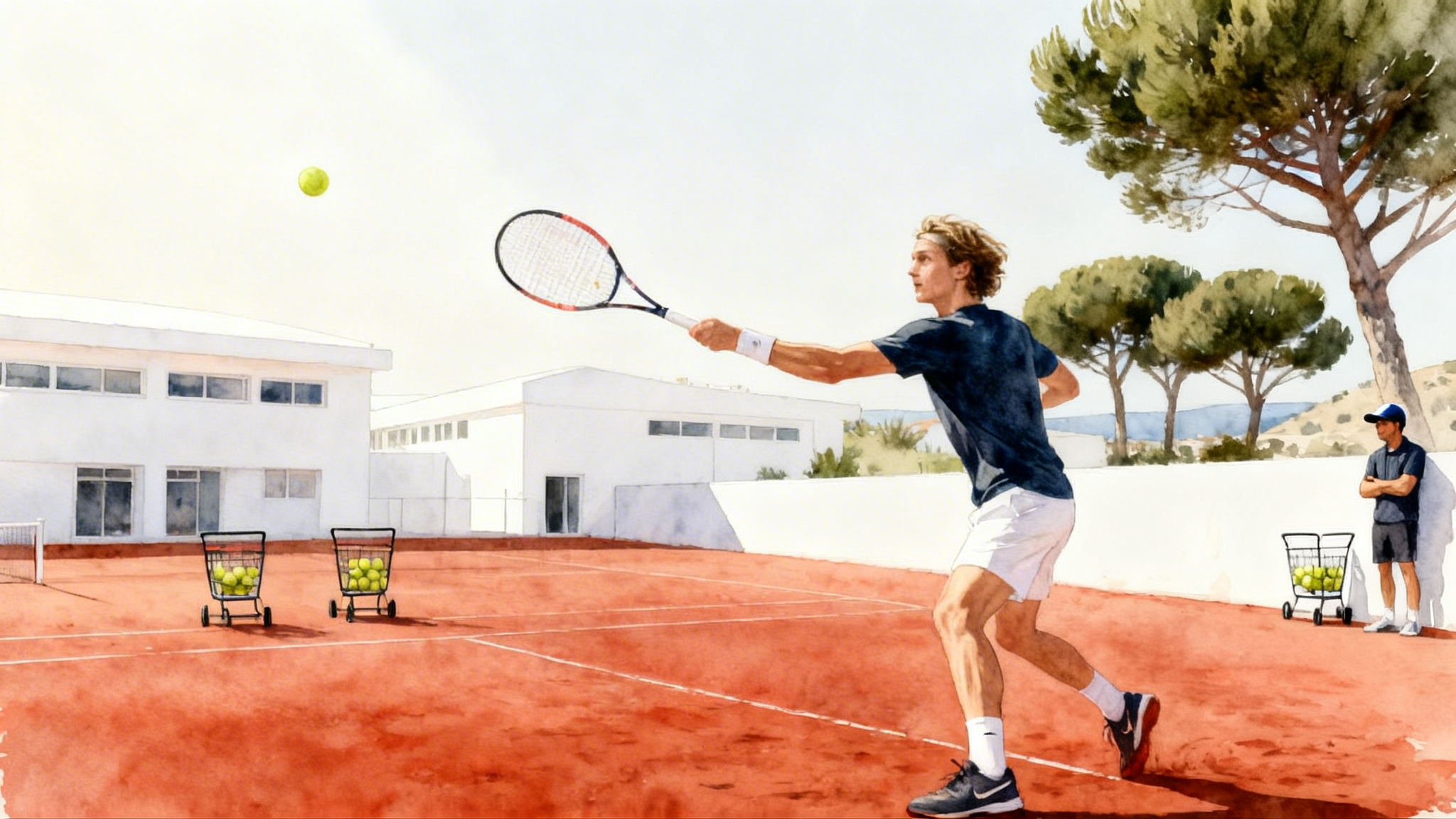
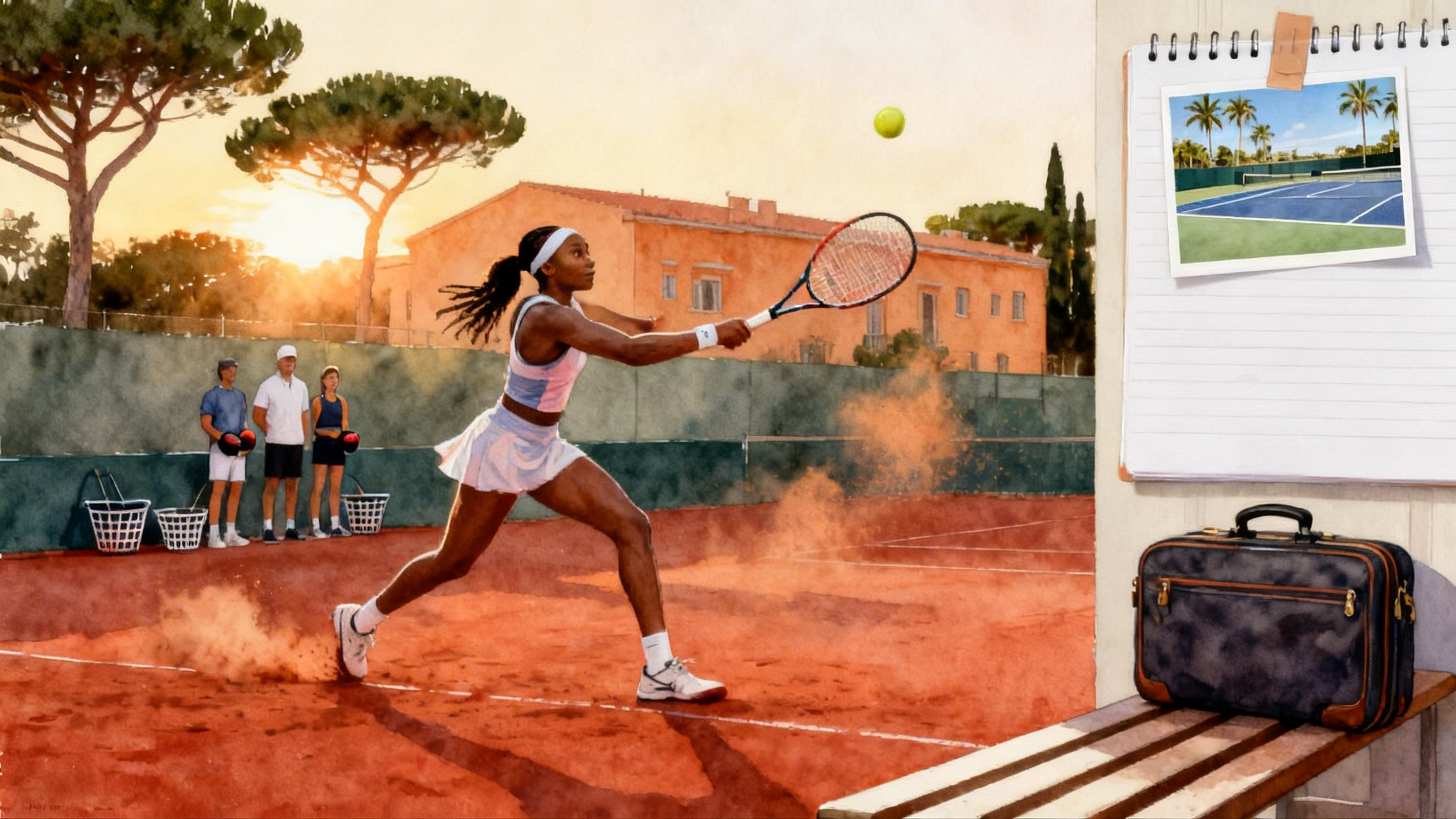
Forehand on the rise. On hard courts and grass, waiting is a tax. Equelite built short hopping progressions. Start with mini court forehands taken just after the bounce. Expand to three quarter court with a coach standing on the service line. Finish with full court rally where the rule was simple. If the ball lands short of the baseline by a racket length or more, step in and take it on the rise to the corners. The goal was to make early contact feel normal.
-
Forehand return plus first strike. Against second serves, the drill flowed return, split, forehand to the open court. The emphasis sat on landing the return deep enough to keep the opponent from resetting. Players learned to own the point before the fourth shot.
The point is not that these are magic. The point is that patterns create repeatable choices when stress climbs. This is what a focused academy can hardwire.
Movement made specific
Equelite did not chase generic speed. It chased tennis speed. Three simple examples show the difference.
- Crossover start. Many juniors shuffle too much on wide balls. The academy overtrained the first crossover step from the split, often without a racket, then with a medicine ball, then with a forehand. The first step became automatic.
- Recovery with the hit. Players were taught to recover during the swing, not after it. Drills required a strike plus a two step recovery before the ball crossed the net. The court felt smaller because the body claimed it sooner.
- Load to explode. On clay, the outside leg load is natural. On hard courts, it is optional. They made it required. Every wide forehand drill had a callout. If the stance did not load the outside leg, the rep did not count.
Footwork language was short and repeatable. Cross, load, explode, recover. That simplicity sped up learning.
The stepwise competition plan
Alcaraz did not jump levels. He stepped through them. That is not romantic. It is strategic.
-
Futures phase. Enter smaller International Tennis Federation events to bank matches, not points. Treat them as laboratories. Arrive with one or two clear goals for the week. For instance, serve plus forehand depth on the ad side, or backhand line change under pressure. If the draw allowed, play doubles to test first volley instincts.
-
Challenger phase. Graduate only when the goals stuck at speed. The aim shifts from lab work to winning habits. Scouting gets sharper. The team studies likely opponents in the first two rounds and rehearses patterns in the two days prior. Conditioning pivots to recovery, with cold tubs and sleep discipline treated like training sessions.
-
ATP phase. Target events where surface and draw suit development goals. Alternate between pushing for points and pushing for skills. One month you enter a draw to climb the ranking. The next month you may seek a surface or opponents that stress a weakness you plan to solve.
The core rule is progression without panic. The calendar is not a trophy hunt. It is a curriculum. For another curriculum style climb, see how the Rafa Nadal Academy forged Casper Ruud.
Targeted blocks that turned a clay base into an all court game
A clay foundation gives time to swing and teaches patience. The next jump is taking time away from others. Equelite attacked this with short, purposeful blocks.
-
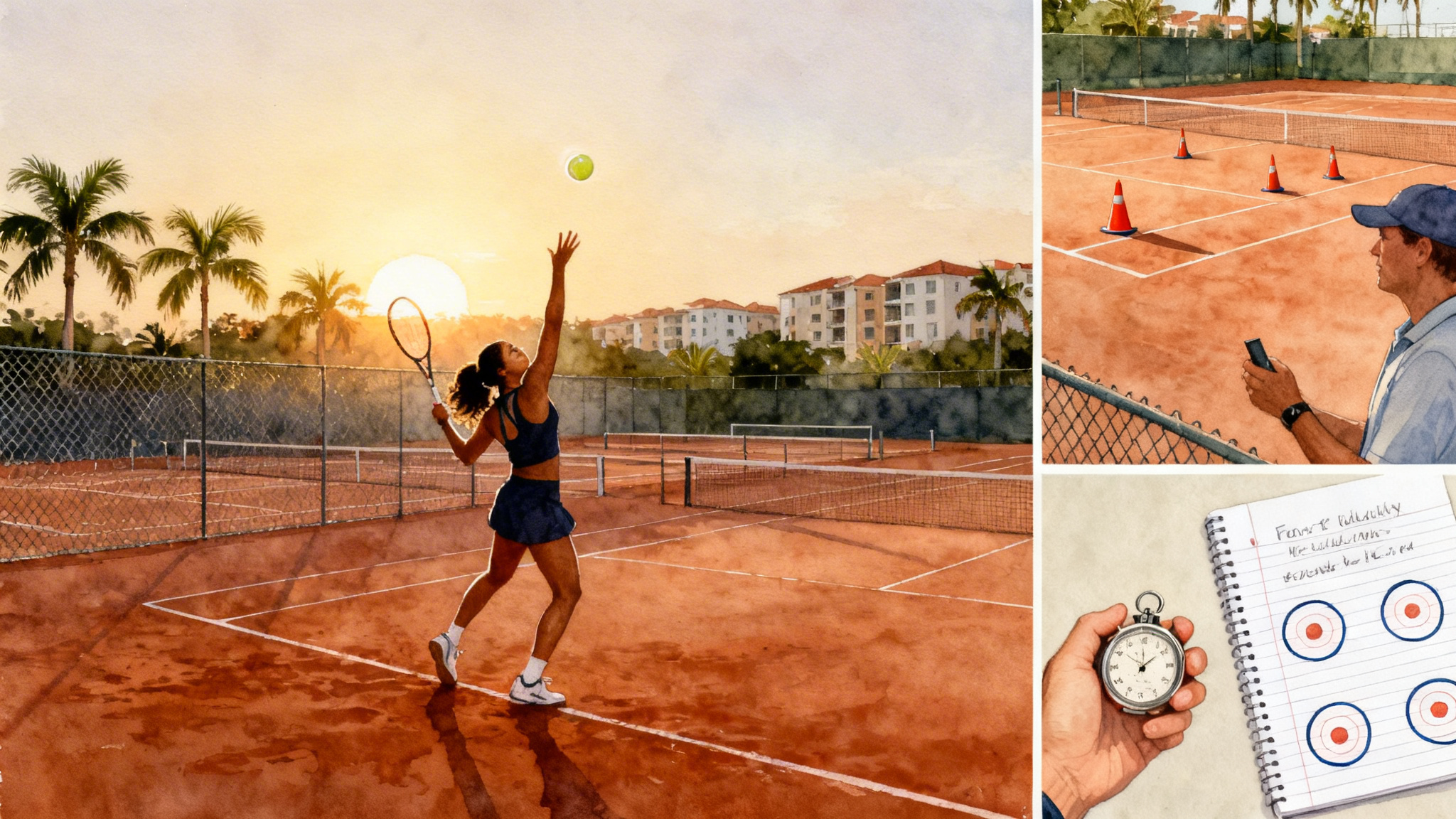
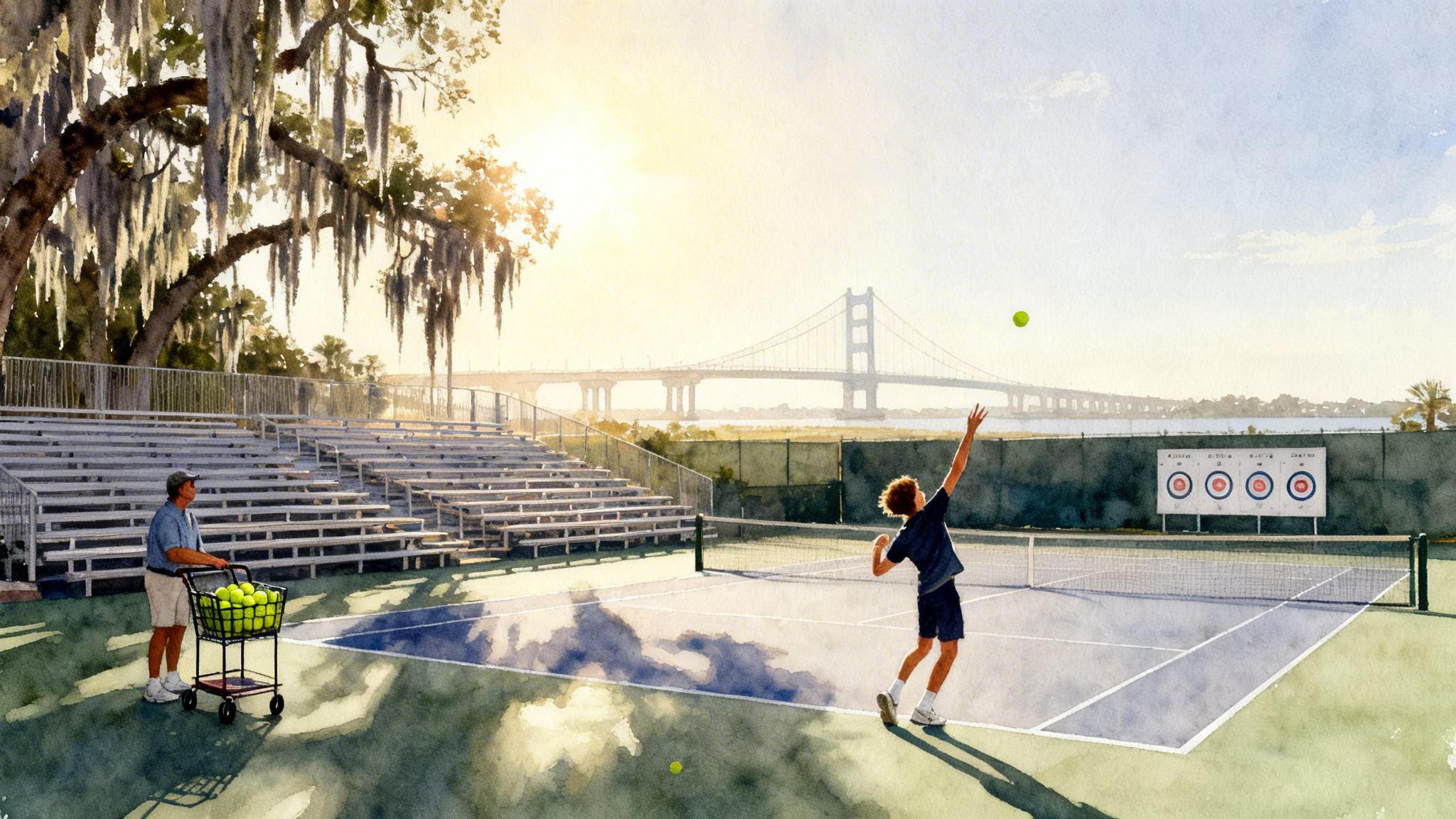
Hard court acceleration. Serve accuracy games for the first ball on the ad side, then plus one forehand on the rise. Points started with a coach delivering a neutral ball around the service line. The player who stepped forward first kept control. The goal was a higher share of points decided within four shots.
-
Grass court instincts. Low contact and quick footing were the focus. Slotted skids, mini slice exchanges, and underspin approaches taught Alcaraz to control the ball’s height and pace. Volley work was paired with return drills to encourage front foot tennis from both ends.
-
Indoor problem solving. Indoors skews fast, so Alcaraz learned to build pressure without overhitting. Routines locked in. Bounce, breathe, choose serve location, commit to the first step after contact. Simplicity cuts noise in loud arenas.
Each block looked small on paper, often two to three weeks. The result was not. The same forehand that rolled through clay began to take time away on hard courts and to knife through on grass.
What parents and juniors can copy right now
You do not need Ferrero’s phone number to apply the model. You need structure and honesty.
- When to consider relocating
- Move if your player’s day is clogged by logistics. If two hours of training costs three hours of commuting and coordination, look for a live in option that removes the drag.
- Move if feedback is stale. If your player has plateaued for a year, a new coaching language and culture can reset habits. Interview three or four academies. Ask who leads the plan, who runs the day, and how often they reassess.
- Do not move for star power alone. Move for the plan on paper. Request a sample week for your player’s age and style.
- How to structure tournament progression
- Futures equivalent. Begin with the level where winning one match is realistic but not guaranteed. Enter with two process goals and one result goal, stated on a single page. Review after every match and either keep or replace one goal for the next event.
- Challenger equivalent. Step up when the player holds leads and closes matches at the current level. Add scouting to the routine. Build a one page pre match sheet that lists three patterns you want and two you want to deny.
- Pro circuit equivalent. Target events that test the newest skill. If you added a more aggressive return position, choose a week with big servers to pressure test it. Rankings rise as a byproduct of that approach.
- How to use a tight coach player culture without burning out
- Keep the unit small. One lead coach, one fitness lead, and a small pool of sparring partners creates accountability. Too many voices blur decisions.
- Install honest debriefs. After practice or matches, spend ten minutes on two wins and two work ons. Keep it factual. What pattern gained points. What choice lost them.
- Put recovery on the schedule. Sleep, mobility, and nutrition are not vague ideals. They live in calendar blocks with start and end times.
A sample week inspired by Equelite
-
Monday
- Morning: Serve targets on the ad side, first ball forehand on the rise. 75 minutes.
- Midday: Lower body strength with outside leg loading focus. 45 minutes.
- Afternoon: Set play, first to ten points starting with second serve returns.
-
Tuesday
- Morning: Backhand line change drills, then cross to forehand finish. 75 minutes.
- Midday: Sprint mechanics and crossover starts. 30 minutes.
- Afternoon: Practice set with a rule. No backhand crosscourt twice in a row.
-
Wednesday
- Morning: Short court forehands on the rise, progress to full court depth games. 60 minutes.
- Midday: Mobility plus recovery. 40 minutes.
- Afternoon: Video review and pattern quiz. Ten clips, choose the next ball each time.
-
Thursday
- Morning: Return plus first strike sequences. Ad and deuce side. 75 minutes.
- Midday: Upper body strength and shoulder care. 45 minutes.
- Afternoon: Tie breaker ladder with consequences. Loser runs a 200 meter shuttle.
-
Friday
- Morning: Approach and volley, finishing through the middle to close off angles. 60 minutes.
- Midday: Contrast recovery and light mobility. 30 minutes.
- Afternoon: Two short sets with scouting emphasis for the weekend’s event.
-
Saturday and Sunday
- Tournament play or match simulation, then a light hit and recovery if out early.
An 18 month pathway template
Every player is different, but the structure below borrows Equelite’s staircase.
- Months 1 to 3: Audit and install. Technical clean up on serve rhythm and forehand spacing. Build a daily movement warm up and a two pattern playbook that becomes the player’s identity.
- Months 4 to 6: Futures level. Three to four events with clear goals. Add doubles for touch and returns. Learn to manage tight sets.
- Months 7 to 9: Mixed block. Two weeks of hard court on rise focus, then a week of recovery, then two weeks of clay patience work. Keep weekly competitive play.
- Months 10 to 12: Challenger level. Two to three events, aim for deep runs. Introduce pre match scouting and post match debriefs as non negotiables.
- Months 13 to 15: Surface shift. If clay is home, choose a hard court swing with serve plus one focus. If hard is home, choose a clay swing to build endurance and shape.
- Months 16 to 18: Pro circuit attempts. Enter draws that align with development aims. Keep the coach player unit tight. Review the entire 18 months and reset goals.
What this pathway implies
- Development lives in constraints. The more specific the drill, the faster the brain learns what to keep and what to throw away.
- Culture scales progress. A small, honest group accelerates adaptation. The wrong group slows it, no matter the facility.
- Surfaces are teachers. Clay teaches patience and heavy shape. Hard courts teach early contact and direction change. Grass teaches posture and first step bias. Rotate with purpose.
Final notes for families charting the same arc
- Measure choices, not only winners. Track how often your player takes the forehand on the rise inside the baseline. Track how many second serve returns reach neutral depth. Those numbers move first, then the trophies follow.
- Treat the calendar like a syllabus. Each event has a lesson objective. If a week does not match any objective, skip it.
- Get comfortable with the long game. Equelite’s work with Alcaraz shows that world class layers stack up in quiet blocks. One pattern at a time, one surface skill at a time, one competition rung at a time.
The takeaway
From El Palmar to Villena, the real leap was from scattered effort to concentrated intent. A live in environment removed friction. Ferrero’s mentorship simplified choices. Technical work turned into tactical patterns, and those patterns held up as the level rose. Parents and juniors can mirror the same staircase. Choose an environment that reduces noise. Build drills that point to match choices. Advance through events like a curriculum, not a lottery. Do that with patience and clarity, and you give talent the one thing it cannot create on its own. A plan that compounds.