From JTCC to the ATP Top 20: Frances Tiafoe’s Academy-Fueled Rise
 Tommy
Tommy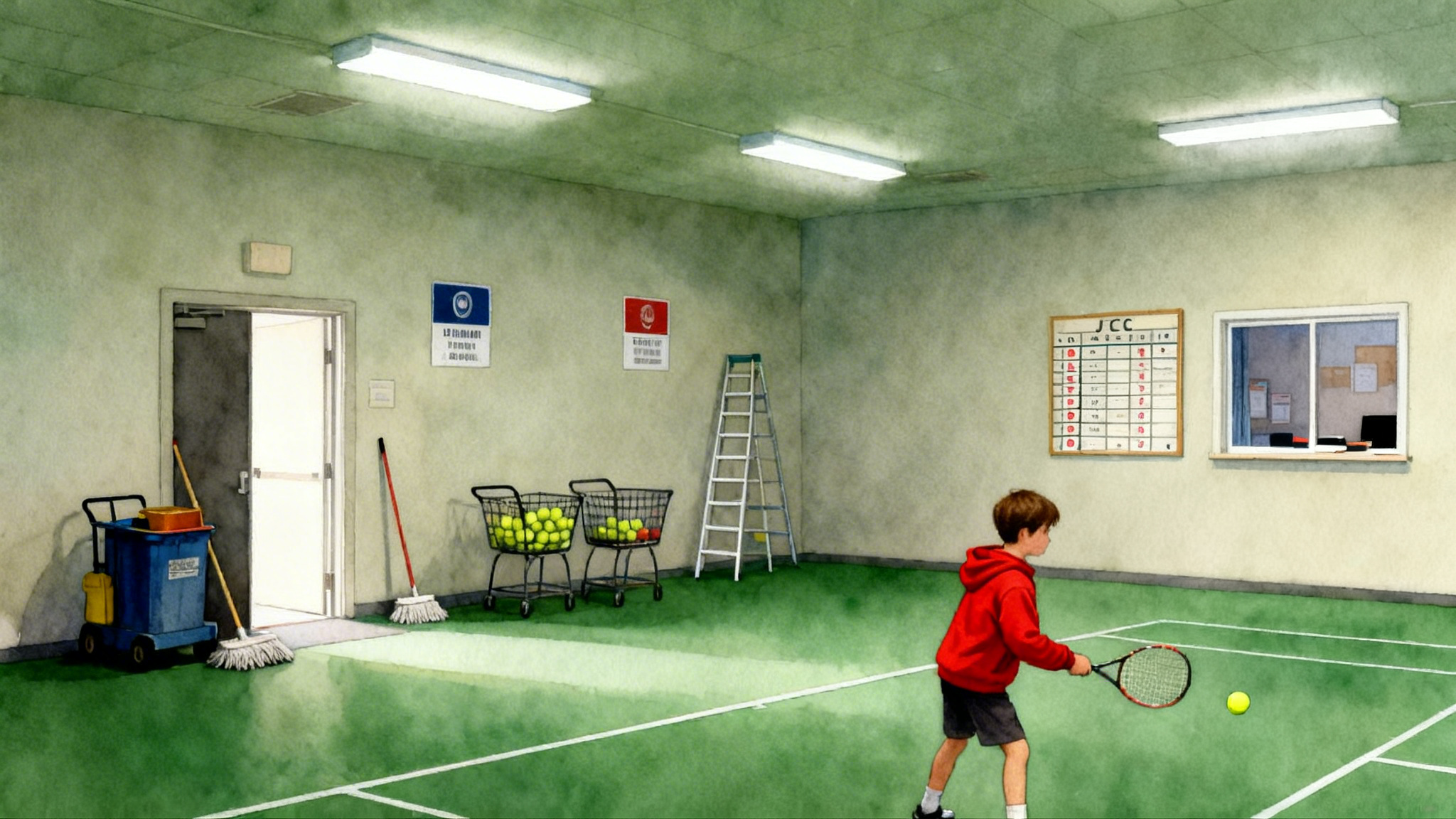
A key to the back door of greatness
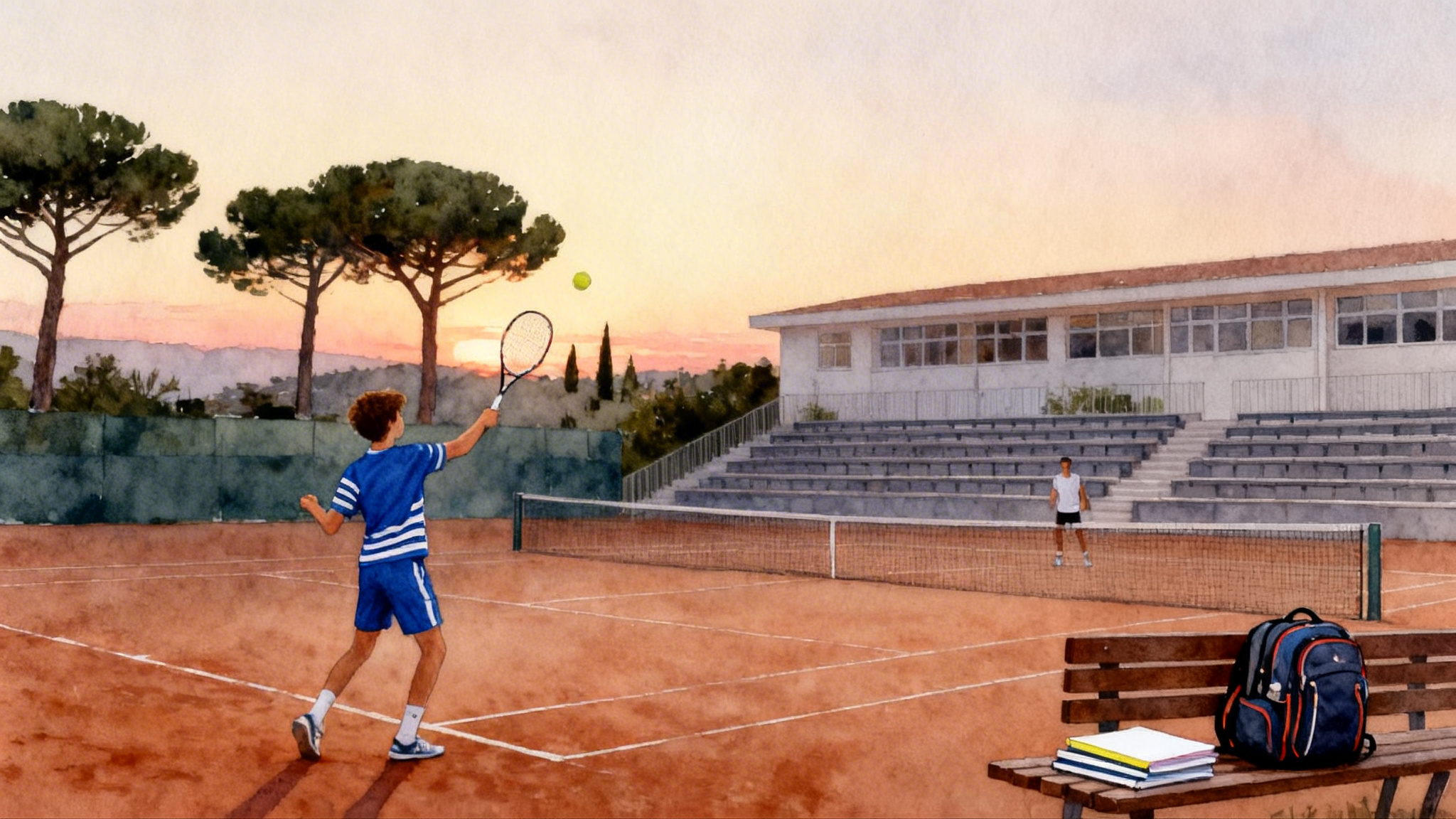
Frances Tiafoe’s story does not begin with a private court or a boutique training camp. It starts with a key and a mop. His father worked maintenance nights at the Junior Tennis Champions Center in College Park, Maryland, and the boys often slept on site. That key did more than open doors. It created early, repeated contact with a world most kids only see for two hours after school. Courts were not exotic places. They were normal rooms where the lights came on, the radio hummed, and you could take a thousand swings before breakfast.
That proximity created repetition. Repetition built a baseline. And the baseline, reinforced by a community-minded academy, eventually carried Tiafoe into the top tier of the men’s game. The result was not a magic leap. It was a staircase that started with access, rose through scholarship support and match-play-heavy training, and kept going through national development connections and shrewd professional choices.
This is the architecture of an athlete, not just a highlight reel. If you are a family considering a community academy, or a coach looking to build a local pipeline, Tiafoe’s rise offers a practical blueprint. Similar academy-to-pro pipelines appear in our Mouratoglou Academy and Tsitsipas case study and the Champ'Seed and Coco Gauff blueprint.
What made JTCC different for Tiafoe
The Junior Tennis Champions Center, or JTCC, positions itself as a community hub rather than a remote factory. That matters. A hub is porous. Young players see older ones training. Parents meet coaches in the lobby. The academy bridges public-school schedules with serious athlete demands. For the Tiafoe family, that design made tennis available at odd hours and allowed long, low-cost sessions during off-peak times.
Three features of JTCC shaped Tiafoe early on:
- Access through work, then a scholarship safety net
- Match play before mythology, lots of live-ball reps
- A community ladder that felt climbable day by day
Access through work, then a scholarship safety net
The biggest resource in junior development is not money. It is time on court. Because his father’s job put the family inside the facility, the twins accumulated hours like compound interest. Once coaches saw the spark, internal scholarships covered court time, coaching blocks, and travel stipends. The scholarship was not charity. It was alignment. JTCC wanted to show that talent from any zip code could thrive if the environment was well built. The family brought commitment. The academy matched it with structure and logistics.
If you are mapping your own path, remember this order: first get in the building; then maximize time; then formalize support through need-based aid or merit awards. The sequence matters because it lets evidence build before you ask for resources.
Reps under pressure, not just drills
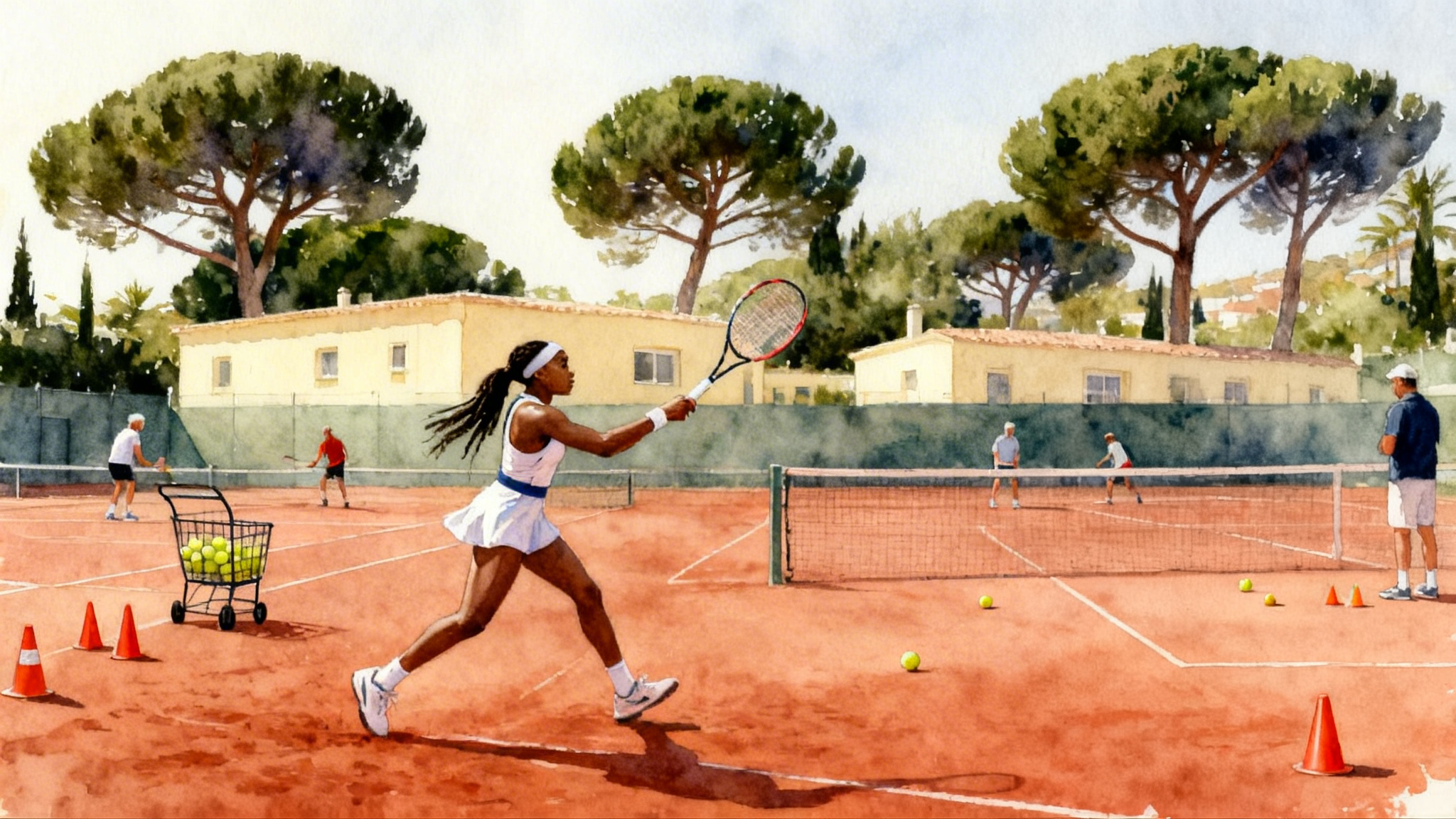
Many academies lean on basket feeding and technique auditing. JTCC layered those with relentless match play. Think of it as scrimmage-heavy schooling. The point was to normalize scoring, serves under scoreboard pressure, and tactical choices when tired. That habit became Tiafoe’s calling card. He looked comfortable in chaos because chaos was part of practice.
A simple example: set up weekly match ladders with promotion and relegation. Winners move up a court, losers move down, and every court has a different pattern focus. One court might reward first-strike tennis. Another might give bonus points for net approaches. Athletes learn to solve problems while keeping score. Over time, that builds competitive I.Q. more reliably than repping the same forehand to a cone for an hour.
A community that taught professional habits
At JTCC, younger kids could watch older juniors map their warmups, do bands, journal after sessions, and hydrate with purpose. This peer-led learning saves coaches from lecturing. Tiafoe absorbed the rhythms of a pro day long before he had an ATP ranking. The academy acted like a stage company. The older cast members blocked the scene. The younger ones stepped into their marks.
The United States Tennis Association bridge
Strong academies do not replace national development. They connect to it. JTCC built tight ties with United States Tennis Association Player Development, which gave Tiafoe access to additional camps, fitness screens, and training weeks that broadened his circle of sparring partners and mentors. Two things mattered most from this bridge:
- Testing and benchmarking: centralized camps exposed gaps in movement patterns and stamina that a single academy might miss. The feedback loop pushed programming back at JTCC.
- Exposure to travel rhythms: United States Tennis Association training blocks and team events provided a taste of the hotel, court, shuttle, repeat life that defines the tour. When Tiafoe turned professional, the airport felt like an office, not a guess.
The lesson for families is specific. Seek community academies that treat national pathways as a partner. Ask how often their players attend regional trainings. Ask whether the strength coach coordinates screening data with national staff. Communication prevents duplicated work and builds a single, coherent plan.
The three decisions that turned promise into points
Talent and environment set the stage. Results flow from choices. The following decisions were pivotal in converting Tiafoe’s junior momentum into ATP breakthroughs.
1. Turning professional on the early side
Turning professional is not brave by itself. Timing matters. Tiafoe played professional events in his mid-teens, balanced with junior majors, and committed fully once his training base and match play density could support it. The benefit of going early is exposure to higher pace and more seasoned problem solvers. The hazard is burnout or stacking losses that erode confidence.
Why it worked here:
- He already had adult practice volume, so the body load was not a shock.
- The academy and the United States Tennis Association scaffolded wild cards and scheduling so that the jump was incremental, not a cliff.
- He viewed early losses as film study. The match-play culture had made learning in public normal.
If your player is considering an early move, audit readiness across three categories: body, game identity, and support. Body means can you handle back-to-back three setters. Game identity means there is at least one weapon that wins points without help. Support means travel, coaching, and basic budgeting are mapped for a year, not a weekend.
2. Smarter scheduling, not just more tournaments
The goal was not to play everywhere. It was to build surfaces and time zones that improved his upside. Early on, that meant a heavy dose of North American hard courts and Challenger-level events where he could string wins. As the ranking rose, the team injected selective clay and grass, expanding skills without exposing him for months to unfavorable conditions.
A practical rule from that approach: play where your strengths produce the most break points per hour. If your serve and first forehand create early control, faster courts are a better engine. Use a six-week block each spring to expand on clay, but do not let development blocks crush the confidence built on your best surface.
3. Choosing mentors, not just mechanics
Frances Tiafoe had form tweaks like any player, but the bigger unlocks were strategic. Coaches and mentors helped him manage energy in long rallies, pick smarter approach balls, and find competitive snarls without losing composure. Mentorship also came from academy seniors and national staffers who had seen the tour. The value was perspective during ranking dips and the conviction to double down on weapons during ranking spikes.
Families can copy this by building a small board of advisors. You want one technical coach, one fitness professional who knows tennis periodization, and one mentor who has lived tour travel. The mentor is not a cheerleader. They pressure test decisions when the calendar or the emotions get noisy.
From academy habits to signature wins
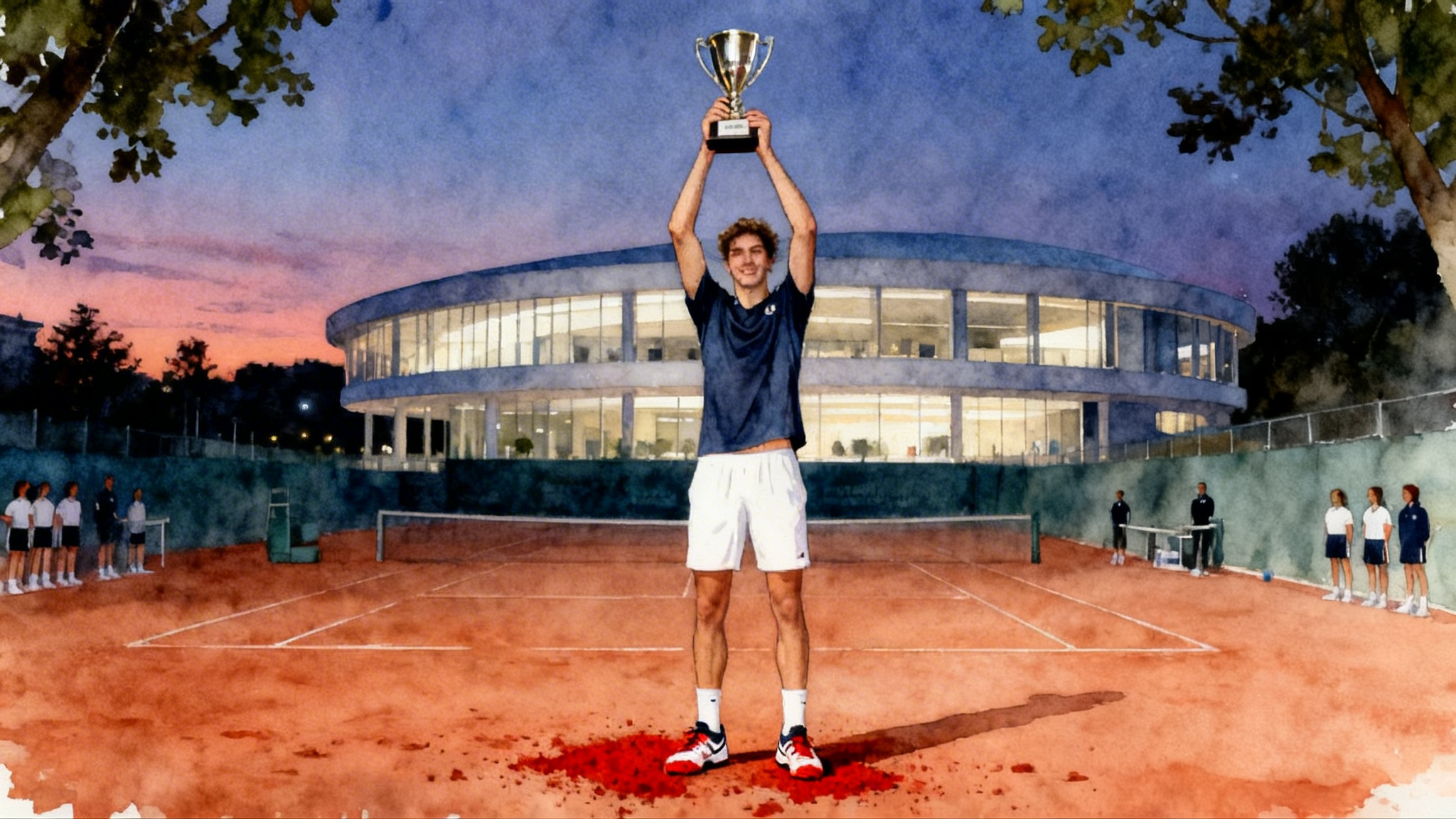
You can trace a straight line from JTCC habits to Tiafoe’s headline results. His first ATP title validated that the serve plus first ball combination could win whole weeks, not just matches. A quarterfinal run at a major confirmed his physical base and in-match resilience. The US Open semifinal in 2022 showcased the exact skills that had been rehearsed in College Park: accepting long, choppy rallies when needed, injecting pace at the right moments, and riding the crowd rather than flinching from it.
Those moments were not surprises to his inner circle. They were checkpoints on a plan that began with how he spent Tuesday afternoons at age 10. Put differently, the result was not just the son of public courts and grit. It was the product of an academy that aligned access, habits, and decisions.
What families can copy from the JTCC playbook
You do not need to live in College Park to borrow the model. Here is a practical guide you can take to your local program.
- Get in the building
- Ask about off-peak court access in exchange for volunteer hours. Offer to help with tournaments, stringing, or front desk duties. The point is to secure more time on court at lower cost. Explore the Milwaukee Tennis & Education Foundation academy to see one community-first pathway in action.
- If your academy joins our platform, study community program schedules and ask your local club to mirror what fits.
- Build a match-play ladder
- Create weekly ladders that move players up or down based on results. Keep records. Reward best-of-three sets on weekends, not just short sets midweek.
- Add tactical constraints by court. Court 1, serve plus one to the backhand. Court 2, must finish points at net once per game. Players learn that tactics are not theories. They are habits.
- Treat scholarships as partnerships
- Prepare a one-page player resume with school grades, tournament results, and a short video. Ask for need-based support after you have documented commitment and improvement.
- Offer value in return. Families can help host junior events, serve as team parents on trips, or assist with fundraiser nights. A scholarship stretches further when the community is stronger.
- Plug into national development without outsourcing your identity
- If you are in the United States, map United States Tennis Association regional camps. Coordinate with your home coach on goals before you travel, then debrief on return so lessons flow back into daily training.
- Copy the best ideas, but keep your language consistent. A player should not hear four terms for the same pattern. Share a glossary between academy and national staff.
- Choose a calendar you can survive, not just one you can win
- Plan in 12-week arcs. Two weeks of fitness emphasis, six weeks of competition with built-in two-day recoveries, then a taper and review week.
- Balance level-ups with consolidation weeks where a player drops one tier to chase titles and rebuild confidence.
- Build a small board of advisors
- Technical lead: one voice in charge of stroke priorities.
- Fitness lead: manages lifting cycles, sprint work, and recovery.
- Travel mentor: one adult who has managed jet lag, entry lists, and on-site problem solving. Their job is to say no when emotion says yes.
For more academy-to-elite pathways, see our Mouratoglou Academy and Tsitsipas case study and the Champ'Seed and Coco Gauff blueprint.
A realistic timeline and budget
The Tiafoe path looks cinematic, but the calendar was ordinary in its grind. Expect a seven to ten year window from first serious training to professional viability, with phases:
- Foundation years: ages 8 to 12, lots of athletic variety, two to three daily school-day hours plus bigger weekend blocks.
- Expansion years: ages 13 to 16, travel to sectional and national events, more strength work to protect growing bodies, three to four training hours with built-in recovery.
- Conversion years: ages 16 to 20, a blend of top junior events, Futures and Challenger entries, and clear accountability around sleep, nutrition, and video review.
Budgets vary by location, but scholarships, volunteer exchanges, and carpooling can reduce cost by 30 to 50 percent compared to retail rates. Track the budget like you track results. If you cannot measure what you are spending, you cannot sustain the plan.
Common pitfalls and how to avoid them
- Over-scheduling: playing back-to-back weeks on a new surface inflates injury risk and deflates confidence. Use one adaptation week before a clay or grass swing.
- Fragmented coaching: three different voices giving three different cues slows progress. Appoint a lead and share notes after every trip.
- Chasing points without a weapon: if your player is winning through defense alone at 14, add offense now. It is easier to learn to close from ahead than to invent first-strike tennis at 20.
- Treating scholarships as entitlements: when support arrives, increase your contribution to the community. Younger players are watching.
The deeper mechanism: environment times decisions
Tiafoe’s rise makes an important distinction. Academies cannot manufacture champions. They can manufacture conditions that make smart decisions more likely. Access produced repetition. Scholarships extended that access. Match play created problem solvers. National development widened the lens. Then came the personal choices that only a player and a family can own: when to jump, where to play, who to trust.
That multiplication, environment times decisions, is more durable than raw talent. It sustains you during a losing streak and keeps you grounded during a surge.
Use the model, not the myth
It is tempting to treat Frances Tiafoe as a one-off fairy tale. That sells short the people and systems that turned a key to a maintenance closet into a key to Arthur Ashe Stadium nights. If you are a parent or a young player, focus less on the magic and more on the machinery. Find or build a community academy that prizes access, match play, and shared language with national development. Set a calendar that fits your strengths. Appoint a small board of mentors who tell you the truth when it is most useful, not when it is most pleasant.
Community academies can be engines of big-time tennis when they align incentives with families and organize the chaos of development into steps anyone can climb. That is the lesson from College Park. The path is not easy. It is clear. And clarity is a competitive edge you can choose.