From Moscow to Cannes: How Elite Tennis Center Shaped Medvedev
 Tommy
Tommy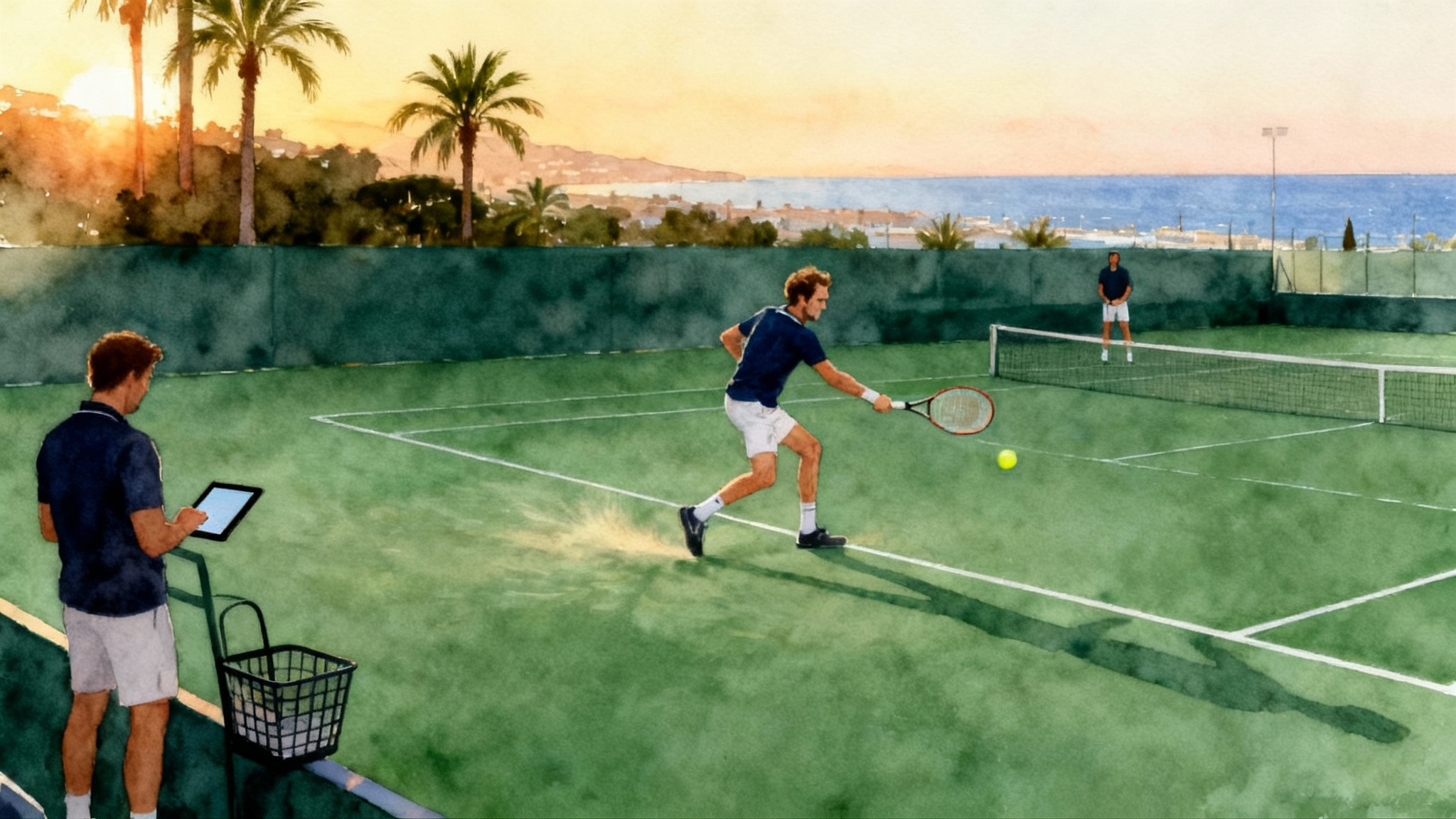
The 2014 decision that changed everything
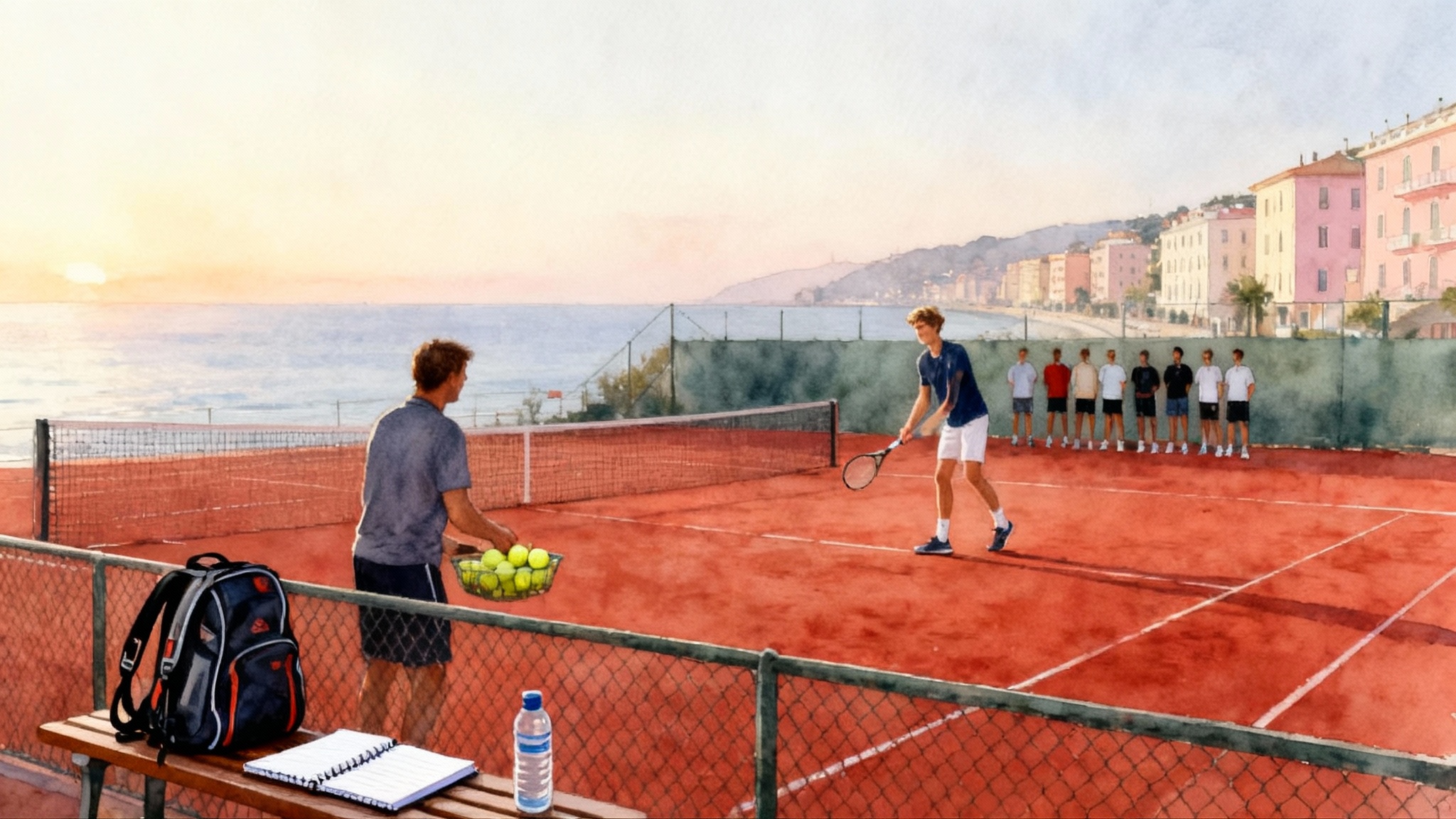
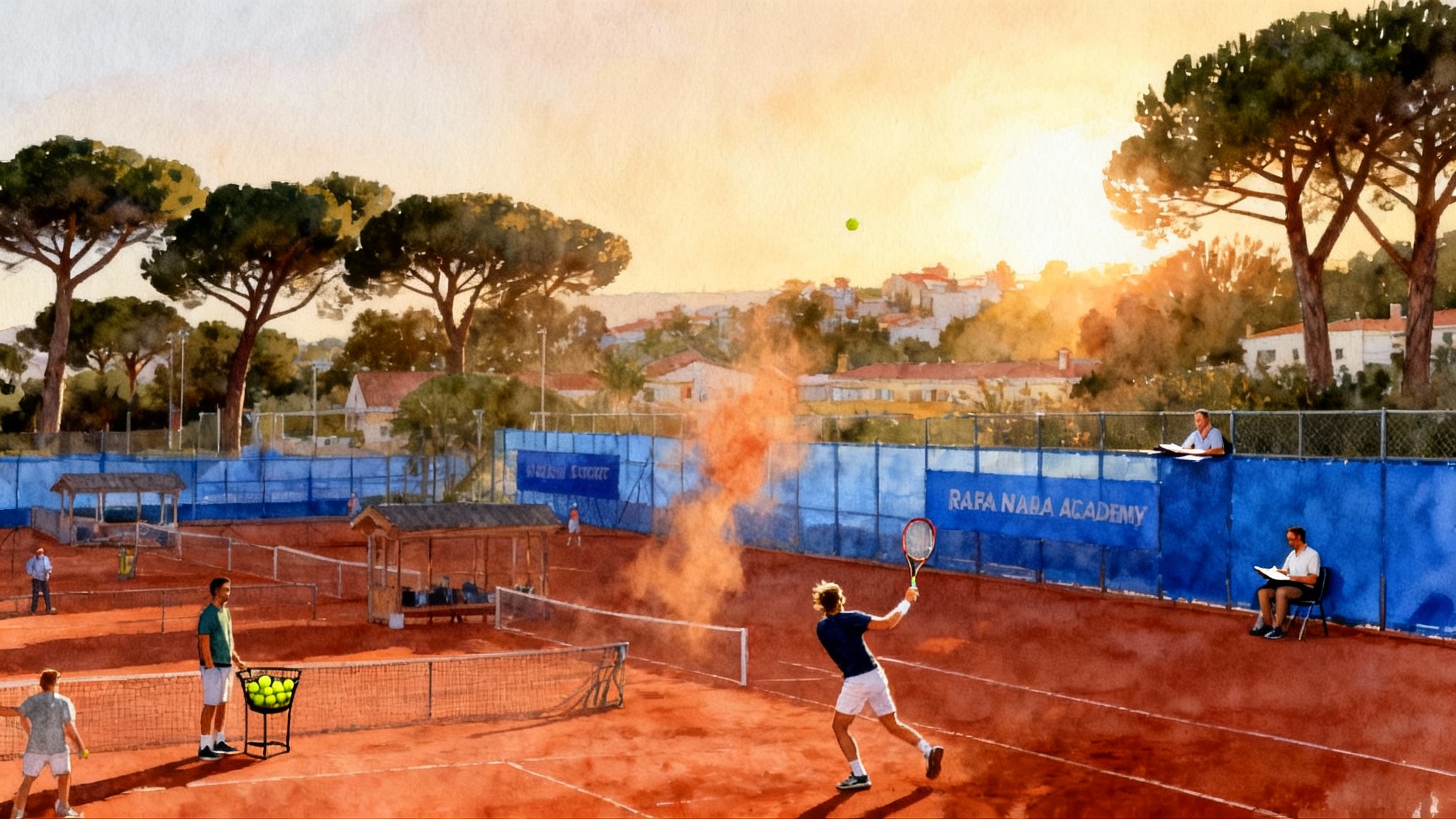
In 2014, an 18-year-old Daniil Medvedev left Moscow for the French Riviera. The destination was not a sprawling factory of courts. It was Jean-Rene Lisnard’s Elite Tennis Center in Cannes, a boutique training base known for deliberate practice and close attention to detail. That move set the stage for the most important relationship of his career: a coaching partnership with Gilles Cervara that took root on those courts and would later carry Medvedev to the summit of hard-court tennis.
Why relocate at all at 18, when most juniors are either finishing school or trying to patch together their first pro schedules? In Medvedev’s case, the reasons were pragmatic. He needed consistent high-intensity reps, a unified staff aligned on daily priorities, and a culture that would turn talent into repeatable performance. The Cannes environment provided exactly that. For other blueprints in this series, see how Pilic built Djokovic and how Mouratoglou shaped Tsitsipas.
Inside a boutique academy that prizes quality over volume
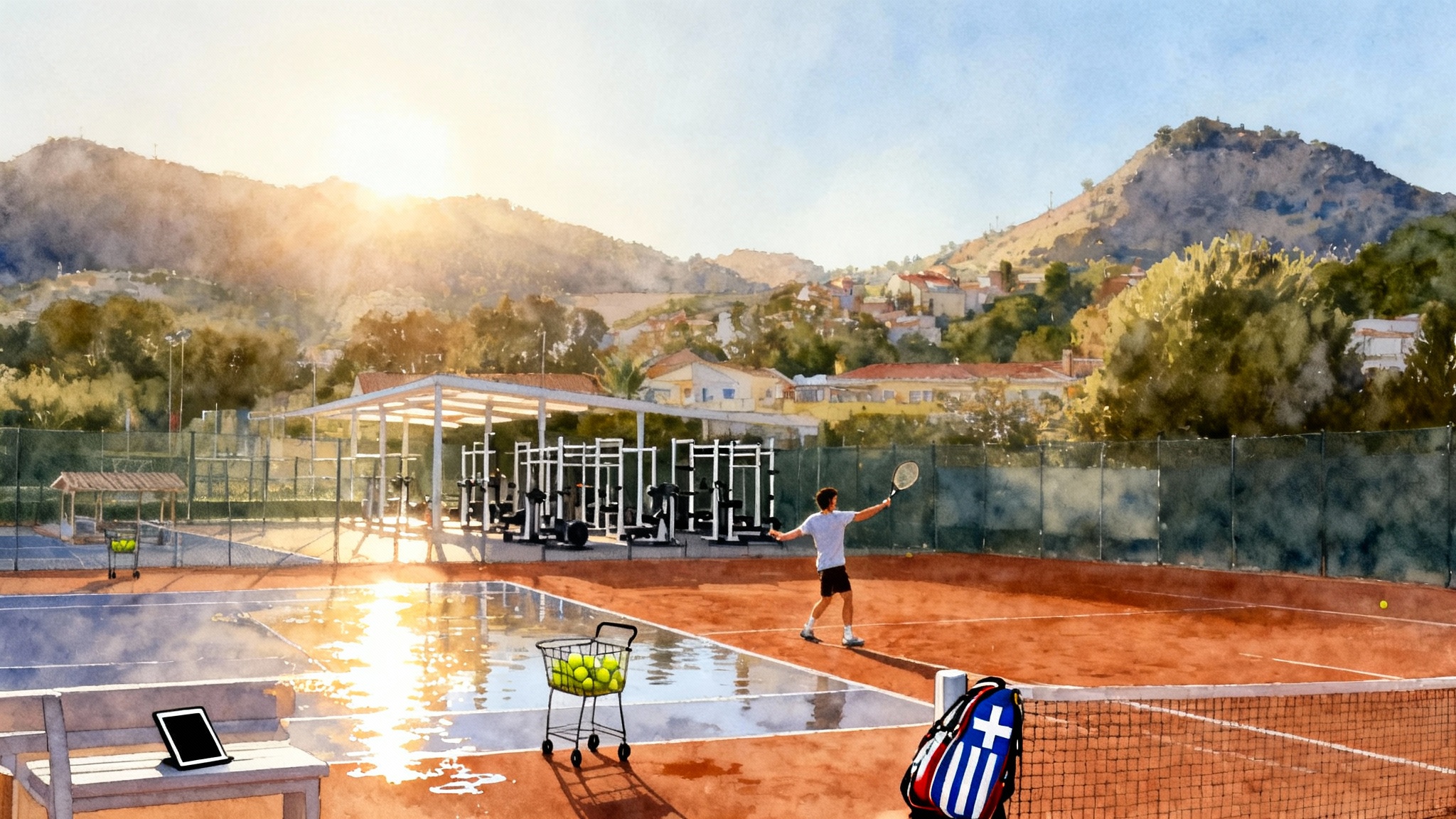
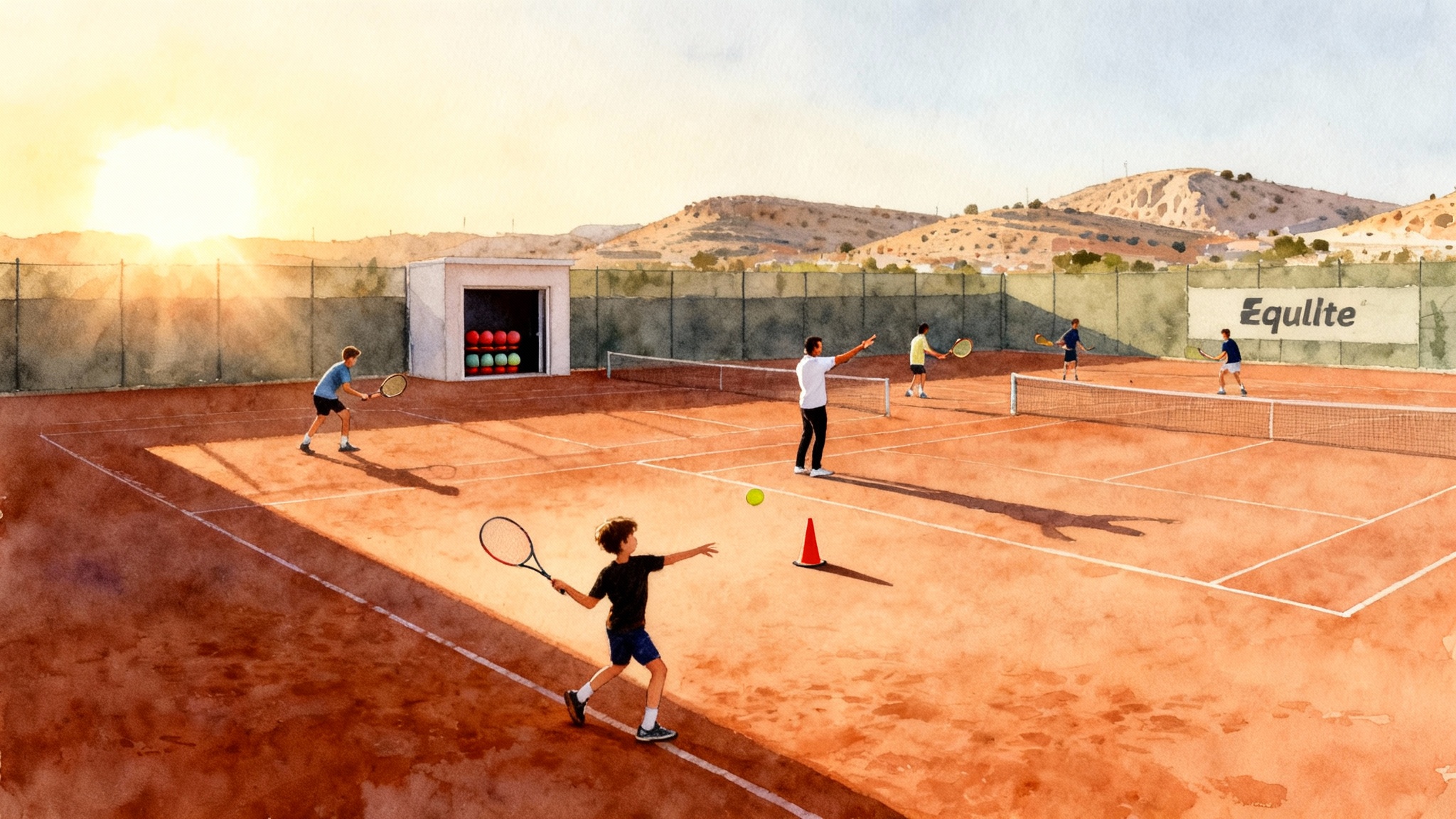
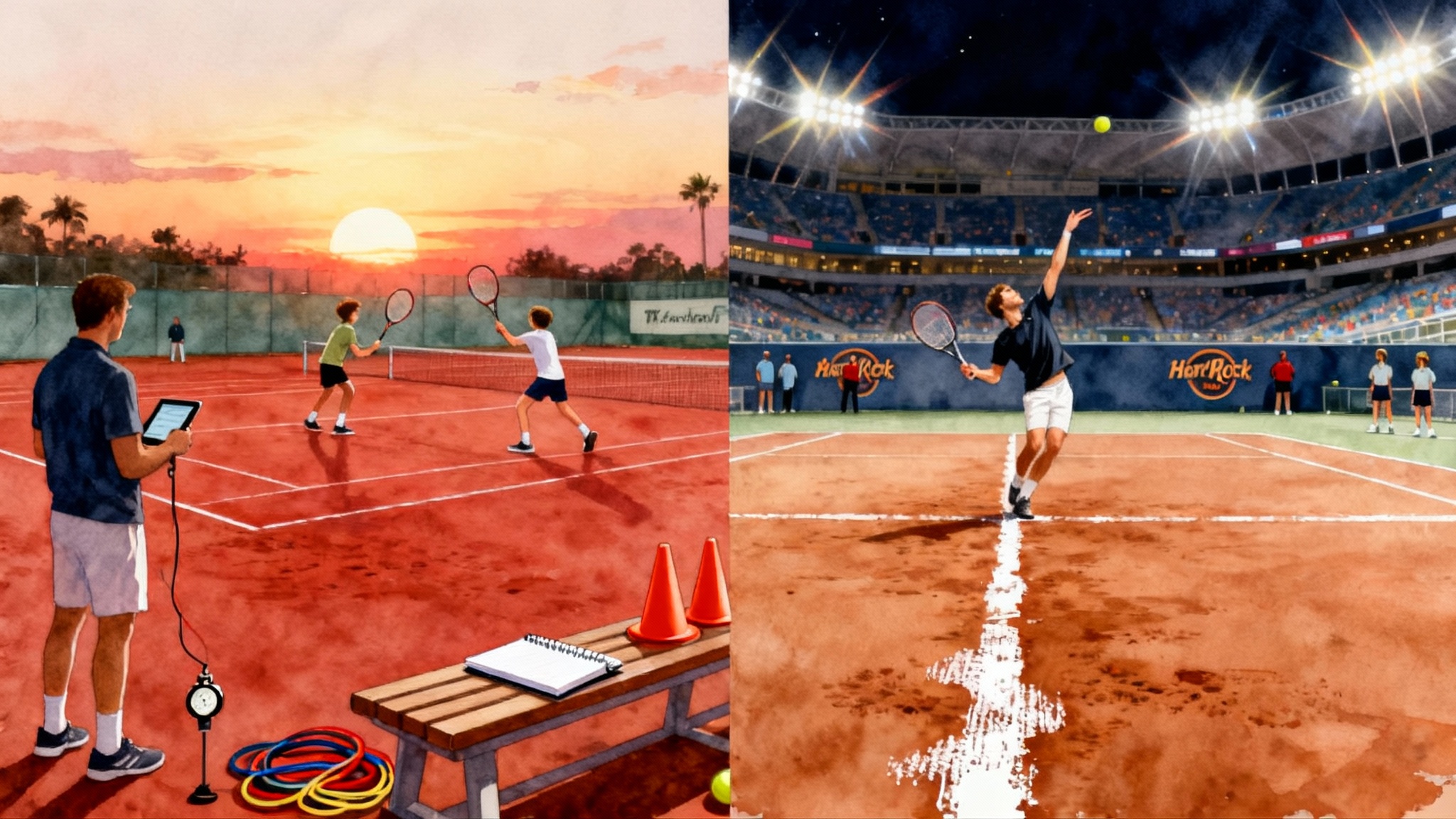
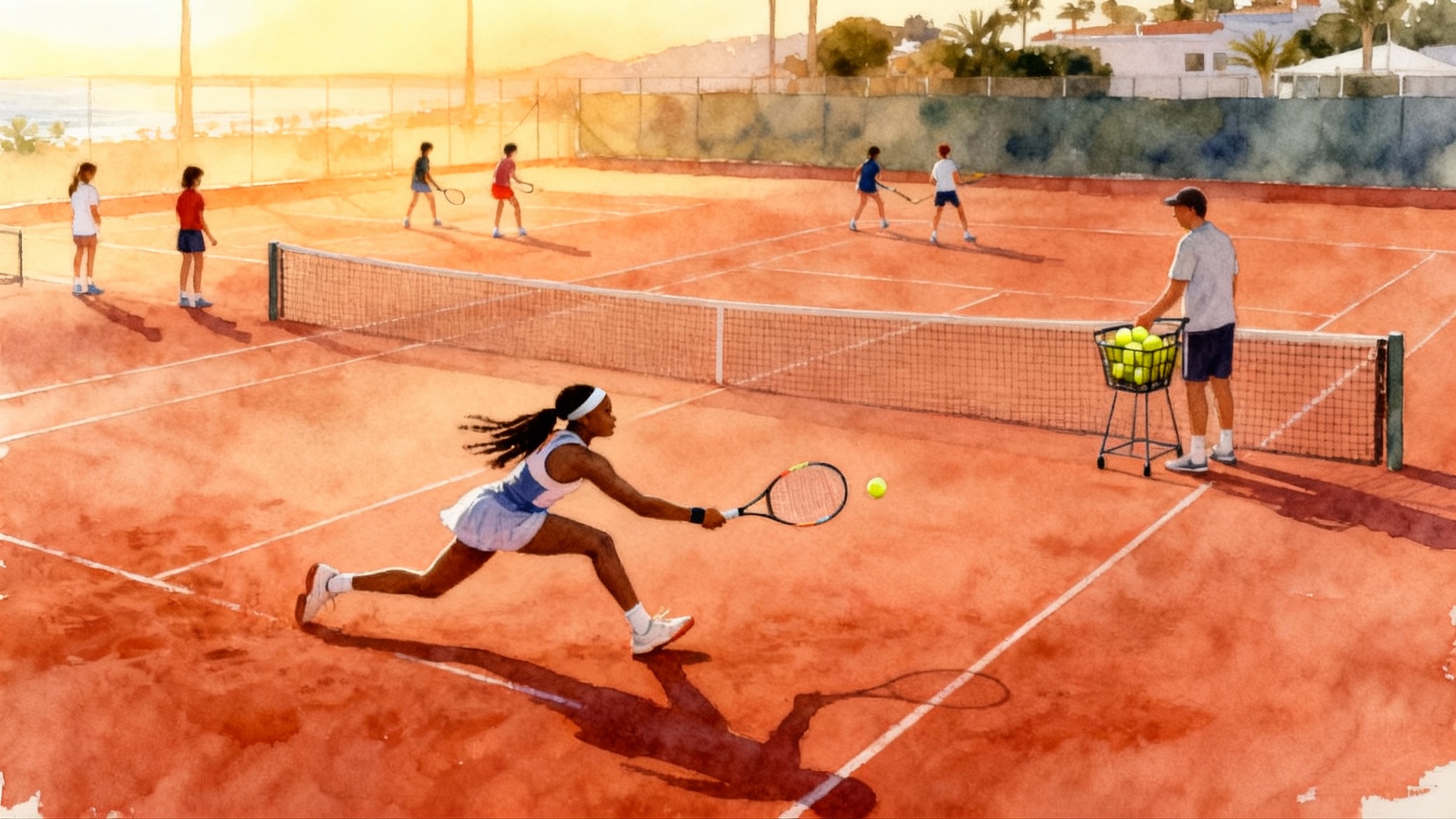
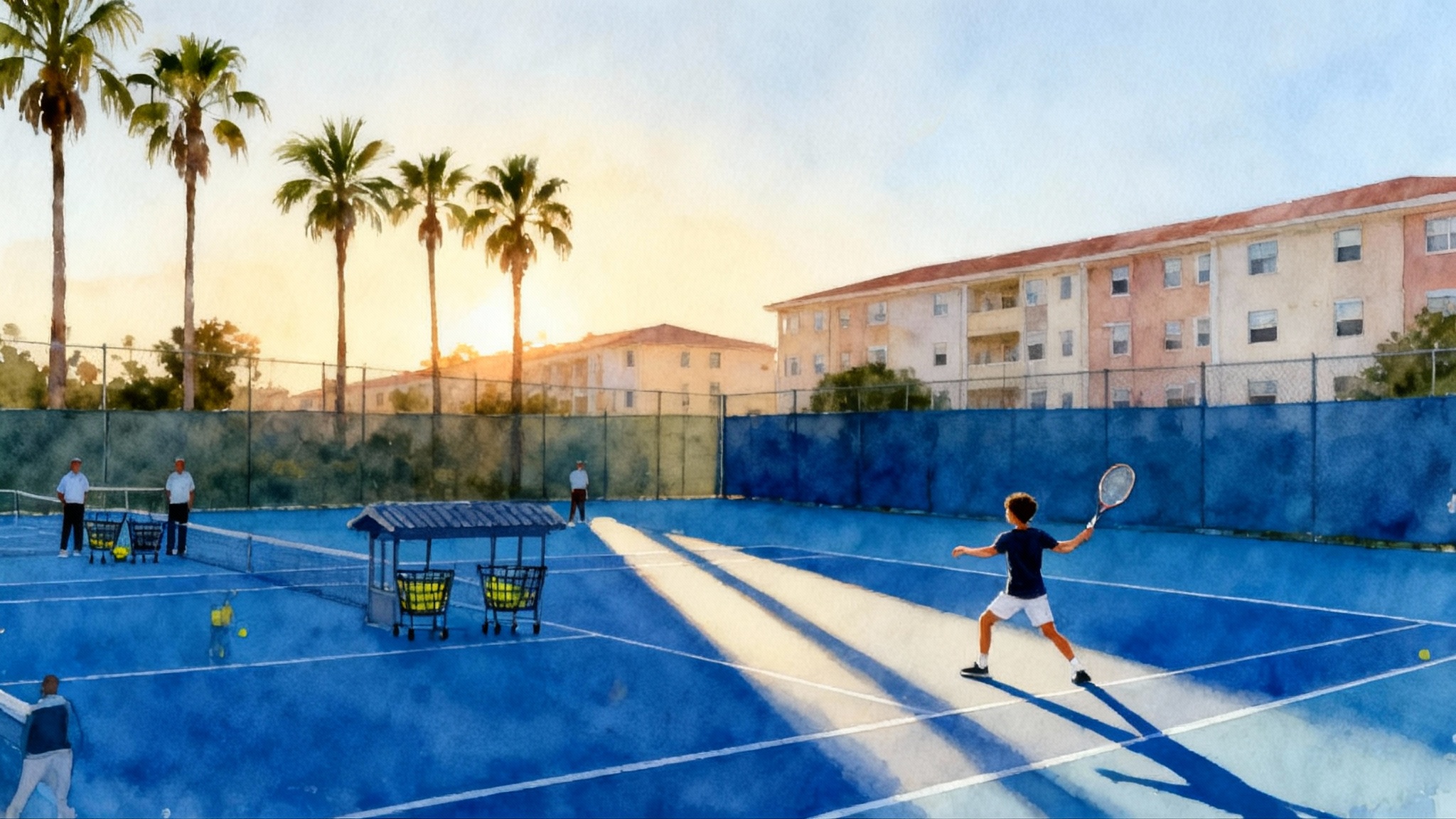
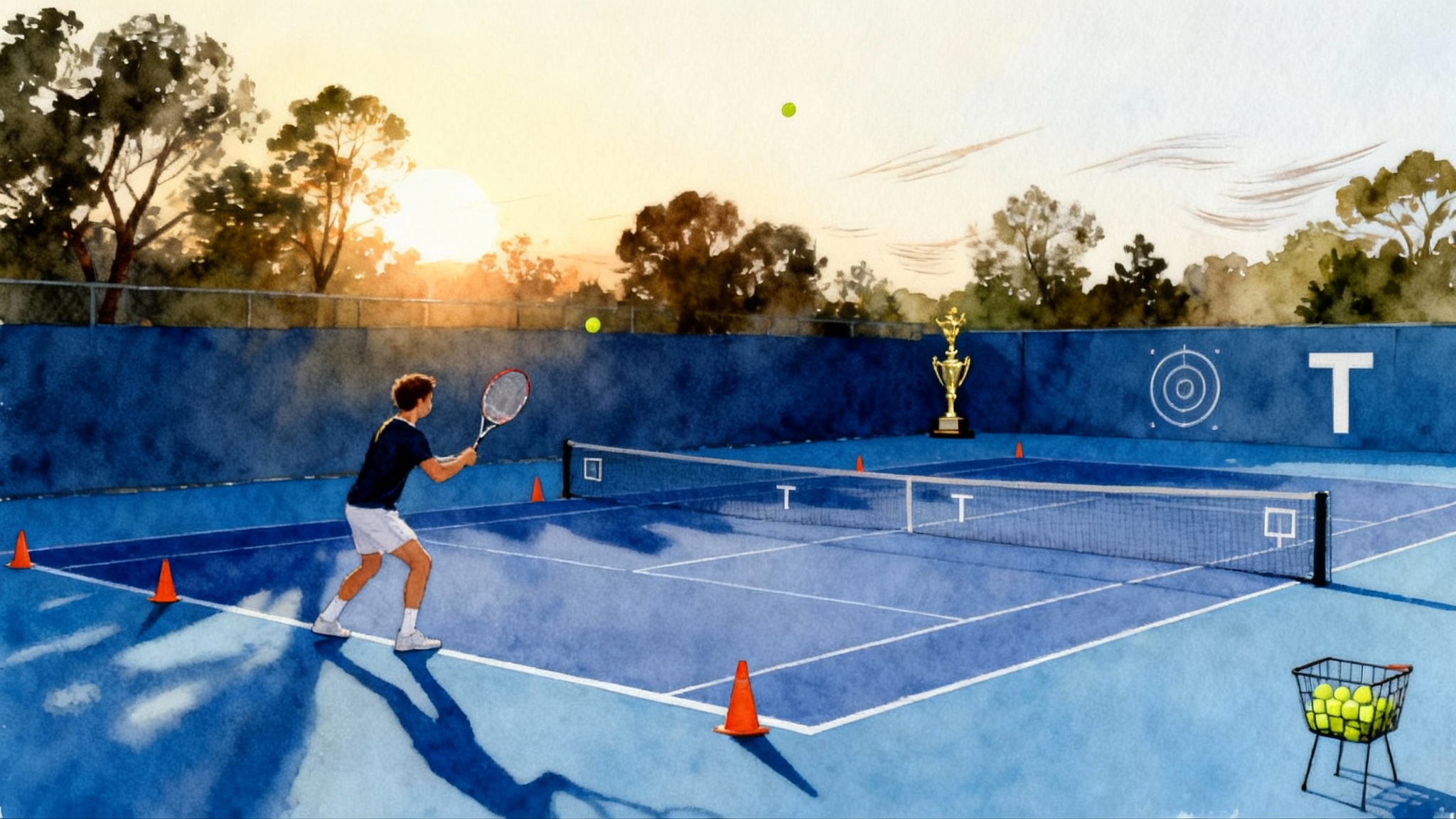
Elite Tennis Center is built on a simple operating principle: small groups, specific goals, and coaches who adjust sessions in real time. The center’s trainings are intentionally capped at two players per court per coach, which forces clarity about the objective of every ball struck and creates immediate feedback loops for footwork, swing shape, and tactical intent. The setup also includes Greenset hard courts and options to train on different bounces, so players can prepare for the speed and skid that dominate the professional hard-court calendar. The center describes its model openly, including the two-players-per-court standard and integrated support services, on its site, which underscores the point that this is a system rather than a collection of random drills. See the center’s summary of its approach and surfaces in its own words: two players per court, integrated support.
The coaches emphasize three training pillars that map cleanly onto Medvedev’s later identity as a top player:
- Small-group repetition: no hiding in lines, no wasted baskets. Each rally has a purpose, with frequent checks on contact point and recovery steps.
- Pattern drilling on fast, low-bounce hard courts: once basic accuracy is locked in, the work shifts to point patterns that suit the surface. Examples include two deep crosscourt forehands to stretch a right-hander wide, followed by a backhand change of direction, or serving wide from the deuce court and stepping in behind a flat backhand to the open space.
- Match-simulation blocks: extended, scored sets with constraints. For instance, start each game at 30-30, or begin points with a second serve to rehearse pressure. Sessions are recorded and reviewed so that tendencies can be reinforced or corrected.
The Cervara partnership: clear roles and a shared language
Gilles Cervara was part of the Cannes setup when Medvedev arrived. Their early work established a shared language around mechanics and patterns rather than slogans. Instead of “be aggressive,” it was “take the ball earlier on the second backhand of a crosscourt exchange” or “use the backhand line change only after you have moved your opponent two steps outside the singles alley.”
Three elements defined their collaboration:
- Division of labor: a lead voice on stroke and pattern decisions, a fitness lead on speed and elasticity, and a performance plan that linked both.
- Baseline metrics: serve targets by zone and height, rally tolerance on the backhand side, and return depth as a percentage of balls beyond the service line. These were written down, revisited weekly, and used to shape the next block.
- Film and feedback cadence: match footage on Mondays, a focused theme for the midweek block, then test the theme on Friday set play. If it did not transfer, they did not move on.
This was not just about hitting cleaner. It was about rehearsing Medvedev’s very particular brand of pressure: flat pace that keeps the ball low, deep court position on return, and the ability to redirect down the line without warning. The Cannes courts and small-group structure were well suited to engrain this.
Training to the surface
Hard courts dominate the professional schedule, especially in the United States summer and early autumn. Elite Tennis Center’s Greenset hard courts reward linear movement and early contact. Drills in Cannes were built to match this physics.
A typical Cannes block for a player like Medvedev looked like this:
- Serve-plus-one circuits: hit 10 serves wide on the deuce side, then step in to take the backhand early crosscourt. Repeat in sets, tracking first-ball depth beyond the service line. The goal was not aces, but predictable first-ball patterns that set up the next strike. For deeper practice detail, see our guide to serve technique and pressure proofing.
- Return theater: alternate between stand-back returns on first serve and step-in returns on second serve, with the feed coming fast and low to simulate the United States summer bounce. The metric was not just in; it was in with depth. Coaches charted how many returns landed past the service line and into the last third.
- Directional change discipline: two heavy crosscourts to move the opponent, then a line change only if the previous ball drew a short reply. If the setup ball was neutral, no green light. This created patience without passivity.
The point of all this was straightforward. When the surface skids and the ball stays low, flatter contact and earlier timing pay off, but only if you arrive balanced. Medvedev’s long levers and elastic legs allowed him to absorb pace and shoot the ball back deep. The work in Cannes made that his default rather than his day-to-day aspiration.
Evidence on the scoreboard: the 2019 United States hard-court surge and the 2021 breakthrough
If you watched the 2019 summer, you saw the plan bear fruit. Across Washington, Montreal, Cincinnati, and New York, Medvedev played a style that was disciplined, stubborn, and relentlessly deep. He reached the finals in Washington and Montreal, won his first Masters 1000 title in Cincinnati, then pressed Rafael Nadal to five sets in the United States Open final. The skeptics who saw him as a quirky shotmaker had to recalibrate. He was a pattern player who could repeat under stress.
Two years later, the patterns reached their peak on the biggest stage. On September 12, 2021, Medvedev defeated Novak Djokovic in straight sets to win the United States Open men’s singles title, his first major. The way he won looked a lot like Cannes. He served to precise targets, took the first ball early, and kept the ball skidding low so that Djokovic could not climb on top of rallies. For an official recap, see the Association of Tennis Professionals report on that final: Medvedev stuns Djokovic for US Open title.
What families can learn: when to relocate to a boutique academy
Relocating to a boutique academy is a serious move. Here is a practical checklist, based on what worked for Medvedev and what we observe in players who make the leap well.
- Timing: consider a move when the player is either at the end of the junior pathway or stuck between the International Tennis Federation circuit and the Challenger level. For many, that is between ages 16 and 18. The marker is not a birthday. It is whether the player needs daily training that is more specific and more accountable than what is available locally.
- Tryouts first: do a two-week assessment block at the target academy. The block should include fitness testing, on-court baselines, and two match-simulation days. Ask for a written post-block report with objective data and a three-month plan. If the academy cannot produce this, keep looking.
- Coach-to-athlete ratio: small-group sessions should be the default, not a premium add-on. Two players per court is a sign that attention and feedback will be real, not just a promise.
- Surface match: ensure the academy’s court speeds and bounces match your competitive goals. If the player’s calendar will live on fast hard courts, training primarily on slow clay will add useful skills but will not wire the exact timing patterns needed for North American hard-court runs.
- Schooling and life setup: ask specific questions about schooling, language support, and housing. A good academy will have a clear academic partner and a logistics point person for visas, travel, and daily life. Stability off court is not optional. It is performance infrastructure.
Building a cohesive team around the player
Medvedev’s rise was not the product of a single voice. It was the product of roles that fit together and a rhythm for decision-making. Families can borrow that structure.
- Appoint a head coach and define scope: the head coach owns technical and tactical direction, period. This person sets the weekly and monthly training themes and signs off on the competition calendar.
- Add a fitness lead who understands tennis: strength and conditioning in tennis is about availability, not just maximum outputs. Look for a fitness coach who speaks in blocks and test-retest cycles, not just workouts. Key metrics include repeated sprint ability, change-of-direction speed, and elasticity for early contact.
- Identify a dedicated hitting partner or assistant coach: this role keeps volume high without diluting quality. On travel weeks, this person should manage warm-ups, stretching, and video capture.
- Create a single plan doc: what is the technical target this month, what patterns are we emphasizing, what are the fitness checkpoints, and how do the next tournaments test those things. Meet weekly for 20 minutes to update the doc and make one decision about the upcoming week.
- Agree on communication rules: during matches, who can talk to the player if in-match coaching is allowed, and with what keywords. During practice, what cues mean stop, reset, or go to the next drill. Clarity reduces noise and protects focus.
Staging the pathway from International Tennis Federation to Challenger to Association of Tennis Professionals
The transition from junior or entry-level events to top-tier professional tennis is not a straight line. It is a staircase. Here is a staging model that reflects how a Cannes-style plan translates into results.
- Phase 1: International Tennis Federation pro entry. Goal: bank matches and rehearse patterns under pressure. Calendar: two tournament blocks of three weeks each, separated by a two-week training block. Targets: hold serve 80 percent of the time and win 40 percent of return games at this level. Daily work: serve targets by zone, second-serve forehand plus one pattern, and return depth beyond the service line.
- Phase 2: Challenger consolidation. Qualification criteria: when a player is consistently meeting Phase 1 targets and winning back-to-back events or making deep runs, move up. Calendar: one six-week tour block with built-in rest, followed by a three-week training block to address weaknesses that the higher level exposed. Metrics: break-point conversion over 40 percent, first-serve points won over 70 percent, and three or fewer double faults per match across the block.
- Phase 3: Association of Tennis Professionals main draws. Entry path: direct entry via ranking, qualifying success, or strategic wild cards. Strategy: choose surface and geography that align with the player’s strengths, not just tournament prestige. Training between events becomes micro-cycles that protect freshness while reinforcing one or two patterns the player uses the most at that level.
Throughout all phases, treat match play as a test of training themes. If a theme does not transfer, the theme changes or the drill design changes. The solution is never just more miles.
Match-simulation blocks that travel
One of the most transferable pieces of the Cannes model is how they simulate matches inside training weeks. Families and coaches can reproduce this anywhere with a timer, a camera, and intention.
- Constraint sets with a timer: play first-to-four games sets that start at 30-30 and force one second serve per game. Use a 20-second serve clock to rehearse pace under stress.
- Serve-plus-one ladders: the server must hit the first groundstroke to a declared quadrant before the point is live. If the server misses the quadrant, the returner starts up 15-0.
- Fatigue finishes: after 75 minutes of work, finish with a tiebreak to seven. Chart first-ball errors and return depth. Compete while tired because that is when patterns decay.
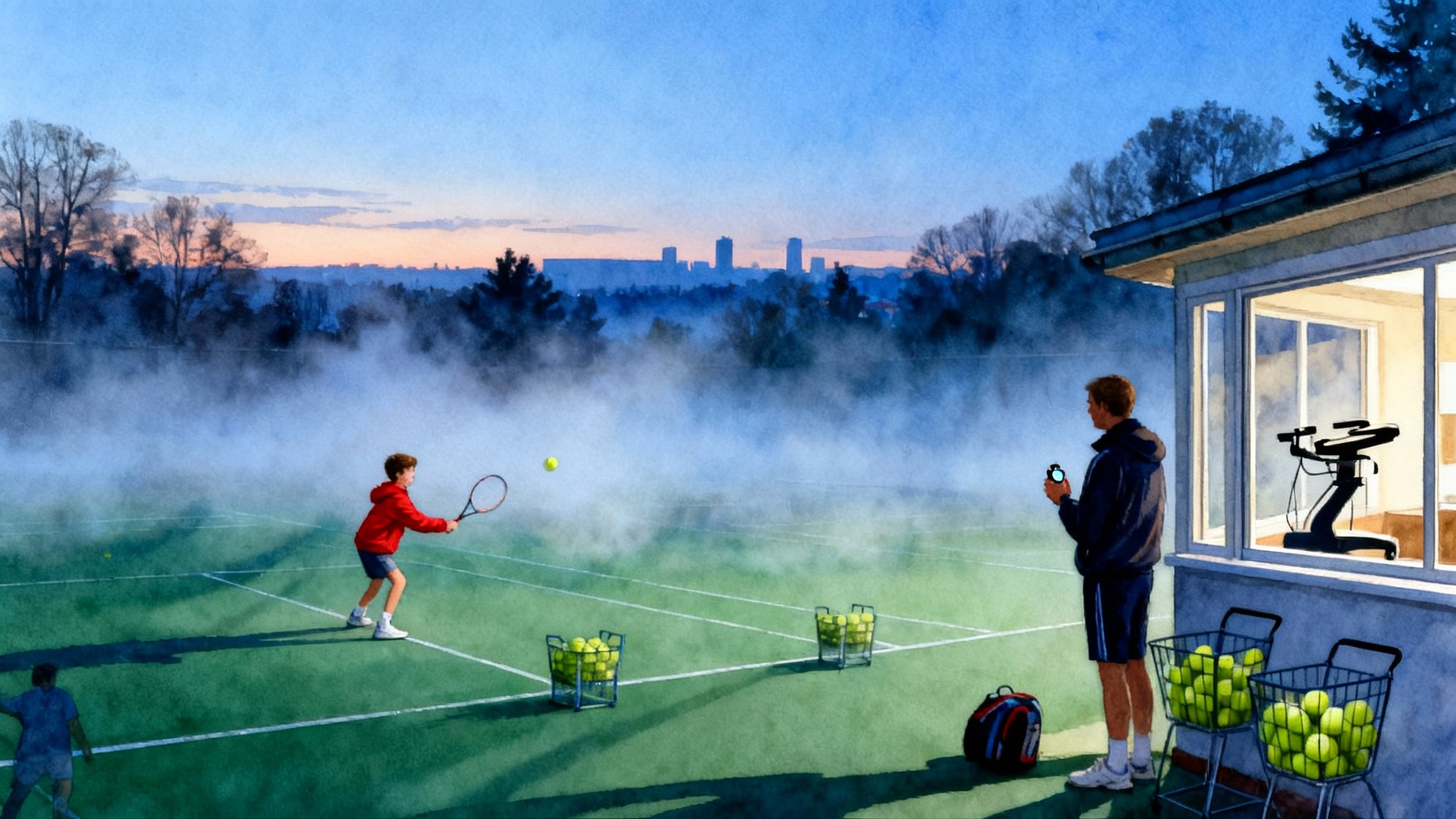
Video the constraint sets, review one clip the next day, and write down one adjustment for the next block. Repetition builds the pattern and the review keeps the pattern honest.
Budgeting and logistics without guesswork
A boutique academy can be more affordable than it looks if travel is planned with blocks and if you avoid scattered one-off trips. Use three levers:
- Block your travel: three tournaments in a region with similar surfaces, then home for a training reset. This cuts flights, adapts to one time zone, and keeps training themes coherent.
- Share resources: hitting partners and physio support can be pooled among two players during travel weeks if the schedule is coordinated.
- Measure return on spend: the best spend is the one that moves a metric you track. If a week with a physiotherapist reduces time lost to back tightness and raises practice volume by 20 percent, keep it. If not, drop it.
Common pitfalls and how to avoid them
- Chasing points instead of skills: results follow patterns that repeat under pressure. If a player is scraping out wins with a style that will not scale, step down a level, fix the pattern, then step back up.
- Ignoring surface specificity: clay habits do not automatically convert to fast hard courts. Build in four weeks each quarter on the surface that matches your goals.
- Overloading the week: two quality sessions a day with intent beat three unfocused ones. If the third session hurts the next day’s quality, it is not a net gain.
- Vague roles on staff: if three voices are giving tactical advice, the player will default to feel. Appoint a lead voice and a process for changes.
The take-home lesson from Cannes
Medvedev did not become world-class because he discovered a secret. He became world-class because a specific environment matched his game and rehearsed it until it held up against the very best. A boutique academy like Elite Tennis Center creates that environment on purpose: small groups that enforce attention, patterns drilled for the exact surface you will face, and match-simulation blocks that stress test what you learned.
If your player is approaching the gap between junior results and professional demands, consider the Cannes model as a blueprint. Audit the daily work, build a team with clear roles, and stage the climb from International Tennis Federation to Challenger to Association of Tennis Professionals with blocks that make sense. The path from Moscow to Cannes to the United States Open trophy was not linear. It was coherent. Make your plan the same way so that when opportunity arrives, the patterns are already there and the performance feels inevitable.