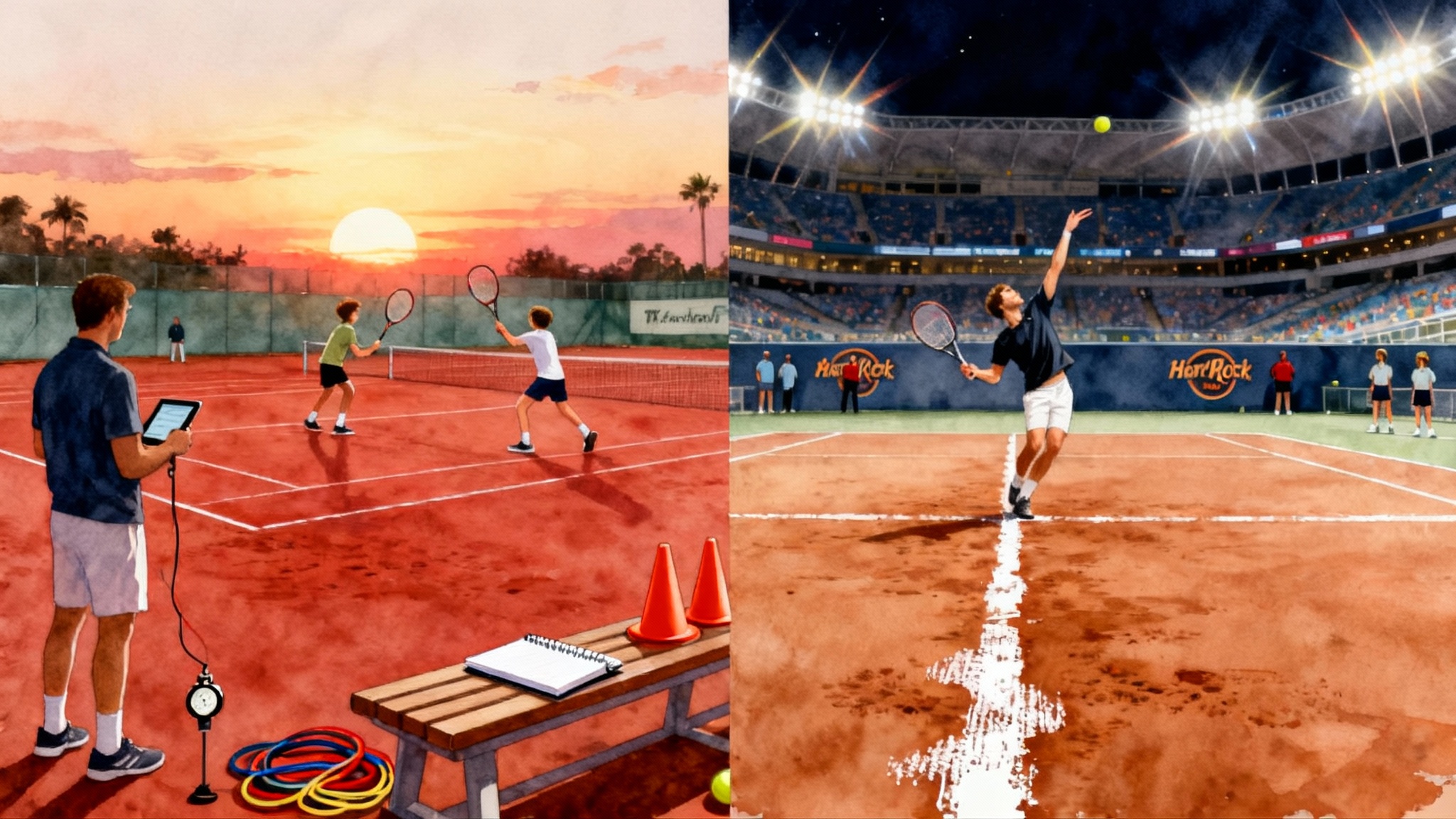
From Sochi to the Riviera: All In Academy and Mirra Andreeva
 Tommy
Tommy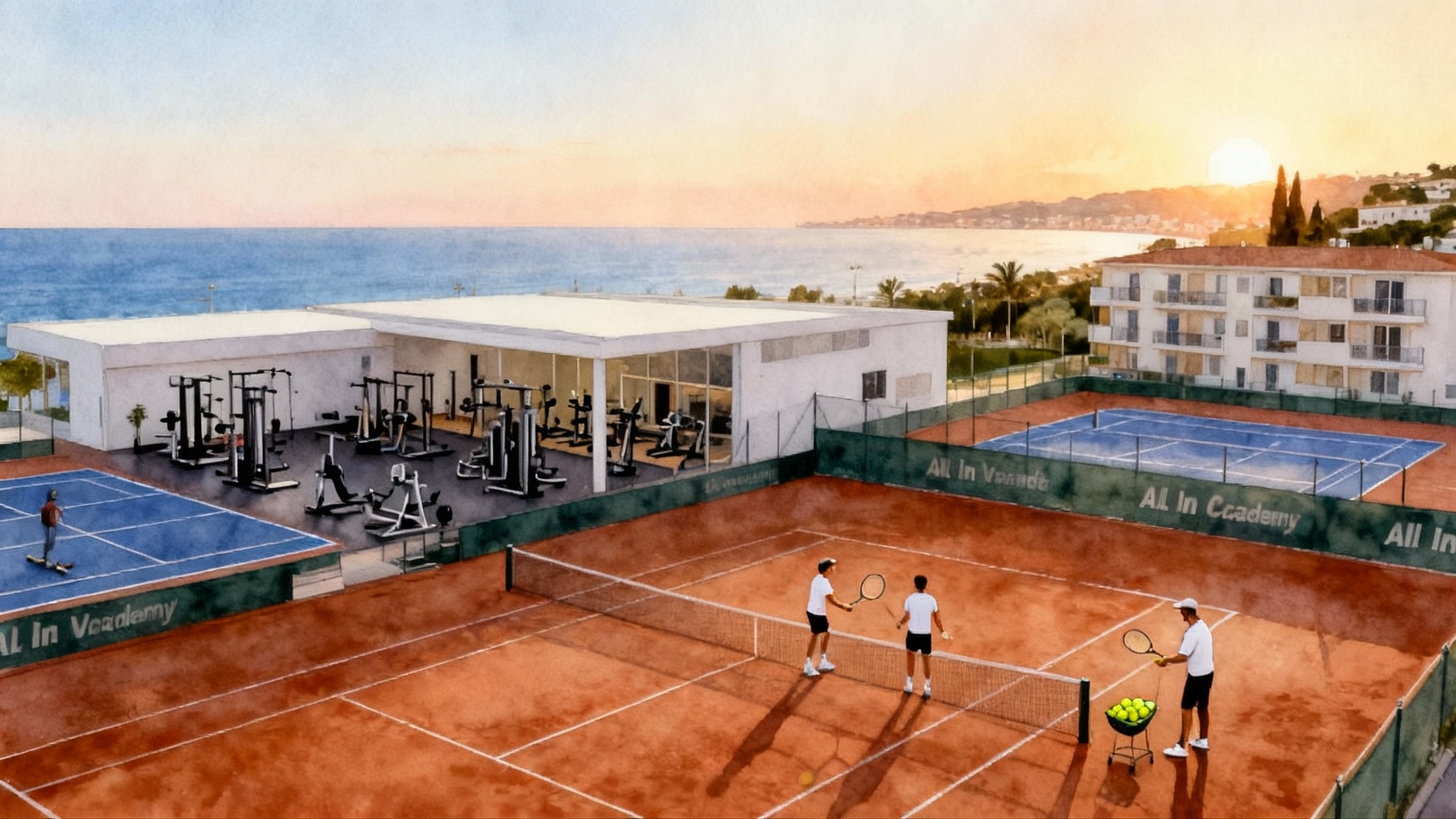
A proven path in three decisive moves
Every rising player’s story looks neat in hindsight. Mirra Andreeva’s path feels more like a set of well‑timed lane changes on a busy highway. She learned the game in Russia, sharpened it in Cannes in 2022, then chose a boutique base on the French Riviera in 2024. With coach Conchita Martinez confirmed as her full‑time guide WTA coach profile, the result has been a steady conversion of promise into weekly results on the Women’s Tennis Association tour. That sequence was not luck. It was a series of structural choices that parents and coaches can adapt for their own talented teenagers.
Phase 1: Foundation in Russia, then a calculated step to Cannes
By 2022, the Andreeva family moved Mirra and her sister Erika to Cannes to train at a high‑intensity, detail‑driven center, a path echoed in the Elite Tennis Center story. The objectives were direct: raise daily standards, find stronger peers, and embrace a year‑round competitive environment. Cannes, with its concentration of courts and events, enabled frequent match play on red clay and hard courts without constant travel.
If you coach or parent a teenage talent, this first relocation is less about brand names and more about the density of appropriate challenges. In simple terms: your player needs a daily diet of slightly uncomfortable sessions. If the local ladder stops pushing your child, it is time to change kitchens.
Three practical markers often signal it is time to move:
- Training partners cannot expose your player’s weaknesses inside a normal week
- Tournament travel dominates life because quality matches are far away
- Your player’s rate of improvement in movement, serve speed, and decision making has flattened for six months despite consistent effort
The Cannes chapter supplied Mirra with that friction. Tight feedback loops, frequent match simulation, and a clear competitive calendar set a new baseline.
Phase 2: A 2024 switch to All In Academy, plus a coach who fits
The second decisive move came in 2024. Andreeva shifted base to All In Academy in Villeneuve‑Loubet, just outside Nice All In Academy profile, and began working with Conchita Martinez. The value of this choice is best understood by looking at fit. Martinez brings a calm, tactical lens and a proven process for upgrading patterns rather than chasing spectacle. That complements a young player whose strengths are anticipation, early preparation, and a willingness to absorb pace and redirect it.
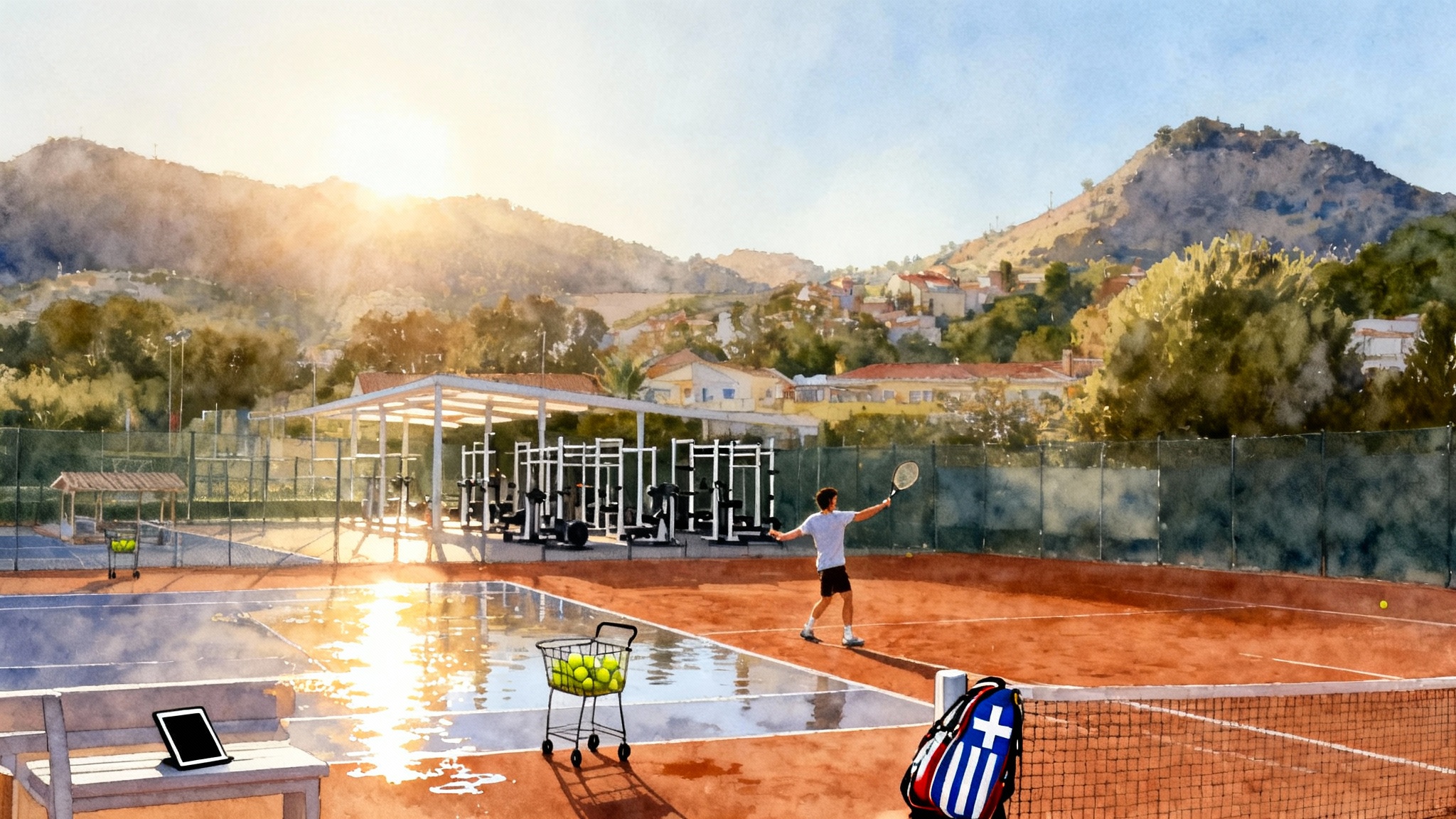
At All In, the environment supports that process. The site combines courts, boarding, fitness, and recovery in one place. For a player still in school, this is not a luxury. It is logistics turned into performance. When bedrooms are 50 steps from the gym and the gym is 50 steps from the courts, you trade commuting time for purposeful work.
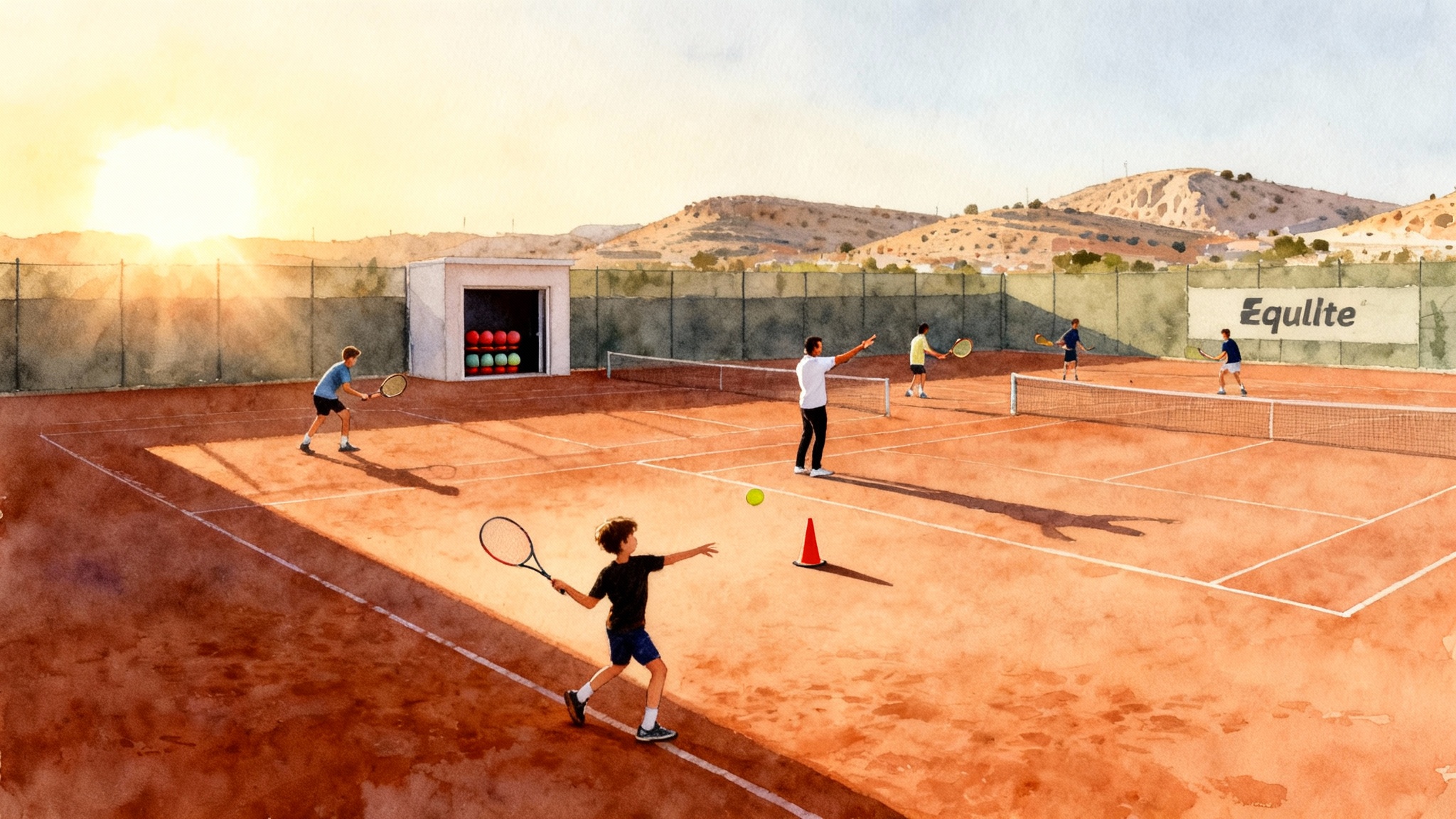
Boutique here means small coach‑to‑player ratios and personalized planning. The academy’s pro track caps on‑court groups at two players per coach, and the weekly template blends tennis, fitness, and a medical pathway. That ratio is the backbone of the approach, because it allows a coach to correct habits at full speed rather than in slow drills. You can see this principle in the All In training center, including integrated strength, mobility, and tournament support.
Why small groups matter more between 15 and 18
Small groups are not just nice for attention. They shape how a player’s game is rebuilt.
- Mechanics at match speed: A serve tweak that works at half speed is often gone the moment points start. With two per court, the coach can engineer live‑point situations and return immediately to technical cues, linking mechanics to decisions.
- Decision density: Two‑player courts raise the number of meaningful decisions per minute. That matters for a teenager whose growth edge is pattern selection under pressure, not just cleaner swings.
- Fatigue‑aware coaching: At 16 or 17, training loads jump and school stress can spike. In small groups, fitness staff and the coach can modulate volume without sacrificing specificity.
Mirra’s game offers clean examples. Her backhand takes the ball early and changes direction without overswinging. That is not a miracle shot. It is a shot that survives in traffic because it was rehearsed in realistic, high‑repetition rallies where a coach could fine‑tune spacing, height, and intent.
Pro‑level sparring as an accelerator
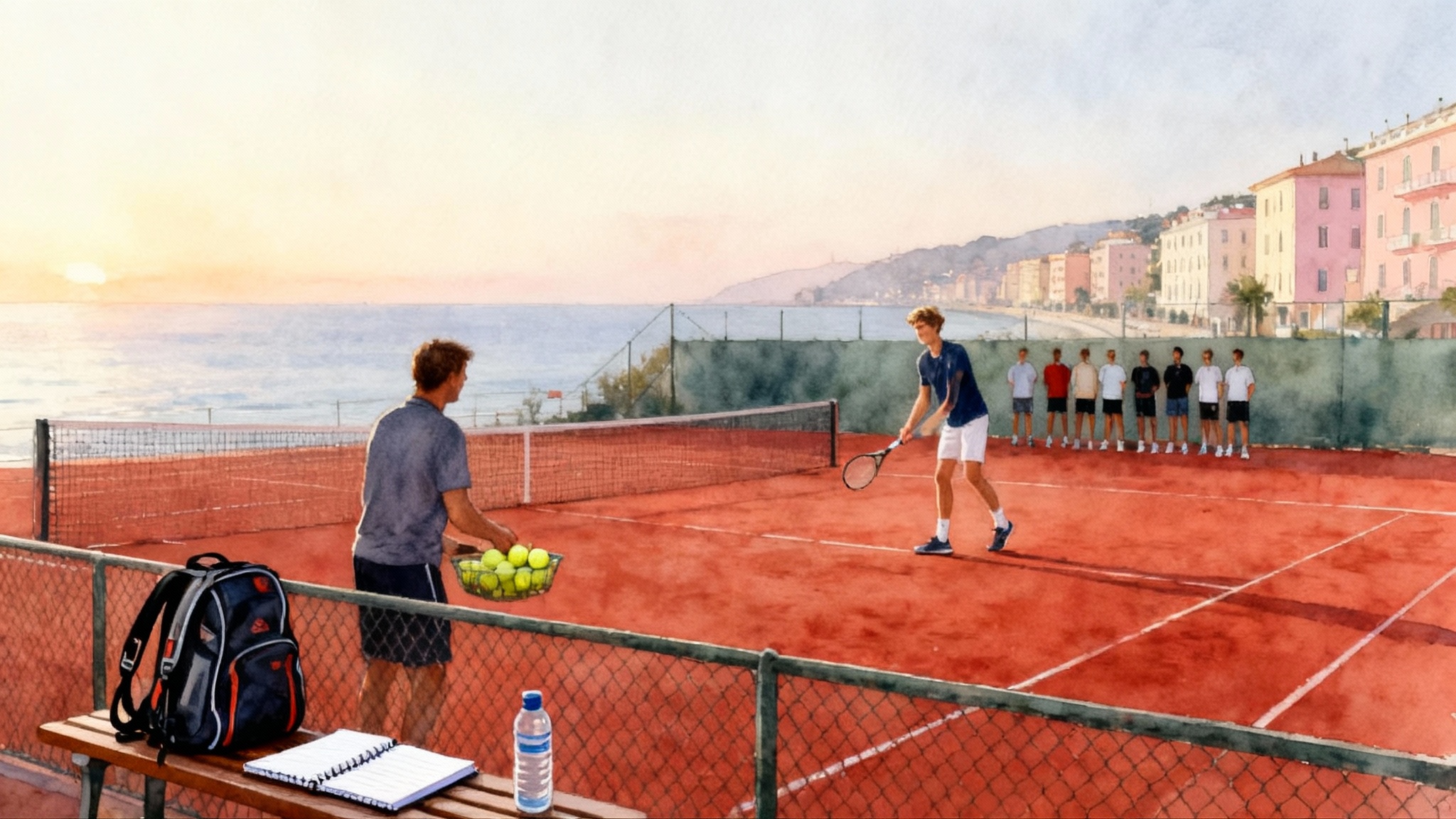
Villeneuve‑Loubet sits in a tennis corridor. Nice airport is ten kilometers away, and tournaments in southern France, Italy, and Spain rotate through the calendar. That geography makes it easier to line up professional sparring without cross‑continent travel. For a teenager, hitting two to three times a week with touring pros is not about speed alone. It is exposure to pace changes, depth discipline, and the patience to reset a point after a neutral ball. Those lessons sink in faster when the player does not have to chase them across countries.
Combine that with a coach like Martinez who turns sparring into targeted assignments. One day might focus on first ball after serve. Another might be nothing but backhand exchanges above shoulder height until the player learns to neutralize without falling short in the court. The point is not hero forehands. It is repeatable patterns that scale to quarterfinal weekends.
Results as signals, not trophies
In 2024, Andreeva broke through with a semifinal in Paris and backed it up with deep runs later that season. In 2025, she turned that into week‑over‑week contention at the highest level, including wins over top‑five players and durable play across travel blocks. Those results were not outliers. They were confirmation that training translated into match habits.
Three stability markers matter more than rankings during this window:
- Break points saved per match and the average length of those rallies
- First serve plus first forehand pattern efficiency on both surfaces
- Unforced errors after neutral balls in the middle third of the court
If those three stabilize or improve across four to six events, you are on the right path. The trophies tend to follow.
The parent’s playbook: when to relocate
Timing a move is emotional. Here is a simple framework that borrows from Mirra’s sequence and from how top academies plan the 15 to 18 stretch.
- Age 14 to 15: Audit your current environment. Count the number of equal or slightly better hitters available each week. If you cannot schedule three quality live‑ball sessions weekly, start scouting.
- Age 15 to 16: Make the move if the competitive density elsewhere is clearly superior and the school solution is viable. Expect the first 8 to 12 weeks to be rough while your player adapts.
- Age 16 to 17: Consolidate. Lock in a base that minimizes travel and maximizes consistency. If you change coaches now, do it for a purposeful reason.
Checklist before you commit:
- Housing and school on the same campus or within a short walk
- A clear weekly plan that shows court time, fitness, recovery, study hall, and bedtime
- A promise you can verify: no more than two players per court on key sessions
- Specifics on medical and recovery support, not just a generic gym
Selecting a boutique academy over a mega brand
Boutique is not code for small budgets. It is a design choice. Look for these signals:
- Ratio and structure: Two per court for core sessions, with a clear rotation for one‑on‑one blocks
- Integrated support: Strength and conditioning coach, physiotherapy access, and a plan for return to play after minor strains
- Tournament coaching policy: Will your child be one of three on a coach’s travel list or one of eight
- Boarding quality: Rooms that are quiet, temperature controlled, and near the courts; study spaces supervised by staff who understand athlete schedules
You will see similar logic in other success stories, such as the Mouratoglou Academy and Tsitsipas. A boutique academy should be able to show you the coming month’s microcycles. If the plan is always we will see on the day, keep looking.
Building the 15 to 18 calendar: travel and match blocks that compound
Use simple blocks and keep the ratio of training to travel honest.
- Training blocks: 10 to 14 days at base with three focuses per week. Example for clay season: return position and depth on Monday, first ball after serve on Wednesday, finishing to the open court on Friday. Fitness alternates acceleration and strength with one full rest day.
- Competition blocks: Two to four events in the same region to reduce flights. If your player is in the International Tennis Federation to Women’s Tennis Association transition, choose a ladder of event levels that offers at least two main draws in four weeks.
- Recovery windows: Three to five days at base after a two to four week road swing, with a taper‑before‑build approach.
Example blueprint for a spring stretch on clay for a 16 to 17‑year‑old:
Week 1 to 2 at base
- Mornings: one technical session, one themed live‑ball session
- Afternoons: mobility and low‑impact conditioning, then study hall
- One practice match every two days with scoring goals, for example no cheap errors in the middle third
Weeks 3 to 6 on the road
- Event 1: local warm‑up tournament within a train ride; coach present
- Event 2: target event where ranking points are likely; aim for three matches minimum
- Event 3: stretch event if confidence is high; otherwise return to base
Week 7 at base
- Two reset days
- Three days of specific rebuild based on match data
This pattern is boring by design. It takes advantage of proximity and reduces cost. It also imitates what Andreeva’s team did well: convert practice themes into tournament patterns and back again.
What to ask on your academy visits
You can learn a lot by asking for receipts, not promises.
- Show me last month’s court assignments. How many two‑player sessions did each 16 to 17‑year‑old get
- Walk me through a recent return‑to‑play case. Who led it, how long did it take, and what changed in the weekly plan
- Which three professional hitters did your top juniors share the court with in the last month, and who arranged that
- May we observe a themed live‑ball session and a post‑session debrief
If answers are vague or defensive, assume the operational reality is weaker than the sales pitch.
The Conchita effect: calm decisions, not louder shots
Mirra’s matches since the coaching change show more intelligent point starts and fewer bail‑out swings when rallies get tight. That is a teachable shift. Parents should look for coaches who can translate video into one or two clear cues that survive pressure. Martinez’s record with champions speaks for itself, but the important part for a teenager is the day‑to‑day tone. Calm voices travel further in loud moments.
How to build that in your player’s week:
- One cue per day: for example, shoulder above the ball on backhands for all live points
- One constraint drill: such as finishing only to the opponent’s weaker side until the pattern is automatic
- One match review: a 15‑minute clip session that ends with a written plan for the next two practices
Translating Mirra’s model for families outside Europe
Not everyone lives near Nice. The principles still apply.
- Find density: identify a two‑month window where events cluster within a short flight or drive
- Buy attention, not amenities: choose the place where you can verify small groups and daily coach contact
- Use a base‑and‑bounce approach: two weeks at base to build, two to three events in a row to test, then back to base
If your child must remain in a home market with fewer events, create a sparring pool. Pay two older college players to hit three times a week. Film those sessions and send short clips to your coach for feedback. You are building your own boutique density.
What All In’s model looks like in practice
All In Academy on the Côte d’Azur has the pieces under one roof: clay and hard courts, a gym, a medical support pathway, an on‑site restaurant with athlete menus, and secured boarding with one to four students per room. The site’s structure is built for serious junior and young professional schedules. The two‑player cap on core sessions is the small detail that changes outcomes, because it anchors the week in high‑quality decision making.
Families should expect this level of specificity wherever they enroll. If an academy cannot articulate its ratios, weekly microcycles, and tournament coaching policy in five minutes, keep walking.
A closing lens for parents
Mirra Andreeva’s rise is not a fairy tale. It is an operations story. Early foundations in Russia, a 2022 move to a denser training hub in Cannes, and a 2024 switch to a boutique academy near Nice with a coach who fits her strengths. The themes are transferable: pick an environment where attention is protected, where fitness and school sit within arm’s reach of the courts, and where sparring partners stretch your child without draining the budget or the calendar. Do that, and the calendar starts working for you instead of against you. The wins will feel like surprises. They will not be. They will be the product of small, repeatable choices that compound into big weekends.