From College Park to Arthur Ashe: How JTCC Built Frances Tiafoe
How a community-rooted academy in College Park shaped Frances Tiafoe, from living near the courts to the 2013 Orange Bowl and an Association of Tennis Professionals breakthrough. Concrete steps for families on access, aid, and smart scheduling.
 Tommy
Tommy
A path that starts at a public gate and ends in tennis’s loudest stadium
Arthur Ashe Stadium is where dreams meet noise. Every August, the US Open turns that court into a pressure cooker. For Frances Tiafoe, stepping onto Ashe was not a fairy tale leap. It was the next logical step in a journey that began in College Park, Maryland, at a community-centered training ground called the Junior Tennis Champions Center, known as JTCC. The line from local hard courts to the biggest stage is not straight, but it is traceable.
This article charts how JTCC’s mission and methods shaped Tiafoe’s rise from a kid who spent more hours at the club than most adults with full-time jobs, to the 2013 Orange Bowl champion, to a professional who could handle the weight of a packed Ashe night session. Then we translate those lessons into practical steps that families can apply in their own communities.
The power of place
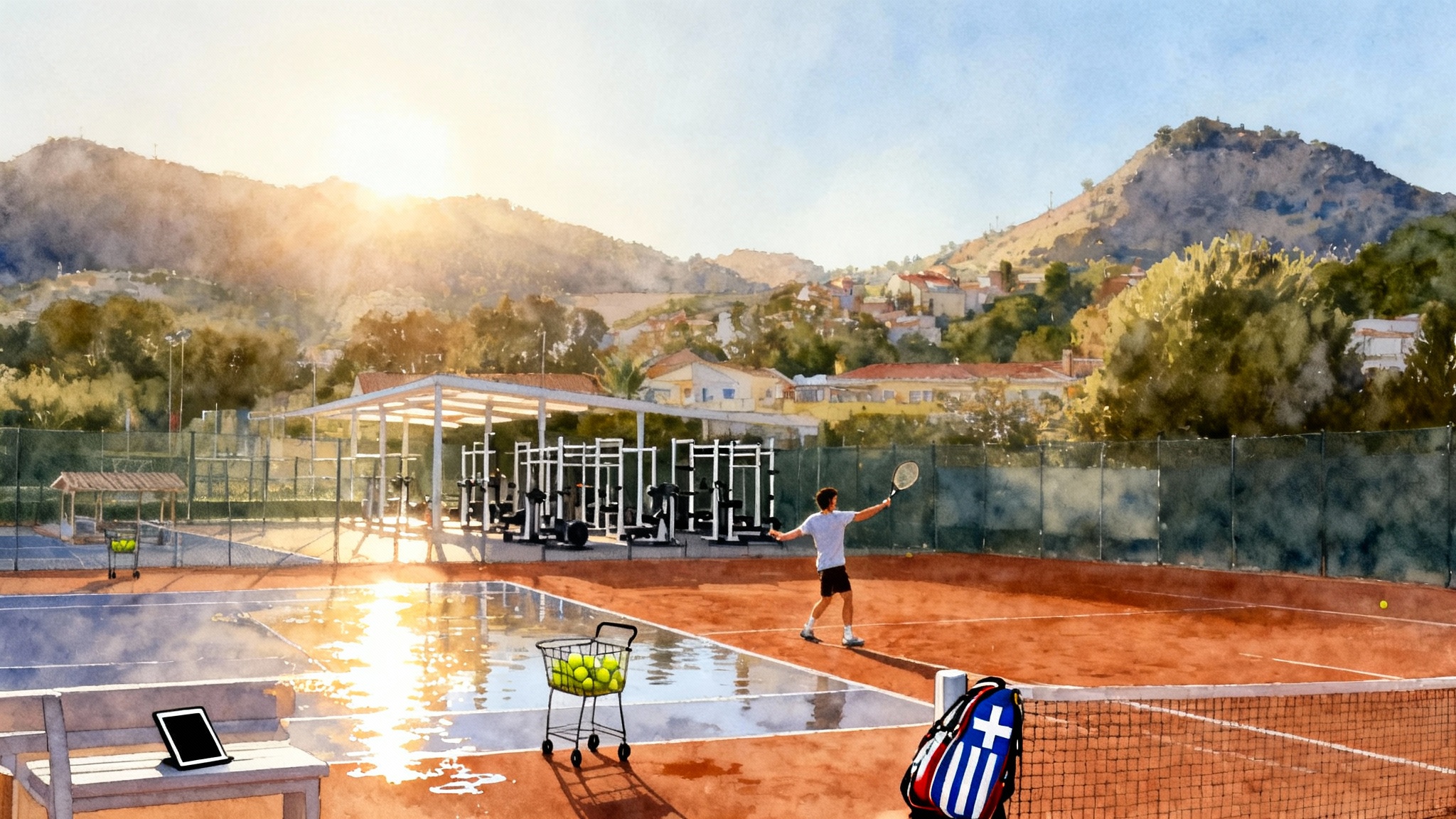
Frances Tiafoe grew up around the courts at JTCC in College Park. His father, Constant Tiafoe, worked at the site, and that proximity was not just convenience. It was the quiet advantage that comes from living inside the sport’s daily rhythm. Courts were available before school and after homework. Coaches were familiar faces, not once-a-week visitors. The environment functioned like a second home, and that mattered because consistency compounds. A young player who logs clean, reliable practice sessions for months and years will often outpace a similarly talented peer who trains in bursts.
JTCC is not a vanity academy. It is a community-rooted nonprofit that blends high performance with access. Families from varied backgrounds share the same courts, and talent is developed within a structure that rewards commitment and character. The center’s own materials describe a mission grounded in community impact and player development, not just elite results, which is why linking a household name like Tiafoe to that place makes sense. If you want to understand the output, study the environment that produced it: JTCC’s community mission.
For another look at how environment shapes champions, compare this to how Pilic built Djokovic.
What NJTL roots bring to a high-performance setting
JTCC grew within a tradition shaped by the National Junior Tennis and Learning network, which traces to Arthur Ashe’s belief that tennis can open doors for young people. That heritage does not just hang on a wall. It translates into practical design choices: scholarships, mentorship, and academic support wrapped around real training. If you do not know the National Junior Tennis and Learning model, start with the United States Tennis Association NJTL overview, then map those ideas onto your local options.
To see an NJTL chapter turning park courts into pathways, explore the Milwaukee Tennis and Education Foundation.
A phrase that captures the JTCC model is simple: performance with purpose. The center marries three ingredients that are hard to find in one place.
- Year-round access: reliable courts, ball baskets, and a coach who can unlock a grip or a footwork pattern in the moment
- Coaching continuity: the same voices guiding the same player through multiple stages, not a parade of disconnected opinions
- A steady ladder of United States Tennis Association and International Tennis Federation competition: frequent matches at a suitable level, with travel that fits the family’s budget
How the JTCC daily system works in practice
Think of player development like building a small house. You do not need fancy marble countertops in month one. You need a square foundation and straight framing. JTCC’s daily habits supply that framing.
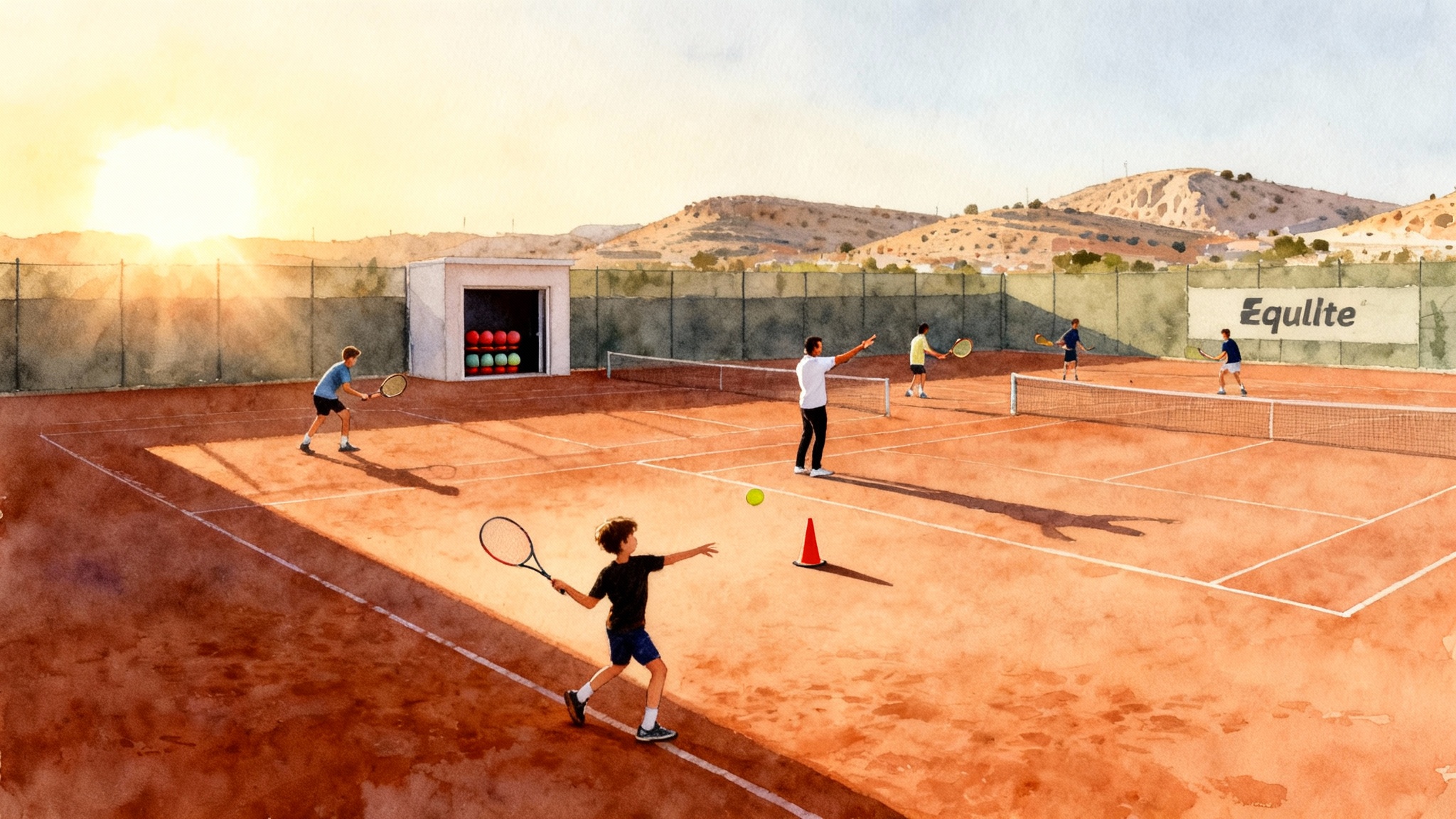
- Repetitions that count: bucket-fed drills that fix specific issues, such as a late forehand contact point, followed by live-ball points that test the fix under stress
- Environment that keeps score: practice sets and competitive games where ladders matter, so effort has a scoreboard
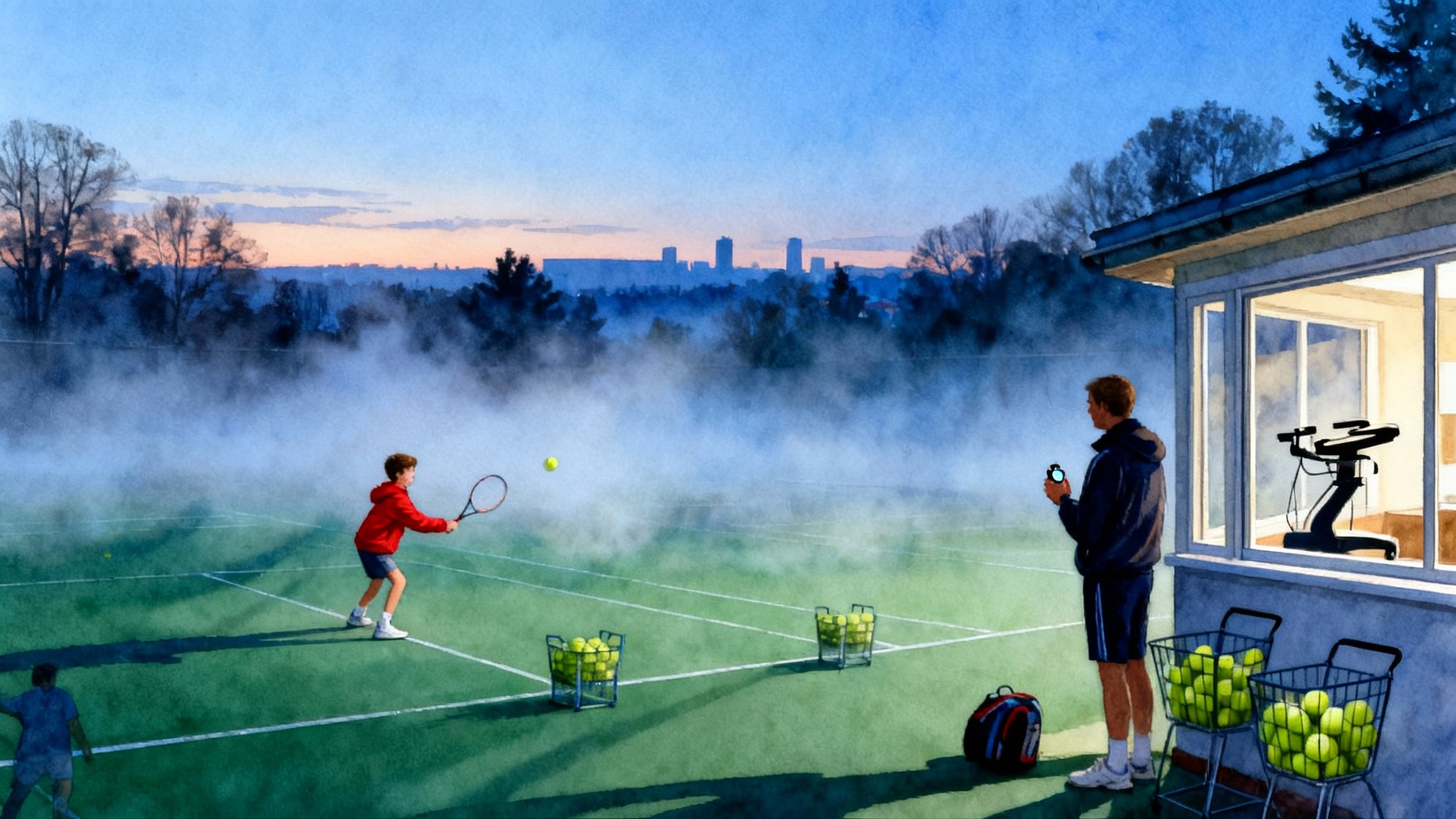
- Integrated movement and strength: dynamic warmups, simple strength progressions, and recovery built into the week, so a growth spurt does not derail mechanics
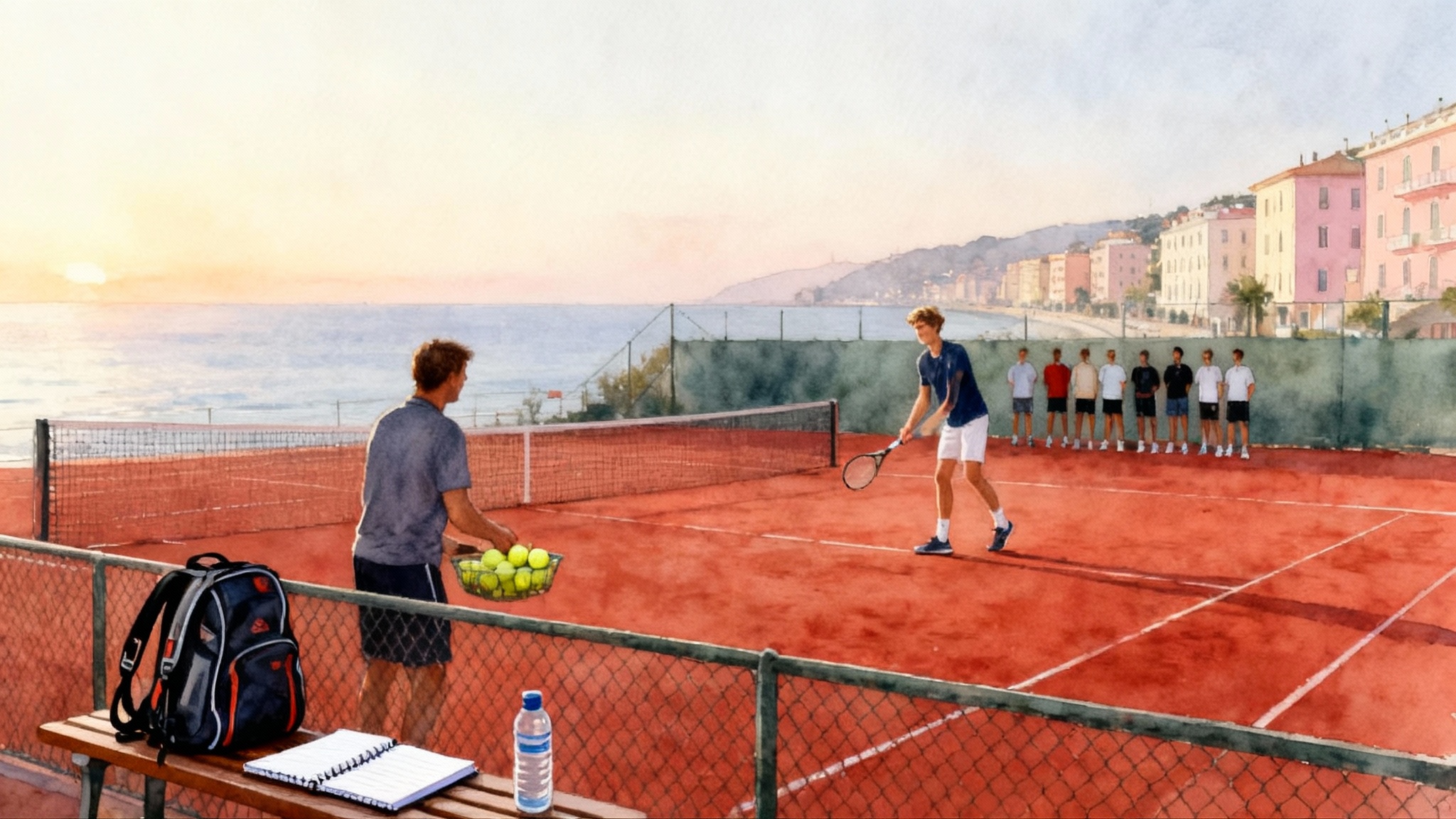
- Coach huddles that stick: the same lead coach and support staff share notes, so the message a player hears on Monday matches the instruction on Friday
Continuity turns drills into identity. When a twelve-year-old works on the same serve rhythm and toss location for months, the motion becomes automatic. That frees up attention for tactics under pressure. It is like learning to drive a manual car; once shifting is instinctive, you can look farther down the road. To sharpen this piece of the game, borrow from our guide to serve technique and pressure proofing.
The 2013 Orange Bowl as a signal, not a finish line
By 2013, Tiafoe had logged years of work inside JTCC’s system. The result that grabbed headlines was the Orange Bowl title in the boys’ draw. The Orange Bowl is not just a big junior trophy. It is an international field played on real surfaces under real pressure, and it tends to reward players who can win ugly on a bad day. For Tiafoe, that win was a confirmation of habits formed at home. It showed he could sustain a level through a weeklong event where matches stack up and small routines, like a consistent warmup and reliable recovery plan, keep a player upright.
Inside JTCC, that win likely did not trigger a reinvent-the-wheel meeting. The process did not change. The calendar adjusted. The lesson here for families is to treat a breakthrough result as a signal to refine the plan, not a reason to scrap it. A trophy can buy entry to stronger events, but it does not replace the daily work that got you there.
Translating junior success into professional readiness
Tiafoe’s early professional steps reflected a smart blend of ambition and structure. He gained experience in selective professional events while maintaining the foundation of regular training and appropriate match volume. Over time he earned deeper runs on the ATP Tour, claimed a first title in 2018 at Delray Beach, and showed he could handle the intensity of a US Open night match, reaching the semifinal in 2022 on the stadium court that carries Arthur Ashe’s name.
The pattern is instructive. When results opened the door, the schedule did not spiral into constant travel. The team chose events that matched long-term goals, then used blocks at home to rebuild the base. You can copy that rhythm even without a pro team.
Takeaways families can use right now
Tiafoe’s path is unique, but the principles travel well. Here are concrete steps.
- Find community-based access first
- Start local. Identify a community-oriented program with open doors and a development track. Use the National Junior Tennis and Learning directory and regional United States Tennis Association lists to map options within a ninety-minute radius.
- Prioritize reliability over glamour. Ask one question: can my child get on court four to six days a week, for ten to twelve months of the year, under watchful coaching eyes? If yes, you have the right starting point.
- Seek coaching continuity
- Request a lead-coach plan. Ask for a named lead coach who will own the player’s plan for at least a year. Ask how assistant coaches will support that plan.
- Insist on written progress notes. A monthly one-page summary that covers technical priorities, match performance, and physical load prevents drift.
- Build a steady match ladder
- Start with level-based events. Use United States Tennis Association junior levels that match the player’s competitive standing. Aim to win some, split some, and lose some, rather than chasing only easy trophies.
- Keep travel proportionate. A simple rule of thumb: if the event does not teach something you cannot get at home, skip the airfare.
- Align school and training
- Design a weekly grid. Put school, homework blocks, court time, and strength sessions on a single shared calendar. Protect one true rest day. Tidy logistics keep the pressure manageable.
- Treat equipment as a system, not a shopping spree
- Match the racket to the mechanic. Work with the coach to confirm grip size, string type, and tension that support the current stroke model. Revisit every six months or after a growth spurt.
Smart match scheduling, step by step
A good junior calendar is a teaching tool. It is not a trophy hunt. Here is a sample approach that mirrors the steady USTA and International Tennis Federation exposure that helped Tiafoe.
- Ages 10 to 12: one to two tournaments per month within driving distance. Use round-robin events when available. The goal is reps under mild pressure.
- Ages 13 to 15: two tournaments per month for three months, then a training block with only practice matches for four to six weeks. Add one regional travel event each quarter. The goal is to test skills, then rebuild.
- Ages 16 to 18: three targeted blocks of back-to-back events each year, ideally two local, one regional or national. Fill the rest of the year with shorter training blocks and practice sets against older players. The goal is to learn how to manage form for consecutive match days.
What to measure beyond wins:
- First-serve points won, second-serve points won
- Break-point conversion and save rates
- Rally length success, defined as points won under five shots versus over five shots
- Match fitness markers, such as heart rate recovery two minutes after a set
Track those in a simple spreadsheet. Improvement here predicts future scores better than a streak of early-round wins against overmatched fields.
Financial aid and creative access
Families often assume high performance equals high fees. Tiafoe’s story pushes back on that belief. Community-based centers with a nonprofit backbone often offer layered aid.
- Scholarships and sliding scales: ask the front desk for written policies and deadlines. If the program is backed by an NJTL chapter, aid may include tuition reductions, travel microgrants, and free tutoring.
- Work-to-play options: some centers allow families to volunteer at events, help with programming, or assist with maintenance in exchange for extra court time or lesson credits. Be candid about your situation. Programs built for access expect that conversation.
- Equipment assistance: ask about demo racks, donated frames, and stringing credits for tournament weeks.
- Travel pooling: coordinate with teammates to share rides and hotel rooms during regional events. Pooling reduces cost and increases team cohesion, which helps performance.
Inside-out technique, outside-in mindset
Tiafoe’s game has always had a signature look, from the explosive forehand to the flexible movement. Yet the lesson for parents is not to copy a grip or mimic a backswing. The lesson is to build an inside-out technique process that JTCC exemplifies.
- Inside-out means start with body positions and contact points, then layer speed. The right sequence produces repeatable power without strain.
- Outside-in means use competition to pressure test what you built. If a new serve rhythm fails at 3-4, you adjust, drill, and try again next weekend.
JTCC coaches are known for turning that cycle into a habit. Week by week, they hardwire a default plan for second serves, a pattern for neutral rallies, and a play for 30-30. Over time, the player does not just have strokes. The player has answers.
What to ask a community academy before you commit
- How many weeks per year is the full program active, and what happens during school breaks and winter?
- Who is the lead coach, and how often will that coach be on my child’s court?
- How do you integrate strength, mobility, and injury prevention for growing athletes?
- What is your competition pathway by age and level, and how do you help families choose events?
- How do you measure progress beyond ranking or ratings?
Listen for specifics. A program that can show you a sample week, a sample month, and a sample year probably has the structure you need.
From local bubbles to the biggest night in tennis
When Tiafoe walked out for a US Open night match on Arthur Ashe Stadium, he was not learning how to compete in that moment. He was relying on years of small, repeatable behaviors practiced at JTCC. The hush before a ball toss, the recovery step after a wide forehand, the reset between points. Those do not appear out of thin air. They are built quietly in places where coaches know your name and your tendencies, and where the distance between a morning drill and an evening match is a short walk.
For families, the lesson is direct. You do not need a plane ticket to progress. You need a place that gives your child frequent touches on the ball, steady voices on the court, and a calendar of matches that make sense for your life. Start by finding a community program with NJTL DNA, ask for continuity, and build a match ladder that teaches instead of flatters. That is the College Park method in plain terms. Do that long enough, and the jump from your local center to the loudest stadium in the sport will feel less like magic and more like the next step in a well-built plan.