How IMG Academy Shaped Sebastian Korda’s ATP Rise from Bradenton
Sebastian Korda grew up in Bradenton’s high performance ecosystem and turned a junior Grand Slam title into steady ATP traction. Here is how IMG Academy’s structure, mentors, and smart scheduling shaped his rise and what families can copy.
 Tommy
Tommy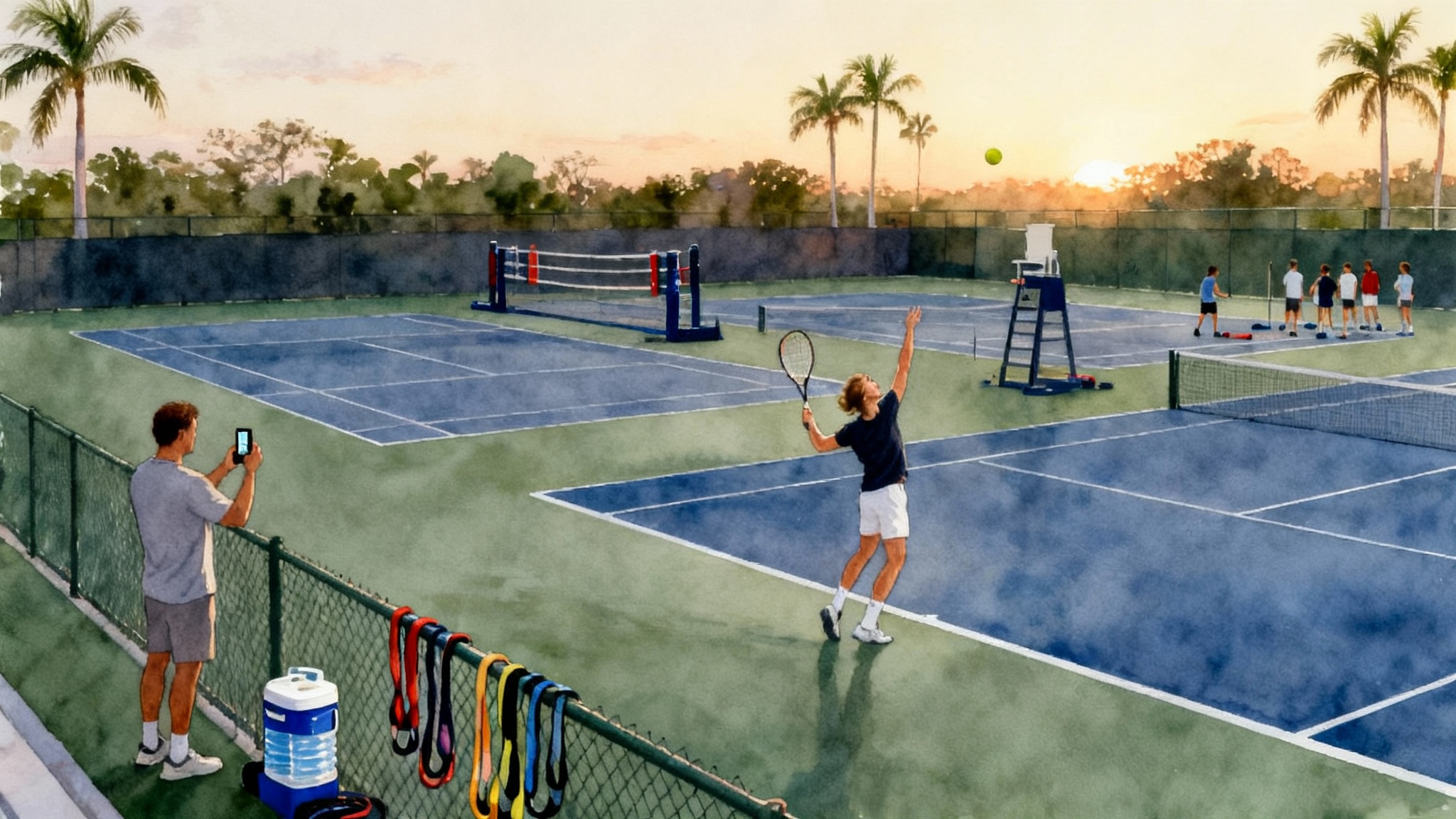
The Bradenton blueprint
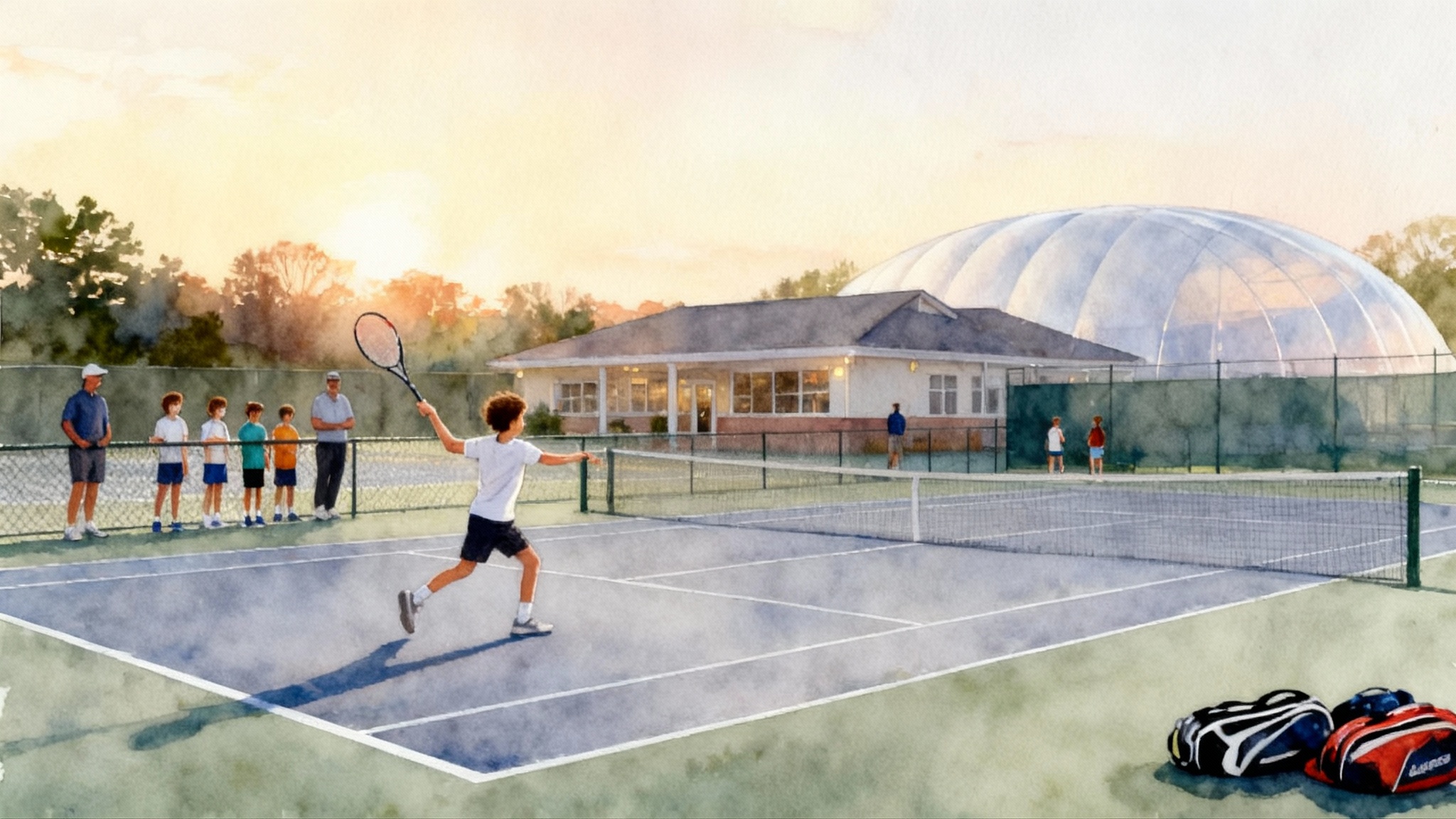
Sebastian Korda’s story is often summarized as tennis royalty meets modern high performance. That is only half the truth. The fuller picture is a young player raised in Bradenton, Florida, who learned to leverage a big academy’s resources without losing the intimacy of a tight coaching circle. After winning the 2018 junior Australian Open, Korda used IMG Academy as his daily base, then built patiently until he became a regular presence deep in tour events, as his ATP player profile reflects. The leap was not accidental. It came from a repeatable system that families can adapt.
For broader context on academy-to-pro pathways, compare with how JTCC built Frances Tiafoe and Nadal Academy fueled Ruud’s rise.
Below is the pathway that mattered most: structured day plans, biomechanics tied to fitness, regular pro sparring, real academic flexibility, and a set of pivotal choices that sped the jump from top junior to credible ATP contender.
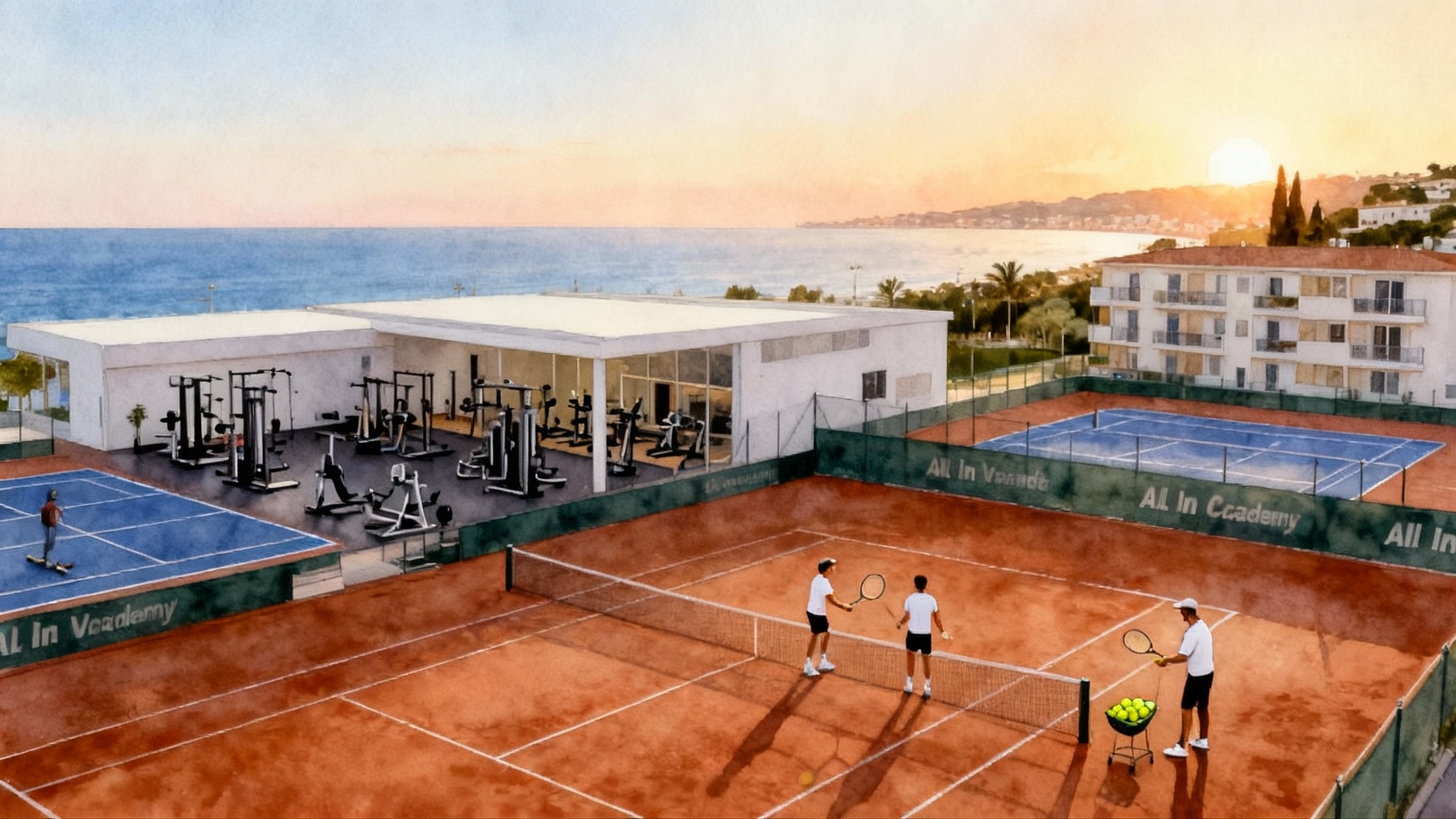
What a good day looked like at IMG
Korda’s Bradenton routine worked because every block of the day had a purpose and a metric.
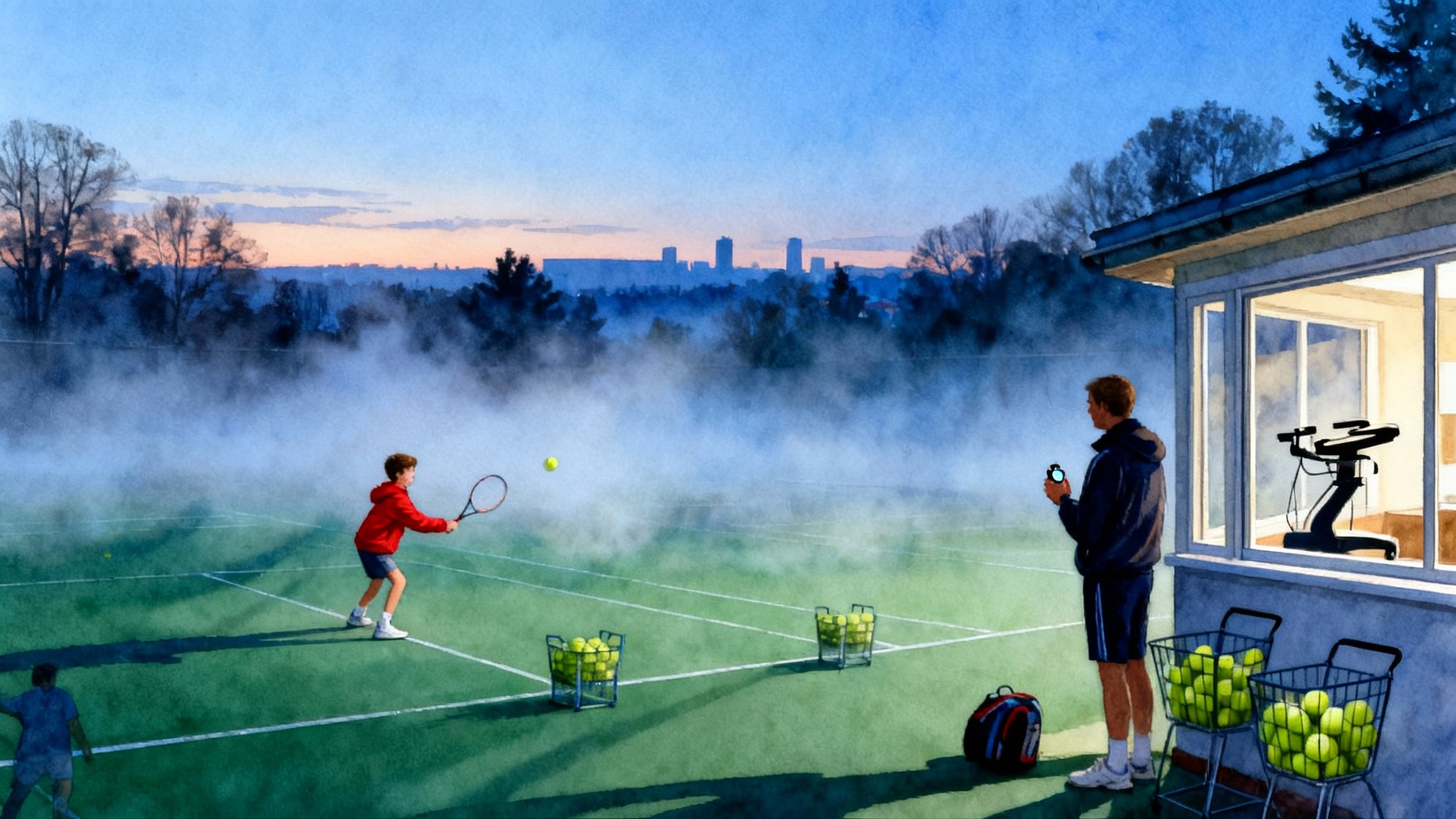
- Early activation, not punishment: light mobility, band work, low intensity footwork, and a short feel session with 10 to 15 minutes of rhythm hitting. The goal was to wake up the nervous system, not chase fatigue.
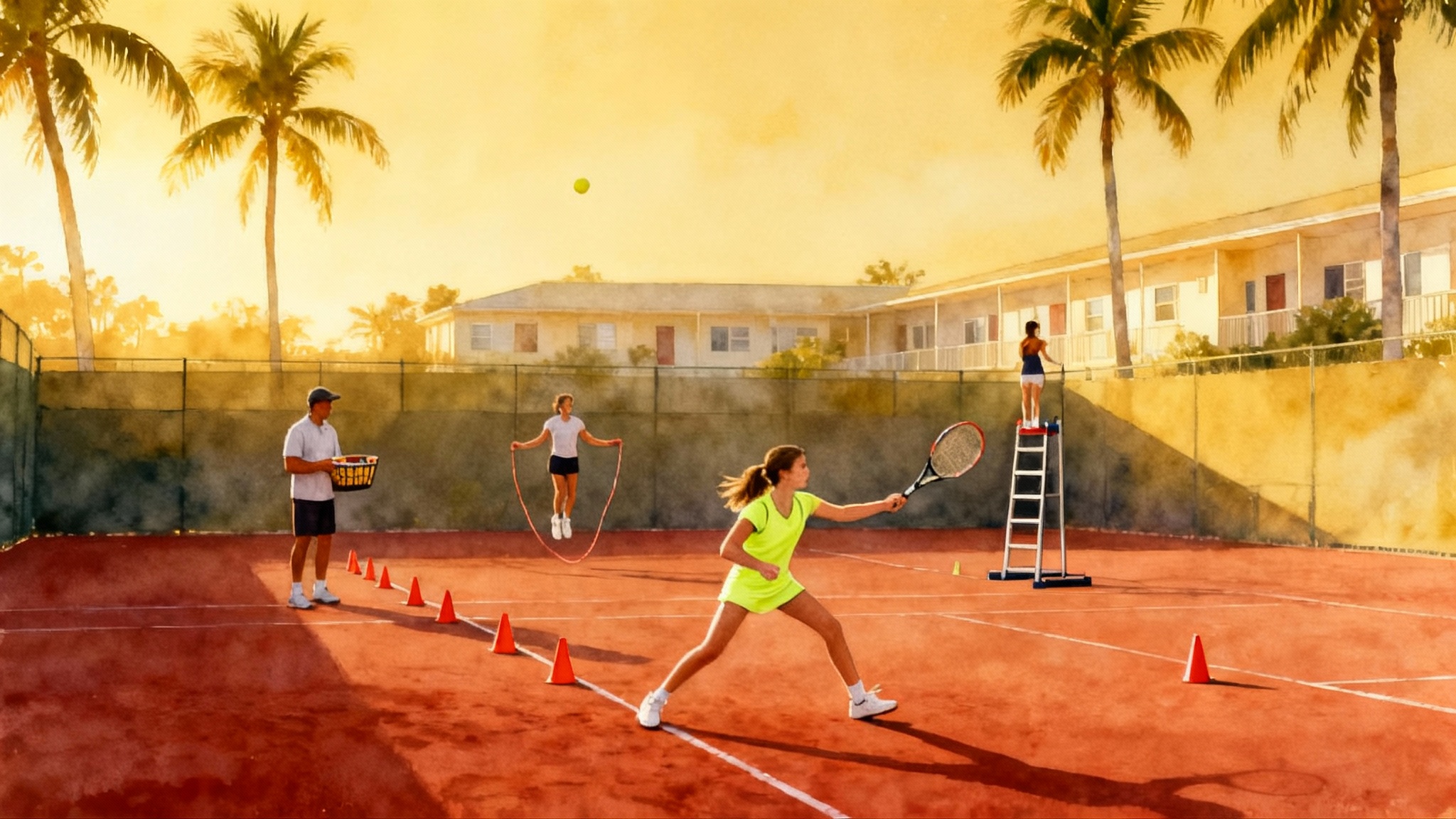
- Technical court block with a theme: one day the serve platform and first step out of the landing, another day backhand line to line with pattern finishes at the net. Each drill had a constraint, such as targets or a serve plus one script.
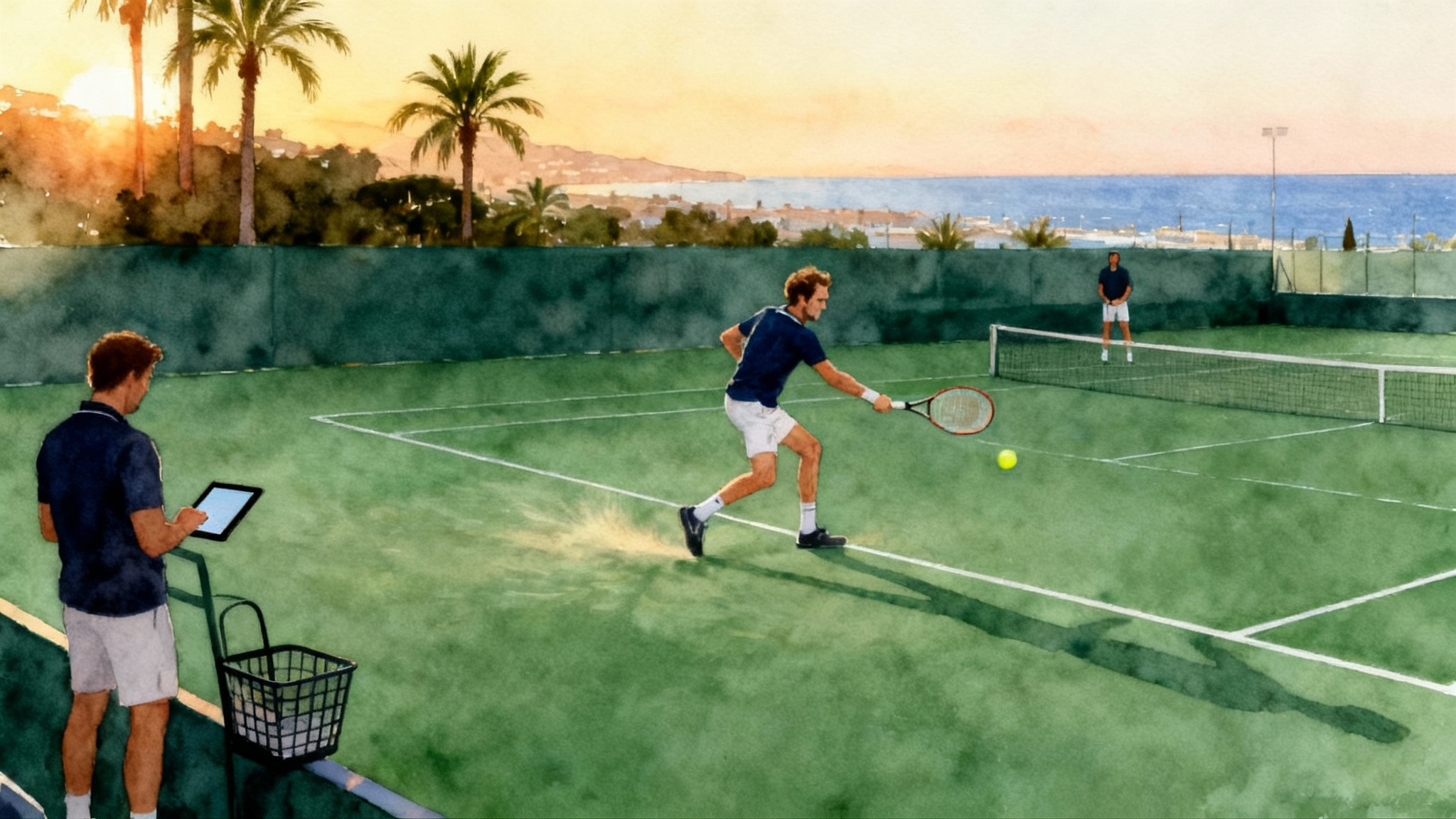
- Video, then micro-adjustments: short clips captured on a phone or a high speed camera, quick frame-by-frame checks of contact height, hip-shoulder separation, or spacing on the wide backhand. Corrections were tested immediately.
- Strength and power matched to the technical theme: if the serve was the morning focus, the gym work emphasized vertical power, lead leg stability, and deceleration. If the day focused on movement, the work emphasized split step timing, lateral acceleration, and return recoil.
- Pro or college sparring in the afternoon: a single set with a player who hit a heavier ball or attacked earlier in the rally. The purpose was to test patterns under speed and discomfort.
- Recovery that actually happened: cold plunge or contrast showers, a short walk, a brief mobility circuit, and hydration benchmarks. The rule was to leave the building recovered, not planning to recover later.
- School without friction: the academic team adjusted class blocks around training. Work was posted early, tests were scheduled to avoid peak load weeks, and teachers were reachable on video during travel.
The detail that often gets missed is how the on-court and off-court blocks mirrored each other. When the morning emphasized serve rhythm, the gym shifted toward tendon capacity and landing control. When the morning emphasized return quality, the afternoon sparring included return games against a first serve a few miles per hour faster than Korda’s norm. This link created transfer. Without transfer, hours stack up with little return.
Biomechanics that travel
Korda’s technique looks simple on television because the system removed clutter. Two examples illustrate how biomechanics and fitness integration worked together.
- Space before speed: in backhand crosscourt exchanges, the priority was contact space rather than racket speed. Coaches cued hip-to-shoulder alignment and the quiet head at contact, then layered speed only after spacing held for a set number of balls. In the gym, that paired with anti-rotation holds and controlled eccentrics so the body could decelerate as well as accelerate.
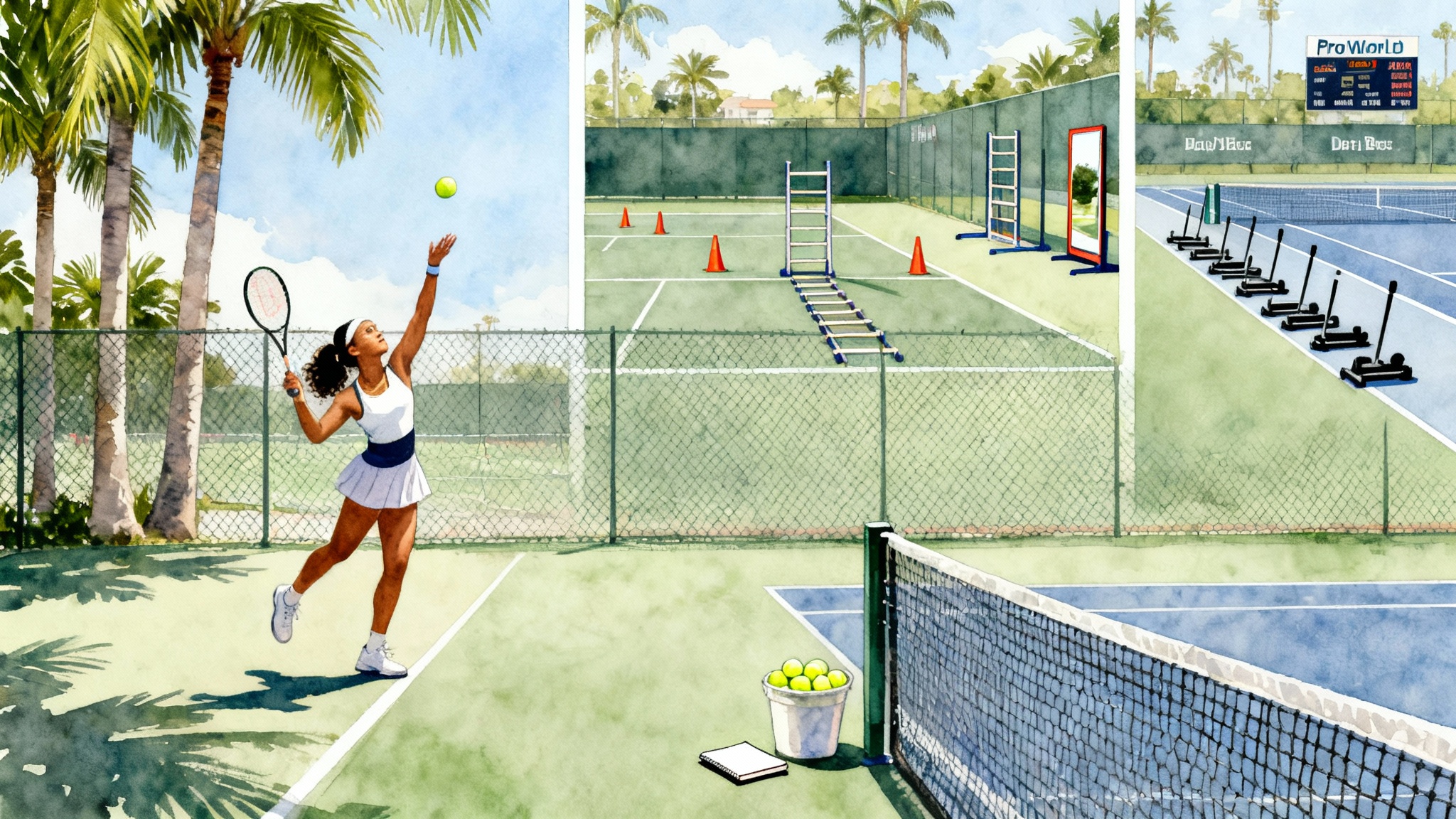
- Serve rhythm, not just power: the serve block focused on sequencing from the ground up. Tall athletes often try to create speed with the arm. The fix was a deeper sit with a smooth rise, allowing the shoulder to flow rather than yank. The gym paired this with ankle stiffness work, elastic medicine ball throws, and landing control to keep the shoulder fresh.
This is how a clean ball striker turns into a reliable tour-level competitor. The cues were simple, and the work behind the cues was specific.
Sparring that raises the bar
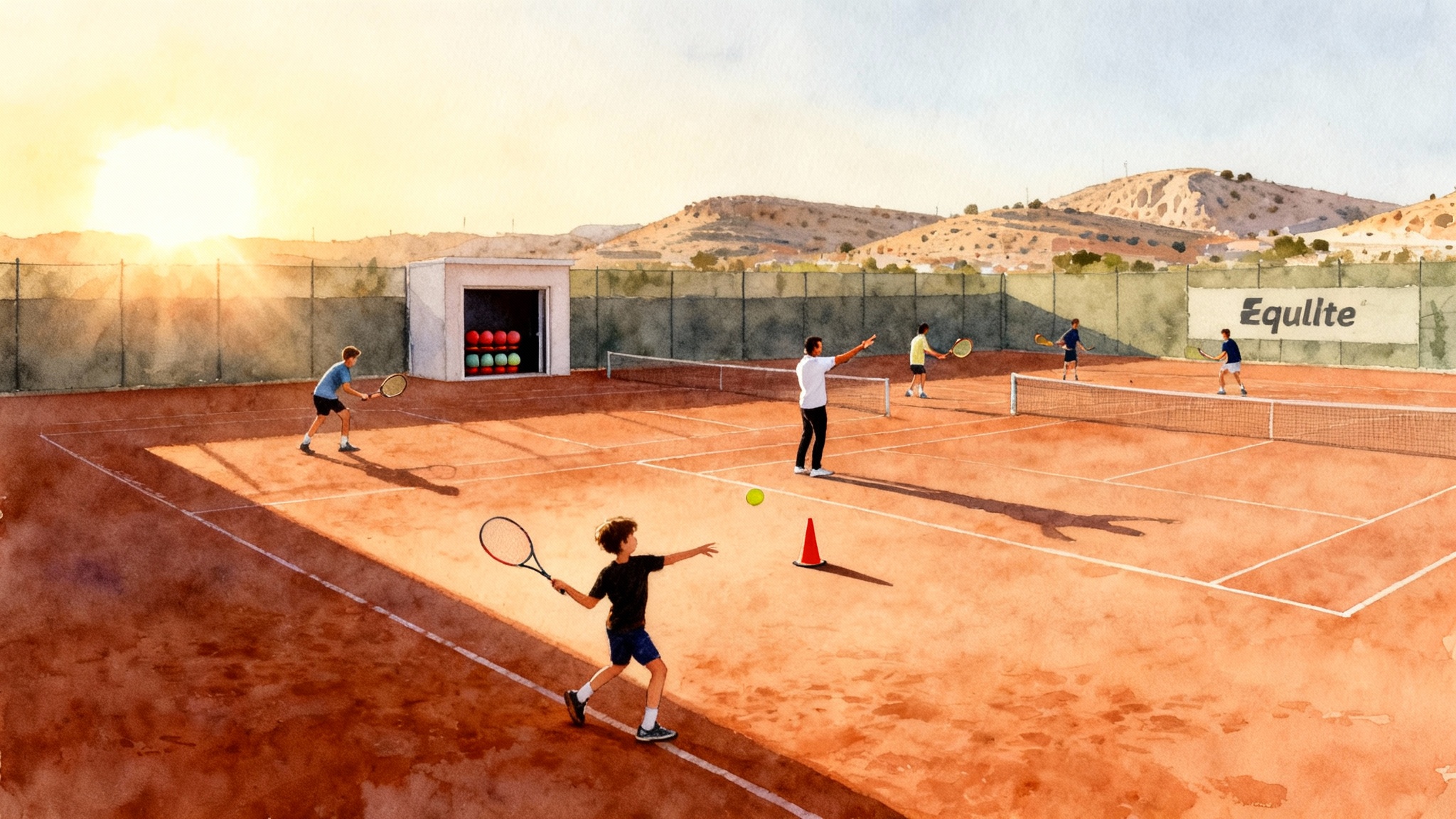
Bradenton is a magnet for tour players during off weeks. IMG coaches used that to expose Korda to speed, weight of shot, and decision pressure that juniors rarely see. Sparring was treated like a lab. There was a pre-set theme, a constrained game, and a debrief that turned outcomes into action.
- Pre-set theme: for example, neutral backhand depth against a bigger hitter. Korda had to land a threshold number of balls beyond the service line before changing direction.
- Constrained game: first to four points, serve starts in the body, no free points for aces, and the receiver initiates with depth.
- Debrief: one or two metrics that mattered for the next practice, such as percentage of deep landings and the success of the backhand change-up.
Sparring was never just a status marker. It was a learning accelerator.
School that fits the schedule
High performance fails when academics turn into friction. IMG’s structure made school part of the plan rather than an obstacle. Class blocks shifted around practice loads, teachers coordinated assignments for travel, and test windows moved away from competition peaks. For families, the lesson is simple. Put academics into the weekly training map. That clarity reduces stress and keeps players from pretending that school will somehow fit in later. For a smaller Florida option with a similar academics-first mindset, see Gomez Tennis Academy in Naples.
For more detail on how the tennis program’s training and support are organized, the IMG Academy tennis program outlines core services, from performance coaching to education staff.
The pivotal choices that sped the jump
1. Challenger to ATP, with purpose
After the 2018 junior milestone, the temptation would have been a rush into every main draw opportunity. Instead, Korda’s team targeted Challengers where conditions matched his weapons, then picked ATP 250 weeks that fit the calendar and his body. The principle was simple: build ranking through runs, not cameos.
Practical scheduling moves included:
- Surface alignment: choosing indoor or medium-speed hard events to sharpen serve plus one patterns, then adding a clay swing for defensive reps and transition work.
- Timing: avoiding back-to-back weeks where travel crushed recovery. The calendar included a build week after two event weeks, even when points looked tempting.
- Entry strategy: using qualifying draws as earned high-intensity practice, not a downgrade. Qualies often offered top-100 ball striking without the noise of a stadium, which made pattern work more honest.
The outcome was momentum rather than volatility. Runs at the Challenger level fed confidence and match fitness. ATP 250 entries then felt normal, not like one-off exceptions.
2. Adding Agassi and Stepanek as mentors
Korda’s team brought in Andre Agassi and Radek Stepanek as advisors as he transitioned from junior success to the men’s tour. The fit made sense. Agassi sharpened return patterns and between-point clarity. Stepanek brought net instincts and an eye for disruptive choices inside rallies. Importantly, their roles stayed advisory. The day-to-day remained with Korda’s core coaches in Bradenton. That mix avoided a common trap, too many voices turning into constant tinkering.
Families can borrow the model. Add a high-end mentor when a specific bottleneck appears, such as return quality against top first serves or transition decisions off short balls. Define scope and cadence up front. A few immersive blocks and periodic check-ins are better than daily overlap that blurs accountability.
3. Injury management as strategy
A right wrist scare during his early ATP climb forced Korda to pause and rebuild. The decision to stop, rather than play through, protected long term speed and touch. The return plan started with strength and range benchmarks in the gym, then a graduated load on court. Serve volume came last. During that period, video work and tactical study continued, so he returned with fresh patterns, not just a healed wrist.
The lesson is broader. Families should agree on red line rules before injuries happen. For example, set a pain threshold that triggers evaluation, a number of consecutive days without progress that triggers a second opinion, and a return-to-play ladder with objective exit criteria at each step.
Turning principles into a family plan
Here is how to apply the Korda model if your player trains inside a large academy.
-
Design the day around one technical theme. Put it in writing before practice. If the theme is serve rhythm, the gym block focuses on landing control and elastic power, and the afternoon spar includes return games to pressure the second serve.
-
Track two metrics, not twelve. For a two week stretch, choose one contact metric, such as forehand depth beyond the service line, and one physical metric, such as average jump height on a countermovement test. Review them every Friday.
-
Schedule for runs. Pick a three event window that favors your player’s strength. If the goal is a ranking jump, favor tournaments where a deep run is plausible over prestige events that are likely one-and-done. Plan a build week after the window.
-
Use pro sparring as a lab, not a selfie moment. Write the theme on the whiteboard. Make the set short and specific. Capture ten balls on video that match the theme. Debrief for five minutes, then extract the next drill.
-
Keep the circle tight. One lead coach owns the plan. Specialists contribute in blocks. Mentors come in with a written brief: the bottleneck, the proposed intervention, and the handoff back to the lead coach.
-
Put academics on the calendar. If travel is coming, get assignments posted early. Block study time after recovery, not after dinner when focus is gone. Treat school as part of the athlete’s stress budget.
-
Build a simple injury protocol. Write down pain triggers, evaluation steps, and a return ladder that moves from isometrics to tempo hitting to full volume. Protect the serve shoulder and wrist with landing control and deceleration work before chasing serve speed.
What the personalized circle looks like inside a big academy
A large campus can drown a player in options. Define roles to keep clarity.
- Lead coach: sets the theme, chooses constraints, runs debriefs, owns the tournament calendar.
- Sparring coordinator: secures hitters who present the right problem, tracks set outcomes, manages the debrief library.
- Fitness and performance coach: builds strength and power to match the on-court theme, monitors readiness, adjusts loads around travel.
- Physio or athletic trainer: handles recovery, range checks, and load progressions, communicates red flags fast.
- Academic liaison: coordinates with teachers and sets study blocks, ensures tests do not land on peak load days.
- Mentor: reviews video and spends short blocks on high value skills, then hands back to the lead coach.
With roles set, the player walks into the facility knowing who decides what and how feedback flows.
Red flags and course corrections
- Too many cooks: if advice conflicts weekly, reduce the number of voices. Pick one lead coach and one mentor. Everyone else becomes a specialist on call.
- Prestige over progress: turning down a fit Challenger for a flashy main draw is a recipe for stalled ranking. Build points through runs.
- Endless technical tinkering: if the body cannot repeat the change under speed, it is not ready for competition. Return to constraints and patterning.
- Ignoring the third set: if practice never recreates end-of-match fatigue, expect tight losses. Use short sets with score pressure and time between points set to match tournament rules.
A simple 12 week blueprint inspired by the Korda path
Weeks 1 to 2, build block
- Technical theme: serve platform and first ball.
- Fitness theme: landing control, elastic power, and shoulder health.
- Sparring: sets that start with second serve only.
- School: push big assignments to the front of week 2.
Weeks 3 to 5, event window A
- Two events plus one travel week.
- Surface conditions matched to weapons, medium pace hard or indoor.
- Metrics: first serve percentage and first ball forehand depth. Review every Friday.
Week 6, rebuild and review
- Light volume, heavy on video and recovery.
- Mentor check-in if a specific bottleneck persists.
Weeks 7 to 9, event window B
- One Challenger with deep-run potential, then an ATP 250 with favorable entries.
- Sparring with a bigger hitter to stress return patterns.
Weeks 10 to 12, adapt and progress
- If the wrist or shoulder feels taxed, shift to movement and return themes for ten days.
- Add a clay week if transition skills need attention.
- Academic push before the next travel phase.
Conclusion
Korda’s rise from Bradenton shows how to scale without losing feel. The academy provided structure, sparring, and school support. The family and core coaches provided focus and restraint. Together they shaped a path from junior champion to a consistent threat on the big stage. For families weighing a big academy, the playbook is clear. Design each day around a single theme, pair biomechanics with fitness, treat sparring as a learning lab, plan calendars for runs, and keep the circle tight. Do those things, and a large program becomes an amplifier rather than a distraction, just as it did for Sebastian Korda in Bradenton.
For an overview of IMG services, review the IMG Academy tennis program. To see another Florida pathway that blends family feel with structure, visit Gomez Tennis Academy in Naples.