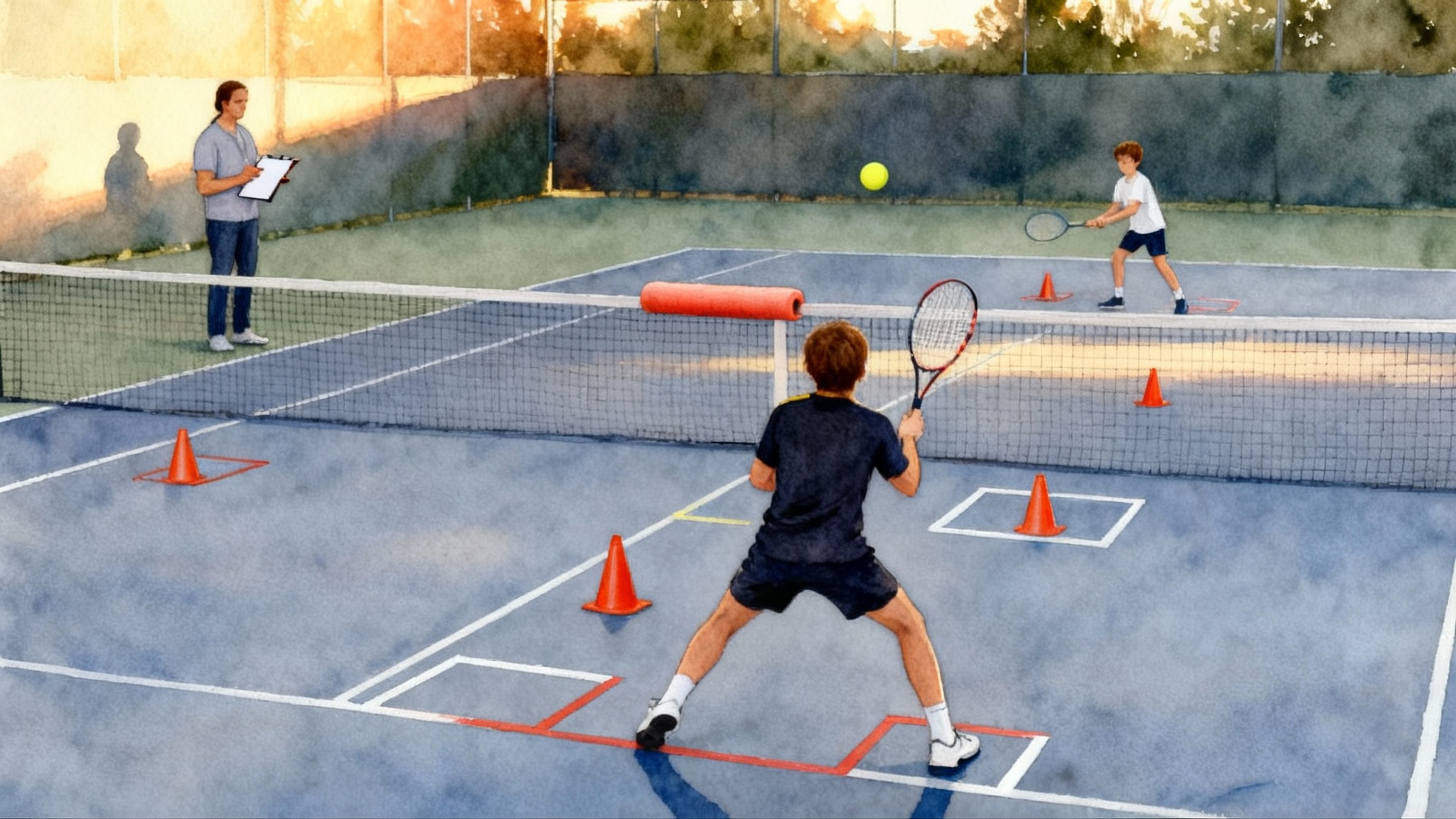
Tennis Match Charting: 8 Stats for Juniors and Adults
A practical, step-by-step guide to film, chart, and interpret any tennis match with one printable scoresheet and a phone. Learn the eight stats that matter, age-specific priorities, and drills you can start at your next session.
 Tommy
Tommy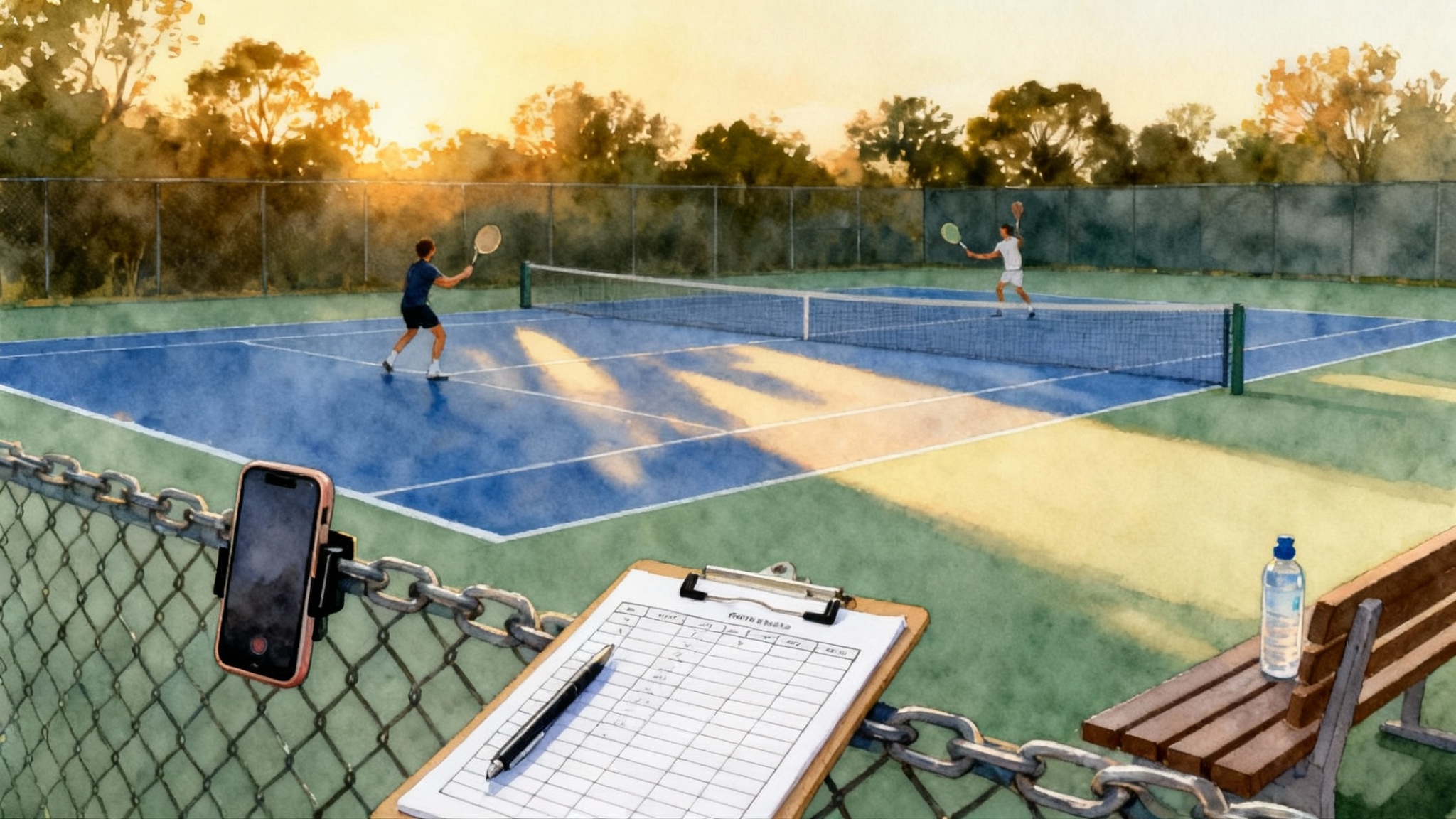
Why charting your matches changes everything
Memory is fuzzy after a tight tiebreak. Video and a simple chart are not. Charting turns a messy match into clear numbers you can train against. You do not need expensive software or a staff of analysts. With a phone, a fence clip or tripod, and a single page to tally key moments, you can discover where points are truly won and lost.
This guide walks you through the entire process. You will learn how to film, how to mark a point in real time with one page, which eight stats matter most, and how to turn those numbers into targeted practice the very next session. Families will find a clear job for a parent or teammate holding the clipboard. Adult players can self‑chart and still stay present in the match.
If you want a ready‑to‑print form, grab our printable one‑page scoresheet. It mirrors everything you will see below.
Your one‑page kit: what you need
- Phone with at least 5 gigabytes free storage and a charger
- Fence clip or a small tripod with a phone mount
- One‑page scoresheet on a clipboard and a pen
- A cheap kitchen timer or your phone timer
Set the phone behind the baseline near the center, slightly above head height. If your court has a back fence, clip the phone around the middle of the fence so you can see both baselines. Use the phone’s widest lens if available. Record at 1080p and 30 frames per second to save space and keep things smooth.
Pro move: start a new recording for each set. It makes later review faster and keeps file sizes manageable.
Quick definitions you will use on court
- First serve percentage: the share of your first serves that land in. If you attempt 40 first serves and 24 land in, your first serve percentage is 24 divided by 40, which equals 60 percent.
- Rally length: the number of shots that cross the net in a point, starting with the serve as shot one.
- Unforced error: a mistake on a ball you could reasonably make without extraordinary difficulty. Think neutral or comfortable situations where the miss is mainly on you.
- Forced error: a mistake caused by pressure from your opponent. The ball is fast, deep, wide, or high, and it demands more than a routine swing.
When in doubt between unforced and forced, pick forced only when the ball quality clearly pressured the miss. Consistency in your choices matters more than perfection.
How to film and chart at the same time
- Start the recording before the warm‑up ends. Say the date and names out loud to label the video.
- Place the clipboard in the bench area or have a helper hold it. If you are solo, mark your tallies during ball changeovers and after games.
- Use one line per game on the scoresheet. At the end of each point, add a single mark in the relevant box. Do not write sentences. Tallies only.
- Between sets, take a 30 to 60 second review to circle anything you want to notice later.
Everything on the scoresheet fits into eight stats. The beauty of tallies is speed. You can keep rhythm with the match and still capture what matters.
The eight stats to track on one page
1) First serve percentage
What you record: total first serves attempted and total first serves made.
Why it matters: a made first serve usually gives you a slightly more neutral or offensive start to the point. You do not need to serve faster to lift this number. Many players gain five to ten percentage points by picking a simple target and trusting their routine. For technique ideas, see our Serve Development 2026 guide.
How to tally: draw two small boxes in each service game labeled FS Attempt and FS In. Add a mark for each first serve, and a second mark in the FS In box when it lands.
Make it useful: set a personal band for success, for example 55 to 65 percent. That is high enough to apply pressure, yet it does not require risky swings.
2) First serve points won
What you record: of the points where your first serve landed in, how many did you win.
Why it matters: this tells you whether your made first serves are creating advantage, even if they are not fast. Placement and depth often decide this number.
How to tally: on the same row as FS In, add a small box labeled FS Points Won. Mark it each time you win a point that started with a made first serve.
3) Second serve points won
What you record: points won when you had to hit a second serve.
Why it matters: many matches swing on neutralizing second serve points. You can lift this number by aiming to higher‑percentage locations and by planning the first two balls after the serve. Improve the reply phase with our Return of Serve 2026 blueprint.
How to tally: box labeled SS Points Won on each service game line. Mark it when you win a point that began with a second serve.
4) Rally length bands
What you record: the result of points in three bands. Band A is 0 to 4 shots. Band B is 5 to 8 shots. Band C is 9 or more shots.
Why it matters: most junior and adult points finish quickly. If you only train long rallies but lose most quick ones, your practice does not match your matches.
How to tally: three boxes per game labeled 0–4, 5–8, 9+. After each point, place a win or loss tally in the band that matches the number of shots.
5) Unforced versus forced errors by wing
What you record: your unforced errors on forehand and backhand, and your forced errors on each wing.
Why it matters: not all errors are equal. A high count of unforced errors on one wing suggests a decision or spacing problem. A high count of forced errors can be fine if you are consistently pushed into a defensive corner.
How to tally: four boxes per set labeled FH UE, BH UE, FH FE, BH FE. Add a tally at the end of each point when you miss.
6) Depth success rate
What you record: how often your balls land deep enough to push the opponent back. Mark a success when your ball lands past the opponent’s service line with enough height to bounce near or inside the last three feet before the baseline.
Why it matters: depth reduces your opponent’s options and buys time. It often turns a neutral rally into your advantage without extra power.
How to tally: during rallies, your helper marks a small check in a box labeled Deep Ball when your shot lands past the service line and is not a short sitter.
7) Net points won
What you record: your win and loss tallies when you reach the net. A “net point” is any point where you played a volley or overhead.
Why it matters: even two or three successful forays per set can swing momentum. Net pressure can force short balls or errors from the baseline.
How to tally: boxes labeled Net Won and Net Lost per set.
8) Break points conversion and saves
What you record: when returning, how many break points you converted. When serving, how many break points you saved.
Why it matters: pressure points are not a different sport, but they reveal pacing and commitment to your plan.
How to tally: boxes labeled BP Converted and BP Saved per set.
Age‑specific priorities
For younger juniors, about 10 to 13
- Focus on rally length bands, unforced errors by wing, and depth success. Keep it simple and positive. The goal is to learn what a neutral ball looks like and to reduce free points.
- Secondary stats: net points won and first serve percentage. The idea is to start points and finish short balls, not to chase speed.
For older juniors, about 14 to 18
- Elevate first serve percentage, first serve points won, and break points. Competitive matches at this stage reward reliable patterns under pressure.
- Keep tracking unforced versus forced errors by wing. It often pinpoints the training theme for the week.
For adult players at the club level
- Focus on rally length bands, unforced errors by wing, and depth success rate. These reflect spacing, shot selection, and patience.
- Add first serve percentage and net points won to create an easy two‑part plan. Start points with a made first serve, then look to end at the net when the ball is short. For the movement piece, tune your reactions with our split‑step timing footwork fix.
How to fill the scoresheet during a match
You have two rhythms. The fast rhythm is a single tally after each point. The slow rhythm is a 10 second pause at the end of each game to scan for any missed marks.
Example of a single point:
- Player A serves first serve in. Tally in FS Attempt and FS In. Rally reaches three shots. Player A hits a deep ball past the service line that pins Player B, then Player B misses a backhand. Mark Deep Ball. Since the rally length is three, place a win tally in the 0–4 box.
Example of a long game:
- Six points, two break points saved by the server, one net approach by the returner that ends in a losing volley. At the changeover, the helper checks that the number of tallies equals six, circles two tallies in BP Saved, and records one Net Lost.
This is all you need for a clean dataset that tells a clear story.
Turn numbers into training in one session
Below is a direct menu from stat to drill. No deep technical changes here. These are simple, measurable tasks to run at your next practice.
-
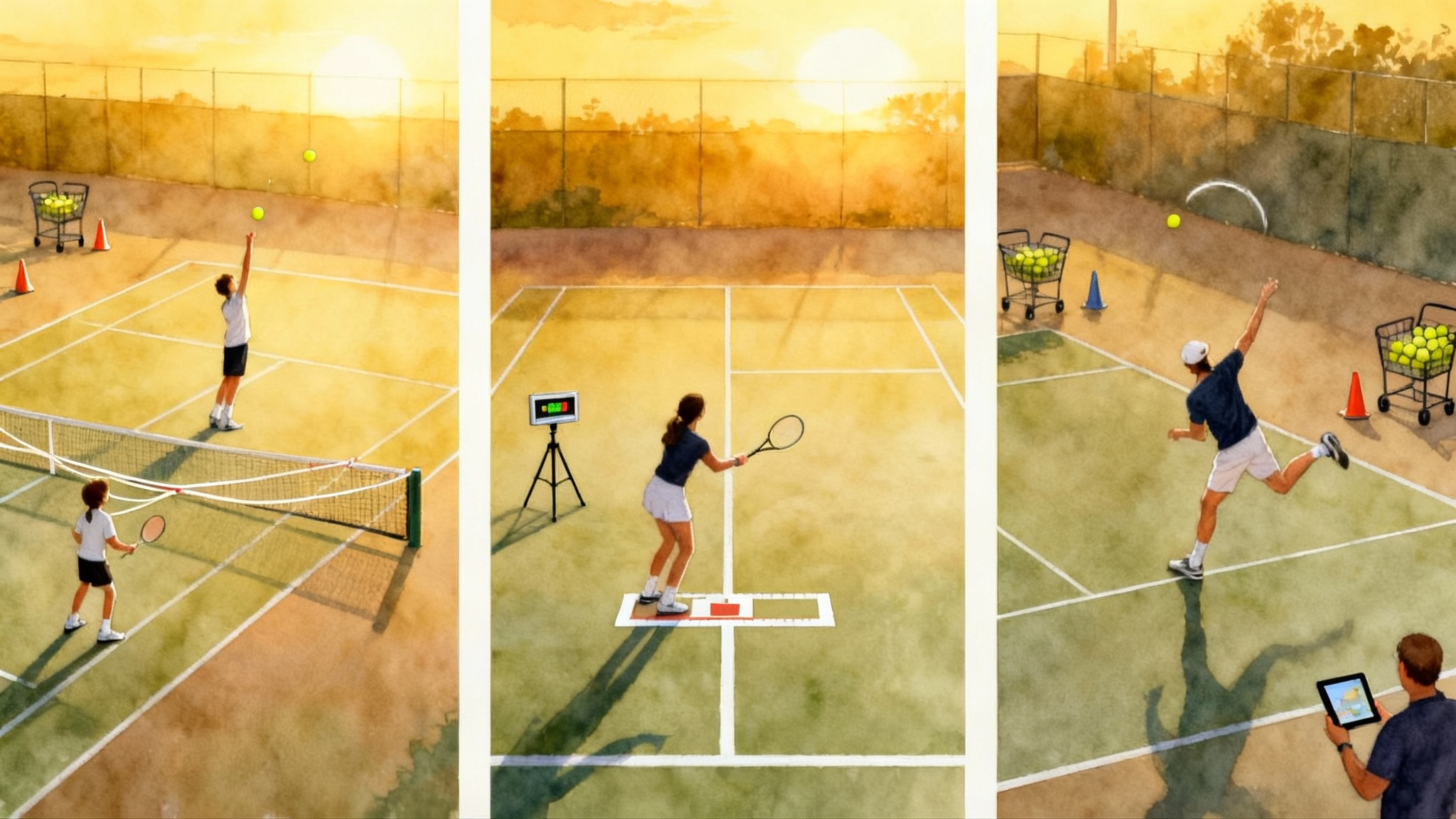
If first serve percentage is below your band, then train a target ladder. Place two cones in the deuce service box and two in the ad box. Hit 40 first serves aiming to split the cones. Count makes. Stop when you reach your band two times in a row. Keep the same rhythm you use in matches, including breath and routine.
-
If first serve points won is low despite a decent first serve percentage, then train plus‑two patterns. Start each rally with a cooperative feed that imitates a neutral start. Play first to three ball control: ball one is a neutral crosscourt, ball two is directed to a safer target, ball three is an aggressive but high‑percentage target. Track point outcomes for 15 minutes.
-
If second serve points won is low, then train second serve plus‑one safety. Begin rallies with a coach or partner sending a medium deep ball to the middle. Your first ball after that feed must go heavy and deep to the middle third. Add a rule that you cannot miss long on ball one. Play to seven points per side and tally wins.
-
If you are losing most 0 to 4 shot points, then train the first two neutral balls. Start with a partner feed to the middle. Your task is two rally balls crosscourt landing past the service line. Add a bonus point for a third ball to the open court. First to 11 wins.
-
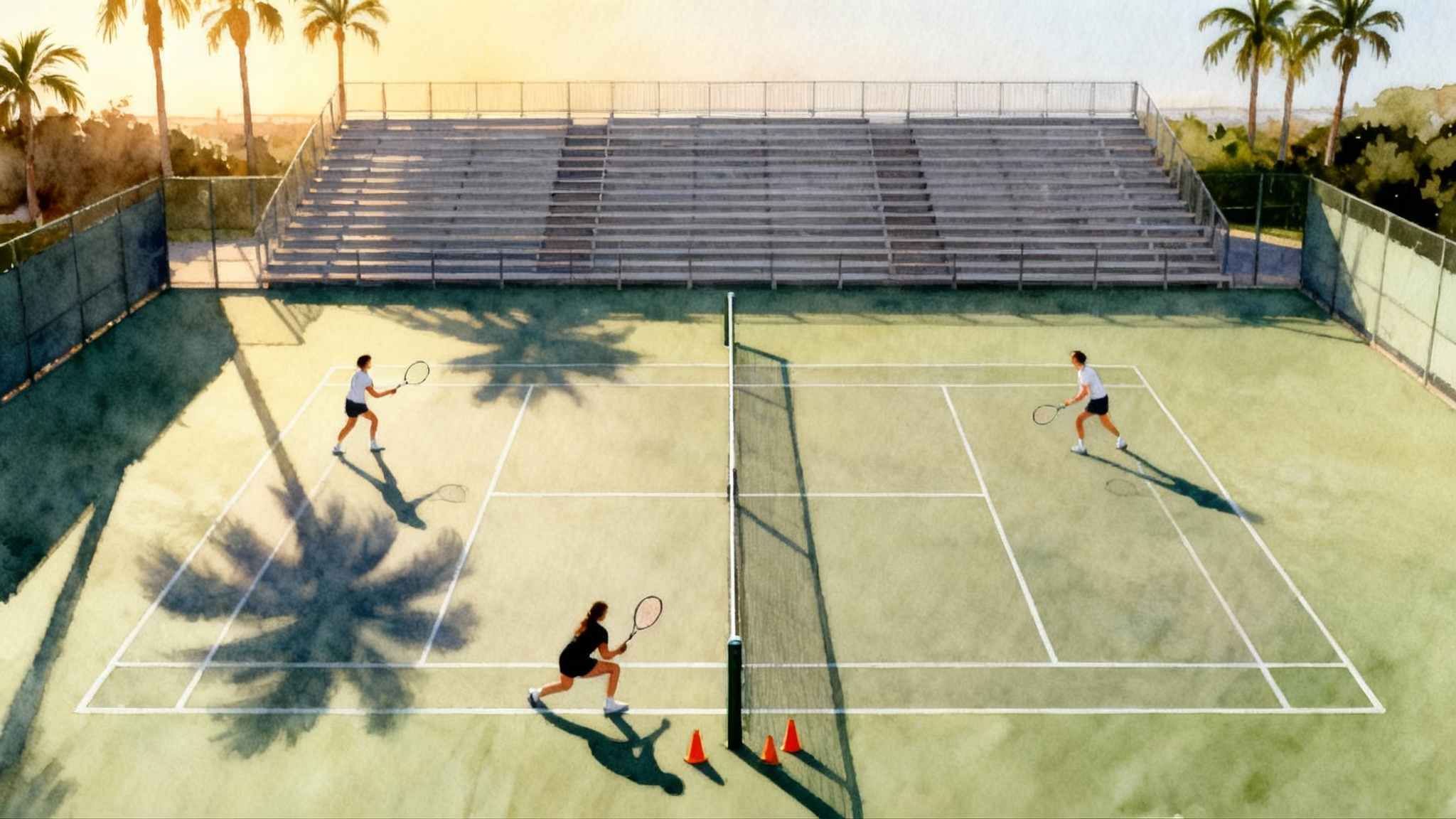
If your unforced errors on one wing outweigh the other, then train spacing with a cone corridor. Place two sidelines inside the singles line to create a corridor one racket length away from the real sideline. Rally crosscourt inside the corridor. If you hit outside the corridor or into the net, the other player gets a point. Play first to 15, then switch sides.
-
If your depth success rate is under 50 percent, then train depth with a service line bonus game. Rally crosscourt and only shots that land past the opponent’s service line can win the point. If your ball lands short, the rally continues but no point is awarded even if the opponent misses on the next swing. First to 10.
-
If net points won is low, then train the approach decision. Feed short neutral balls to the middle. Approach only when your ball lands past the service line and bounces near the last three feet. If you approach on a short ball, pause and reset. Keep a tally of correct approach decisions rather than winners.
-
If break points are not converting, then train scoreboard pressure. Play games that start at 30 all. The server announces the score before each point. The returner gets one timeout per game to reset the plan. After each game, each player states one sentence about court position or target choice that helped.
Each drill is short and measurable. Keep the same language from your chart in practice. For example, say out loud “0 to 4 band” or “Deep Ball” when you hit the target. This wires match language into your practice brain.
After the match: a 15‑minute review plan
You do not need to rewatch the entire match. Use the video to spot‑check your tallies and to find two or three key examples.
- Scan set by set. Circle the band where you won the most points and the band where you lost the most. Clip one example video from each band.
- Note the wing with the most unforced errors. Find one rally where spacing cost you the point and one rally where you solved spacing well.
- Check first serve percentage against your band. If it dipped in only one set, ask what changed in pacing between points.
Write a three‑line summary on the bottom of your scoresheet.
- One strength I will keep using is: ______
- One pattern I will train is: ______
- One scoreboard moment I will rehearse is: ______
These three lines become your plan for the week.
How parents can help without coaching every point
- Be the timekeeper and tally partner. Your job is the pen, not the pep talk.
- Confirm the score and the number of tallies at each changeover. Quietly correct the sheet, not the player.
- Ask two questions after the match. What band did you win most in, and what band did you lose most in. Then ask what you will train.
This keeps the environment calm and focused while still making the match useful.
Bring your charts to an academy session
A good session starts with a clear picture of your match patterns. Bring your scoresheet and two short clips to your coach. Say what you want to train using the same words as the sheet. For example: “I won only 32 percent of points in the 0 to 4 band. Can we build a short rally plan that pushes depth to the middle first.”
If you book a focused slot, our team can help you translate the page into drills in real time. See our match analysis session to understand how we structure that hour.
Common pitfalls and how to avoid them
- Overcounting forced errors. If the ball was neutral, call it unforced. You will get better feedback from a stricter standard.
- Trying to chart every detail. Resist the urge to add more boxes. Eight stats are enough to guide a week of training.
- Chasing perfect numbers. Track progress inside your own bands. For example, raising first serve percentage from 52 to 58 percent is a real win.
- Filming too low or too close. The best angle shows both baselines with space behind the far player. If you see only one service box, raise the camera or move back.
A sample page, end to end
Imagine a two‑set match where your tallies read like this.
- First serve percentage: 60 percent, with first serve points won at 63 percent
- Second serve points won: 52 percent
- Rally length bands: 0 to 4 won 54 percent, 5 to 8 won 48 percent, 9 plus won 60 percent
- Unforced errors: 9 forehand, 6 backhand. Forced errors: 7 forehand, 11 backhand
- Depth success rate: 46 percent
- Net points won: 8 wins, 6 losses
- Break points: converted 3 of 7, saved 4 of 9
Your plan for the week writes itself. You will train two 15 minute blocks on early rally depth, one 15 minute block on backhand spacing, and a 10 minute scoreboard pressure game that starts at 30 all. Next weekend you will try to lift 0 to 4 band wins to 57 percent and depth success to above 50 percent.
Final checklist before you press record
- Battery at 70 percent or more, storage space clear
- Phone high on the back fence with the widest lens
- One page printed and pen ready
- Decide your two focus stats for this match
- Agree on tally roles if you have a helper
Hit record, trust the page, and play. Charting takes a match that would fade by Monday and turns it into a map for your next week. It is simple, repeatable, and tailored to your level. The numbers do not judge. They point. Use them to choose your next practice with purpose and to enjoy the clarity that comes from seeing your game as it really plays.