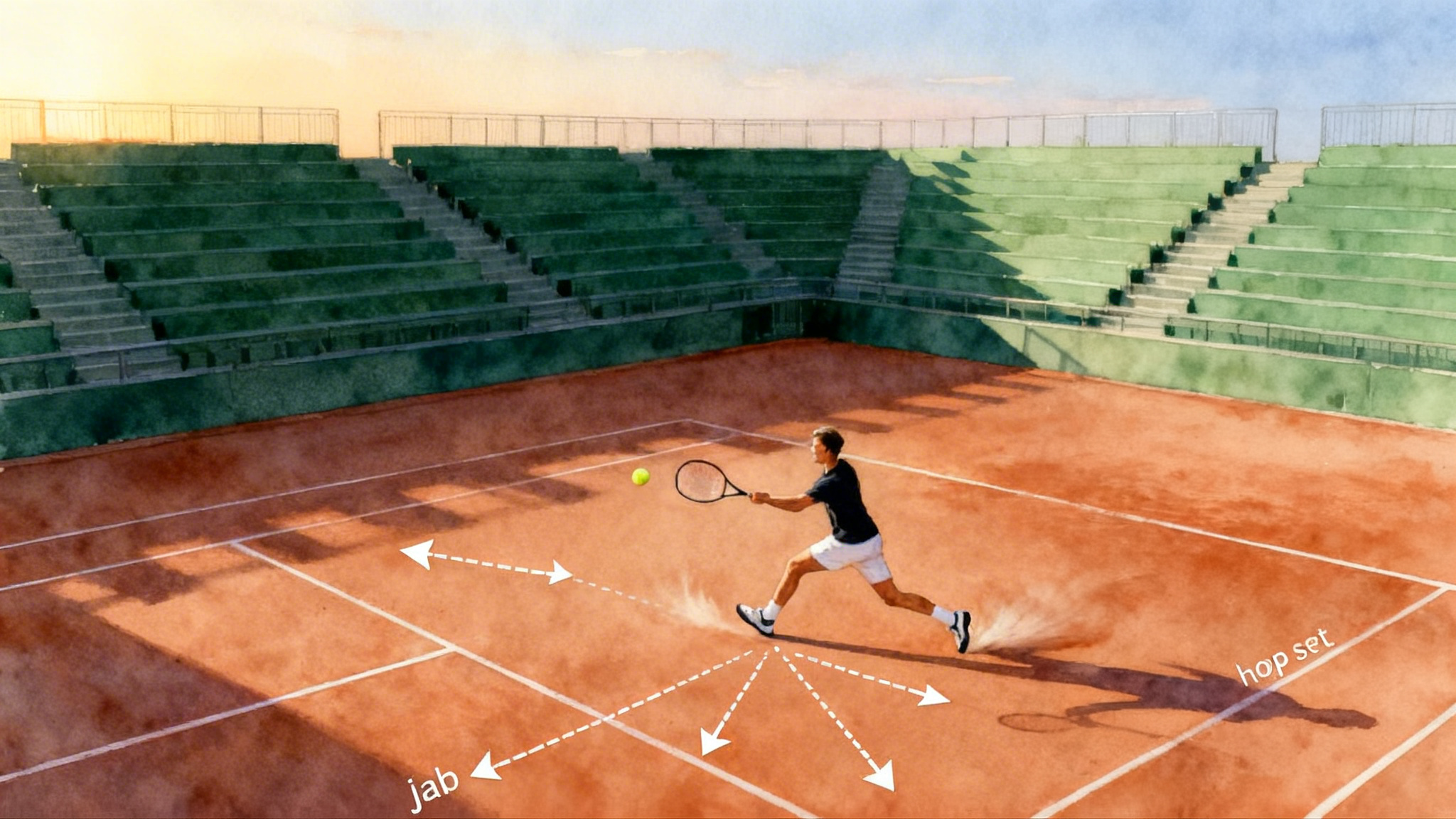
Indoor-to-Outdoor Spring Tennis 2026: Your Wind and Sun Playbook
 Tommy
Tommy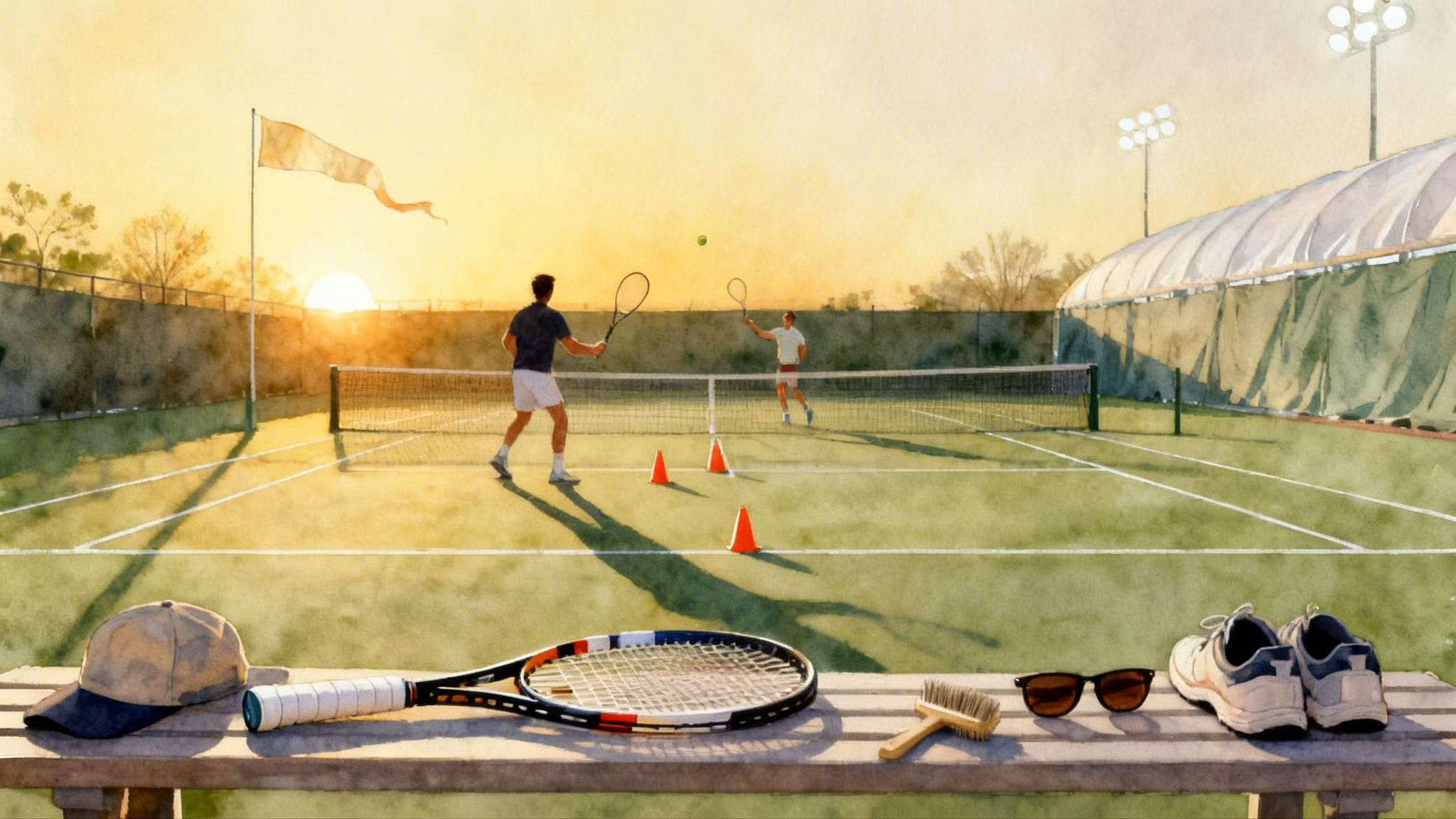
Why the indoor-to-outdoor jump feels harder than it looks
Indoors, the ball does what you tell it to do. The air is still, the light is even, and the court is uniform. Outdoors in spring, the ball is in a negotiation with wind, sun, and a less predictable surface. That shift can feel like a skill drop, even when your strokes are sound. The good news is that you can plan for the variables. Think of indoor tennis as a laboratory and outdoor tennis as a field test. The laboratory gives you clean mechanics. The field test asks if your mechanics travel.
What follows is a practical playbook for juniors, parents, and adults who want a smooth, injury‑smart transition. You will learn wind‑proof patterns built on net clearance and spin, sun‑aware serving and returning, footwork and ankle micro‑drills that harden you against uneven courts, and small gear tweaks that save your strings and shoes. You also get a 10‑day practice microcycle and a parent coordination checklist to make the first outdoor weeks feel organized instead of chaotic.
Wind: patterns that hold up when the ball drifts
Wind does not only push the ball off course. It also exaggerates spin, shrinks or stretches your contact window, and punishes indecision. The answer is not to hit harder. The answer is to raise margins, use spin as ballast, and adopt patterns that do not depend on threading needles.
- Raise net clearance by one to two feet: If your indoor rally ball clears the tape by two feet, outdoors make it three or even four. Topspin helps the ball dip back inside the baseline.
- Aim three feet inside lines: Treat the lines as decoration in wind. Build habits that survive gusts by picking larger targets and trusting depth over hairline precision.
- Favor crosscourt exchanges: Crosscourt gives you more net to work with and a longer court. In a headwind, crosscourt also lets you add height and spin without floating the ball long.
- Play your forehand to the windward corner: If the wind is blowing left to right, your forehand to the deuce corner will ride the wind and land deeper. Your opponent’s backhand going into the wind will check up short, which is defendable.
- Let the ball drop a fraction lower in a tailwind: A tailwind elongates bounce and flattens your shots. Catching the ball a little lower increases your spin window.
- In a headwind, drive up on the ball: Think of lifting the ball over a small hill. Use a higher finish and more vertical racket path. The headwind will provide the brake.
Two situational patterns to train this week:
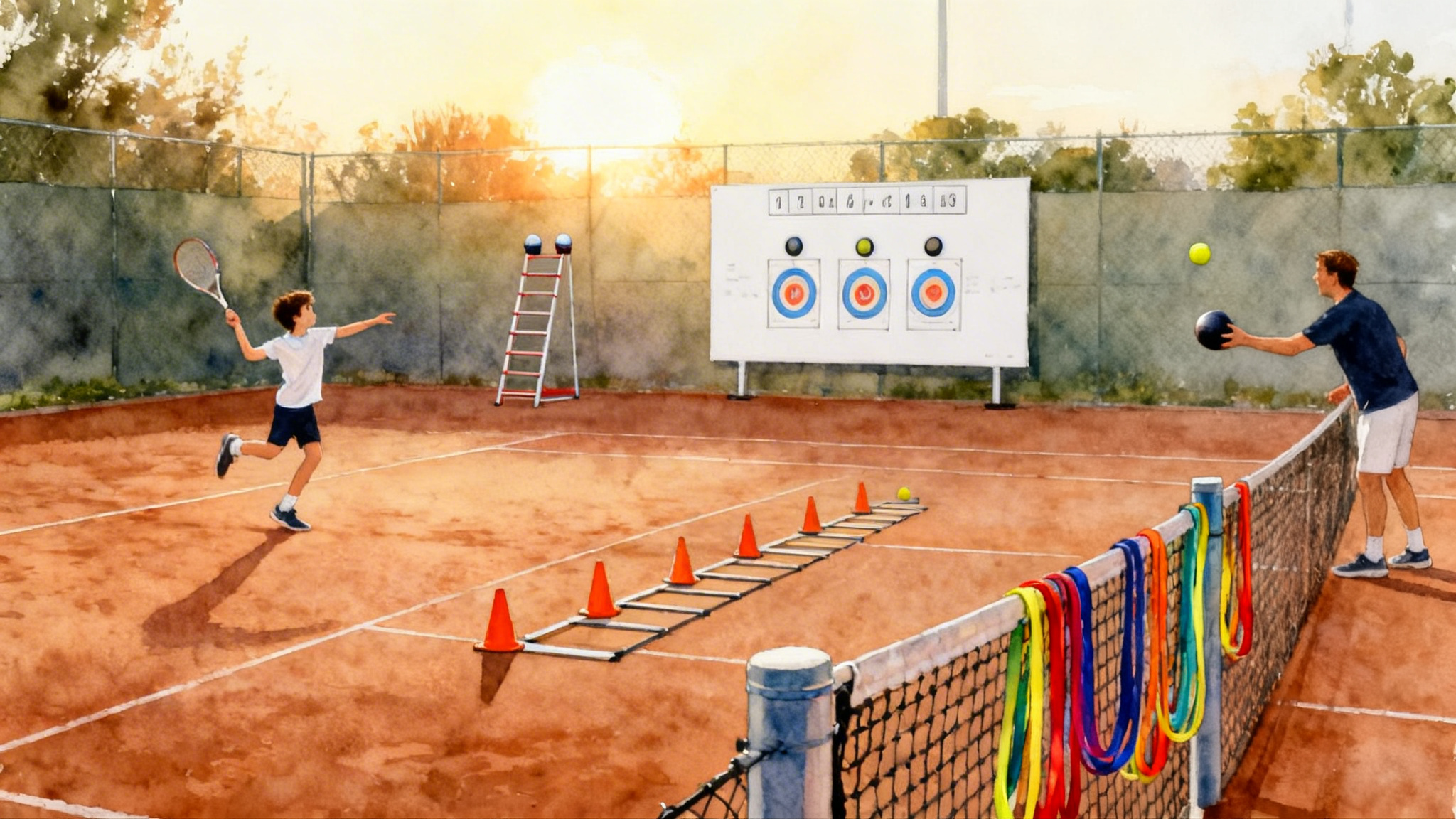
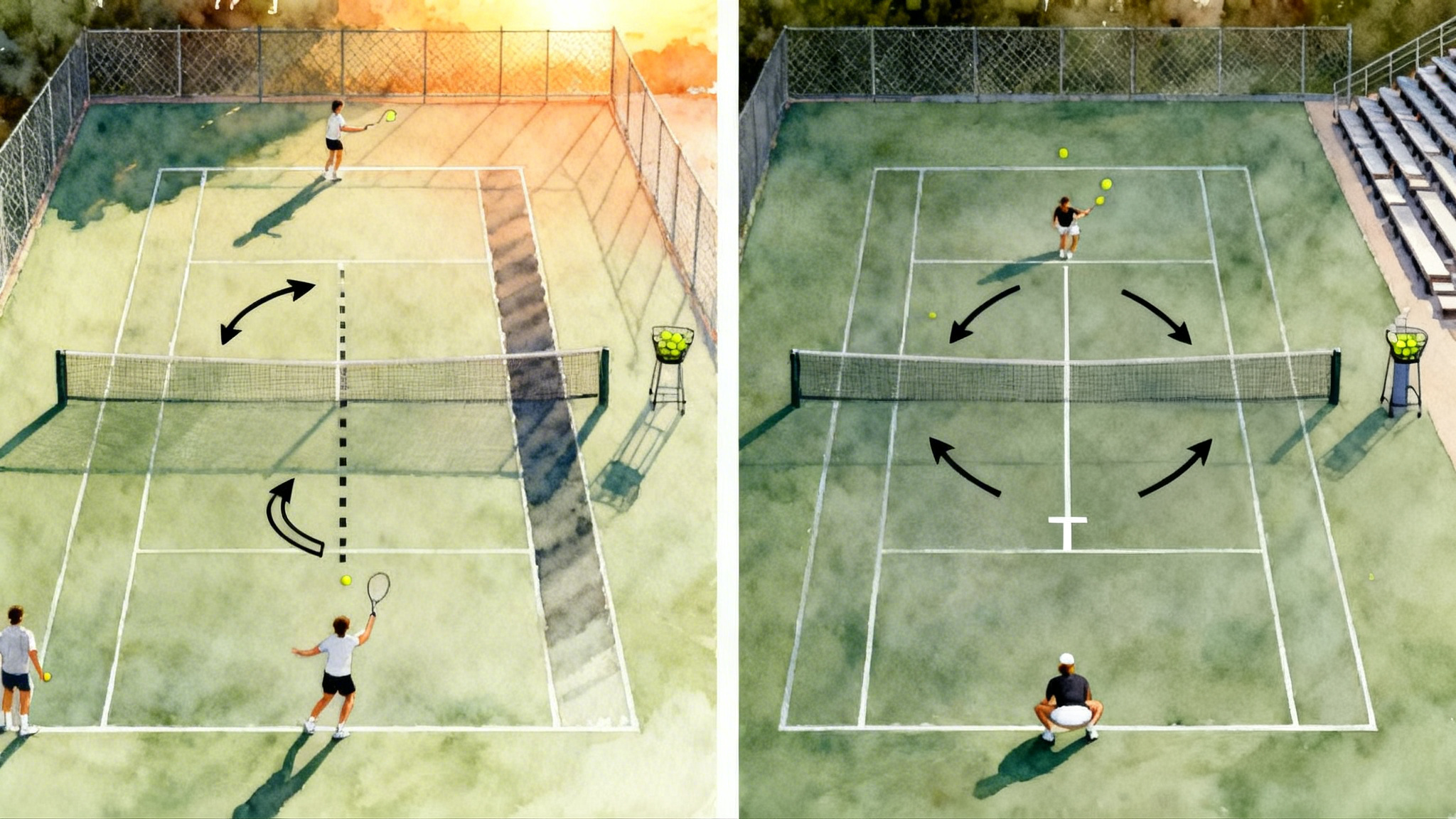
- Crosswind forehand triangle: With wind blowing left to right, rally crosscourt forehands into the deuce court target cone placed three feet inside the singles sideline and three feet short of the baseline. Every fourth ball change direction down the line with extra clearance, then recover diagonally back to the crosscourt pattern.
- Headwind moonball to short ball: Into a headwind, lift two high, heavy balls crosscourt to force a short reply, then step in and finish with a controlled, heavy roller to the open court. Make the finishing ball a 70 percent swing, not a blast.
Serving in wind deserves its own note. Into a headwind, add kick and aim deeper; the wind will shorten the ball. With a tailwind, flatten the serve slightly and aim a little shorter; the wind will carry it. In crosswinds, serve toward the wind; let the gust bend the ball back toward the box.
Sun: serve, return, and court position that respect glare
Sunlight changes timing, toss location, and even how soon you can pick up the ball off your opponent’s strings. The fix is not to stare harder. The fix is to set angles that minimize glare and to own a couple of toss and return adjustments.
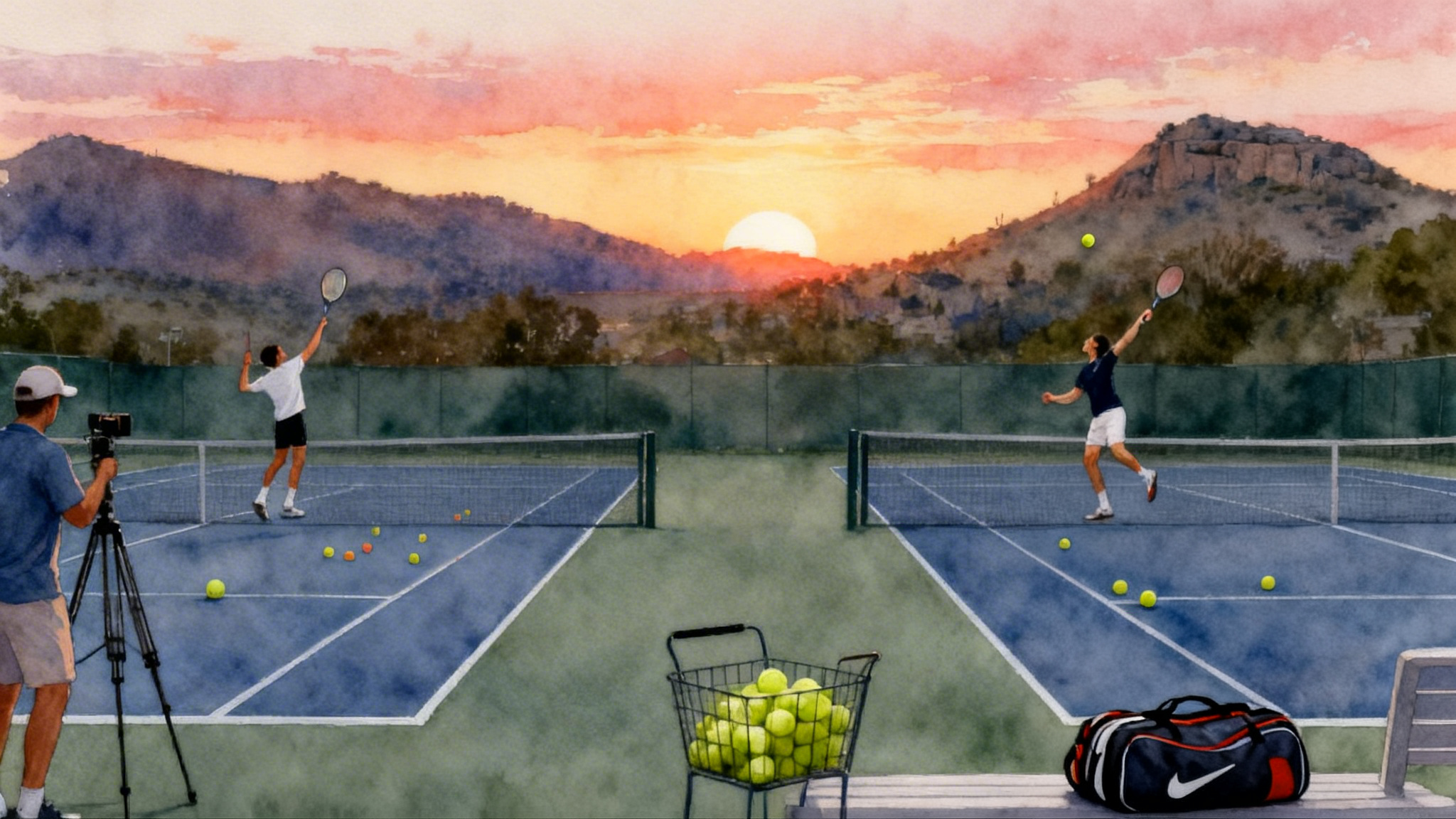
- Shift your toss a fist‑width: If you are serving into bright sun, move your toss a fist‑width to your hitting‑side shoulder. This keeps your gaze off the blaze but preserves contact height. Practice this indoors first so it feels natural.
- Use a three‑count between bounces: When the ball and shadows play tricks, a short pre‑serve count regulates rhythm and reduces rushed faults.
- Choose sun‑smart patterns on big points: When sun is low, favor slice wide serves from the deuce court and kick serves to the ad court. Both let you contact the ball slightly to the side rather than straight overhead.
- Return stance step‑in rule: If you lose the ball in the sun, step in one shoe length and lower your center of gravity. The smaller visual cone helps your eyes pick up the ball earlier, and the lower stance improves stability on skidding outdoor bounces.
- Backhand block return on glare: When glare is severe, use a shortened backhand block with compact turn, conservative target, and early split step. Your goal is a neutral ball that lands deep, not a winner.
For deeper patterns that pair well with this section, see the return of serve mastery guide.
Positioning helps too. In blinding sun, slide your return position a half step toward the shade side if it exists, or cheat a half step crosscourt to cut off the most likely serve. During rallies, stand a step deeper than indoors until your eyes fully adjust to outdoor ball flight.
Surface shift: footwork and ankle‑prep micro‑drills
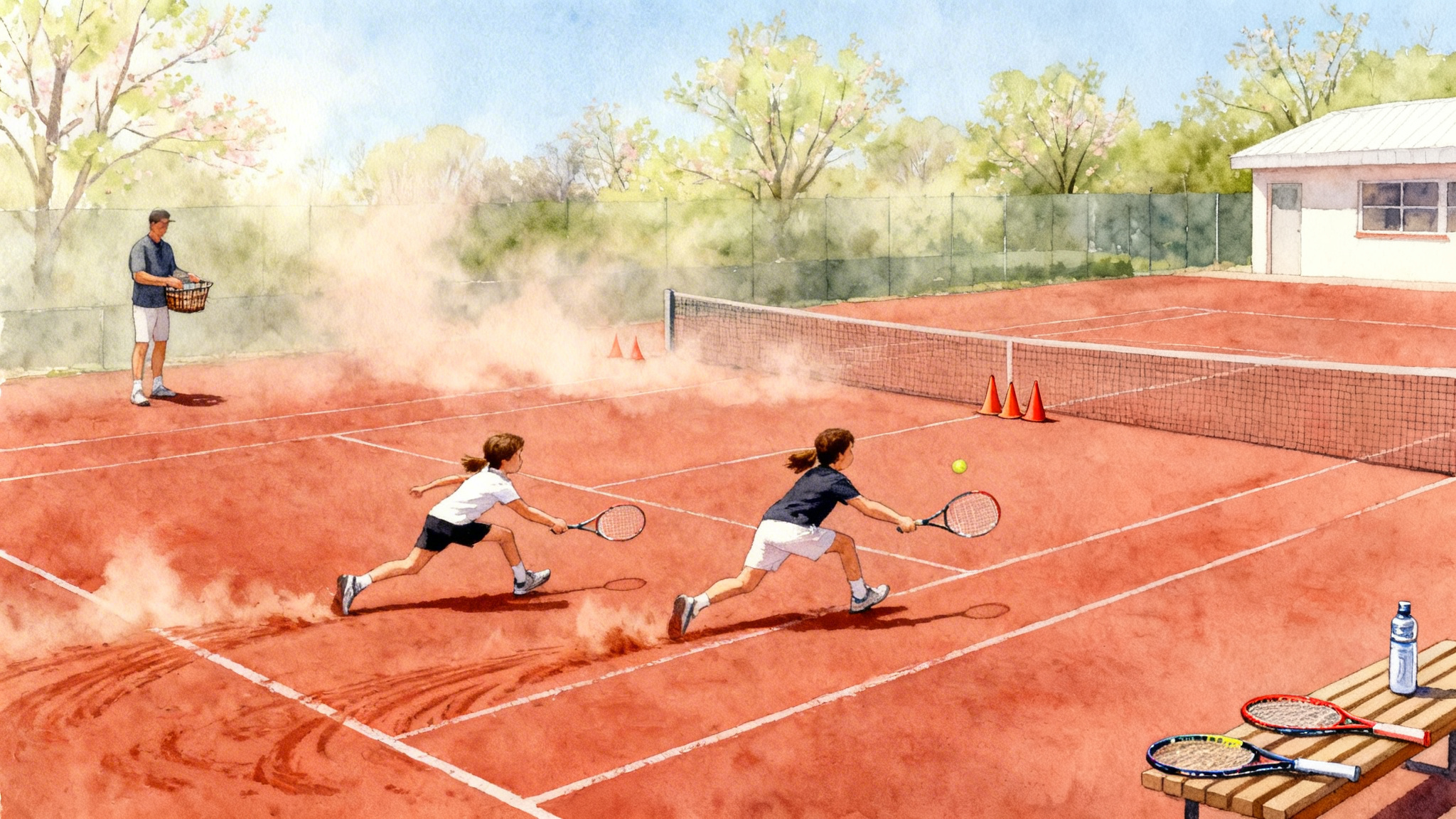
Outdoor courts vary. A hard court can have gritty patches that grab one step then let the next one slide. A clay court can be firm in the morning and mushy by noon. Your ankles need both mobility and reflexive stiffness. Add these micro‑drills to your warm‑up; most take less than five minutes.
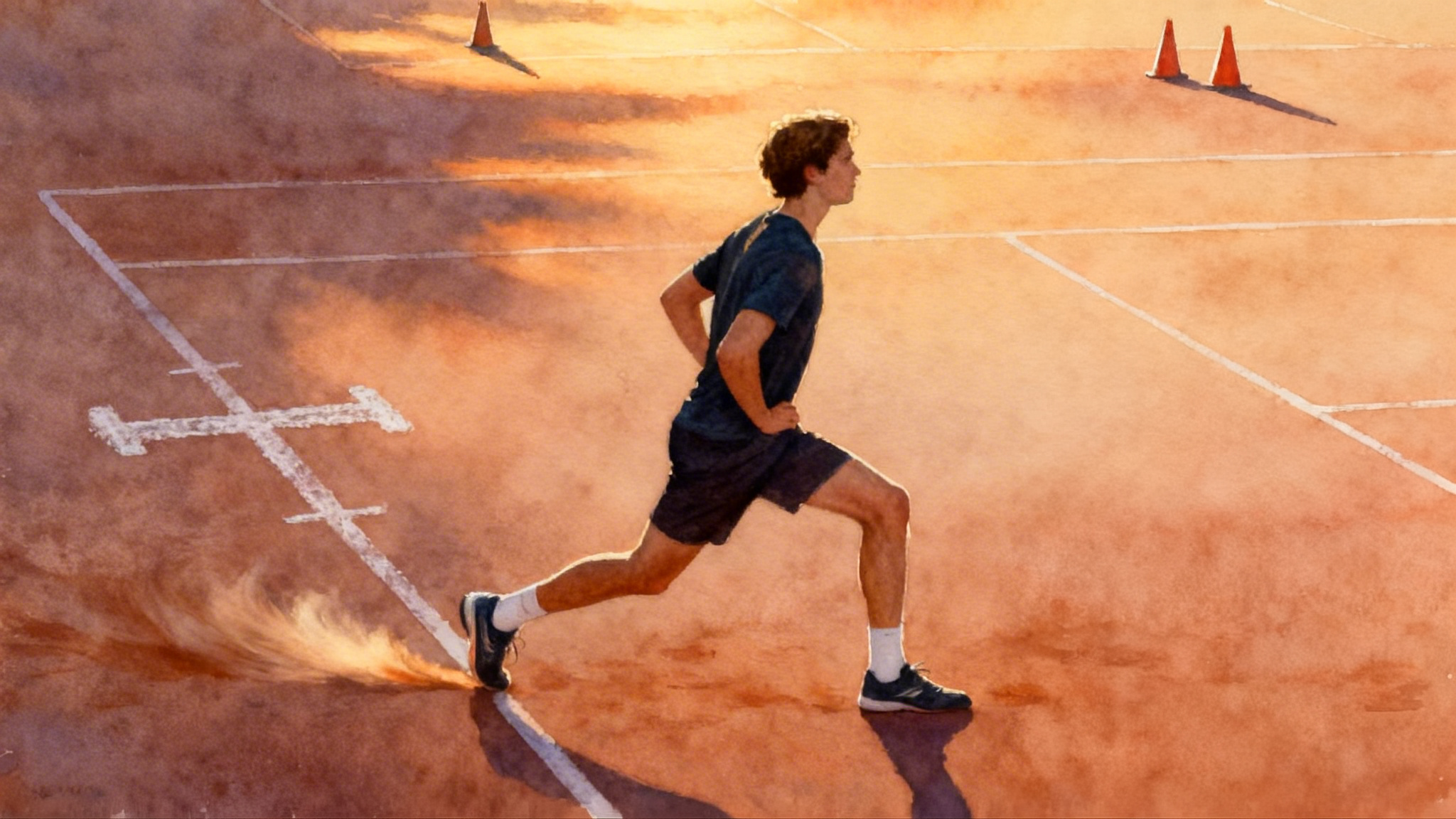
- Short‑foot activation: Barefoot or in socks on a yoga mat, stand tall and gently pull the ball of your foot toward the heel without curling toes. Hold five seconds, relax for five seconds. Ten holds per foot. This builds the arch that stabilizes landings.
- Ankle alphabet: Seated or standing on one leg, write the alphabet with each ankle. One alphabet per side. This restores range after winter in stiff indoor shoes.
- Single‑leg quarter squats with reach: Stand on the hitting‑side leg, squat to a quarter depth, and reach the free hand to three o’clock, twelve o’clock, and nine o’clock. Six cycles per leg. This teaches your knee and ankle to align under mild chaos.
- Line hops matrix: Find the center service line. Hop side to side over the line for ten seconds, then front to back for ten seconds, then diagonals for ten seconds. Two rounds. Keep hops quiet and elastic.
- Low split‑step pops: From a neutral stance, drop into a low split step, land softly, then push out to an imaginary ball to the forehand corner. Return and repeat to the backhand. Ten total reps. Focus on landing on the balls of your feet and feeling the floor.
- Clay shuffle with brush: For clay players, perform eight slow shuffles left and right, skimming the surface. Pause to brush your outsole with your hand or a small shoe brush, then repeat. This teaches you to manage clay buildup that changes traction mid‑rally.
Schedule these micro‑drills before your first ball of every outdoor session. They are the seatbelt for the surface transition.
Gear tweaks that punch above their weight
Two small changes make outdoor tennis more playable on day one: string tension and shoe rotation.
- Lower string tension slightly: Many players drop tension by two to four pounds outdoors. The extra pocketing helps you roll the ball with higher net clearance without sailing long. If you use a polyester string, consider a hybrid with a softer cross string to add feel and reduce shock on off‑center outdoor contacts. If you use a multifilament, consider staying at your usual tension but restring more often because wind and grit fray filaments faster.
- Refresh your overgrip: Wind exposes sweaty palms. A fresh overgrip every two to three sessions gives predictable traction, which is crucial when you are adding spin under stress.
- Rotate two pairs of shoes: Alternate pairs every session. Shoes dry completely between uses and the midsole rebounds better, which keeps your landing mechanics sharper. For hard courts, one pair can be your older indoor pair with predictable slide; the other your newer outdoor pair with intact tread. For clay courts, choose a herringbone outsole that sheds clay and bring a small brush to clear the grooves during changeovers.
- Lace for lockdown: If your heel lifts on outdoor starts, use the runner’s loop at the top eyelets to lock the heel. A stable heel reduces sloppy ankle angles when you hit chalk or a gritty patch.
These are not luxury tweaks. They are force multipliers when wind and sun steal your timing.
A 10‑day practice microcycle for the first outdoor swing
This microcycle assumes 60 to 90 minutes per day. Juniors can split some days into two shorter blocks. Adults can trim the optional work to fit schedules. The goal is to layer environment first, then speed, then decision making.
-
Day 1: Environment acclimation
- Warm‑up: Ankle alphabet, short‑foot, low split‑step pops.
- Hitting: Twenty minutes crosscourt rally with higher net clearance, three feet inside lines. Add ten minutes serves into a headwind if possible, aiming deep with kick. Finish with five minutes of lobs and overhead tracking in sun.
- Goal: Comfort with bigger targets and brighter light.
-
Day 2: Spin ballast
- Warm‑up: Line hops matrix, single‑leg quarter squats.
- Hitting: Twenty minutes of heavy topspin crosscourt, then ten minutes of slice backhands skid‑low down the line. Serve with tailwind practice; flatten slightly and aim shorter.
- Goal: Control depth with spin in both wind directions.
-
Day 3: Footwork density
- Warm‑up: Add clay shuffle if relevant.
- Hitting: Two‑ball live drill. Partner feeds one short, one deep to opposite corners. You must recover to neutral and raise net clearance under fatigue. Finish with return practice using the backhand block on glare.
- Goal: Movement quality on varied bounces.
-
Day 4: Pattern day
- Warm‑up: All micro‑drills, short versions.
- Hitting: Headwind moonball to short ball pattern; three sets of six points to eleven with serve starts. Emphasize patient finishing swings at 70 percent.
- Goal: Point construction that survives gusts.
-
Day 5: Serve and first ball
- Warm‑up: Shoulder and thoracic mobility, then ankle sequence.
- Hitting: Thirty minutes of serve plus one. Into sun, shift toss slightly to the hitting side. Alternate deuce wide slice, ad kick to backhand. On the plus one, aim middle third targets.
- Goal: Reliable holds built on safe targets.
-
Day 6: Recovery and touch
- Warm‑up: Easy alphabet only.
- Hitting: Drop volleys, short‑court dinks, and feel volleys into wind. Finish with ten minutes of half speed lobs and overhead footwork. Stretch calves and hips.
- Goal: Reset tissues, sharpen hands.
-
Day 7: Crosswind decision ladder
- Warm‑up: Line hops and low split‑step pops.
- Hitting: With a crosswind, play a ladder. Ball one crosscourt safe, ball two crosscourt safe, ball three attempt a change of direction. Score one point only if you win on ball three or later. If you miss early, the rally resets.
- Goal: Discipline before aggression in wind.
-
Day 8: Returns under pressure
- Warm‑up: Balance work and ankle stiffness pulses.
- Hitting: Serve machine or partner serve at varied speed. Practice shading to the shade side or cheating a half step to cut off common serves. Use the backhand block return when glare peaks.
- Goal: Early read, simple mechanics.
-
Day 9: Live sets with constraints
- Warm‑up: Full micro‑drill sequence.
- Hitting: One or two short sets to four games. Constraints: every rally ball must clear the net by at least the height of your racket head, serves must be spin serves, and targets are three feet inside lines.
- Goal: Translate training margins into real scoring.
-
Day 10: Assessment day
- Warm‑up: Favorite three micro‑drills.
- Hitting: Film twenty minutes of points. After, review three clips: best hold, best break, and a tough deuce game. Note if misses were long or in the net, if footwork broke on uneven bounces, and whether sun or wind decisions held under stress. Write one adjustment for the next week. Use the smartphone tennis video guide to capture clear, coachable footage.
- Goal: Close the loop with evidence.
If you need a visual plan to share with a coach or family, write the day’s one clear goal at the top of your hitting notes before you start. Clarity beats volume.
Parent packing and coordination checklist
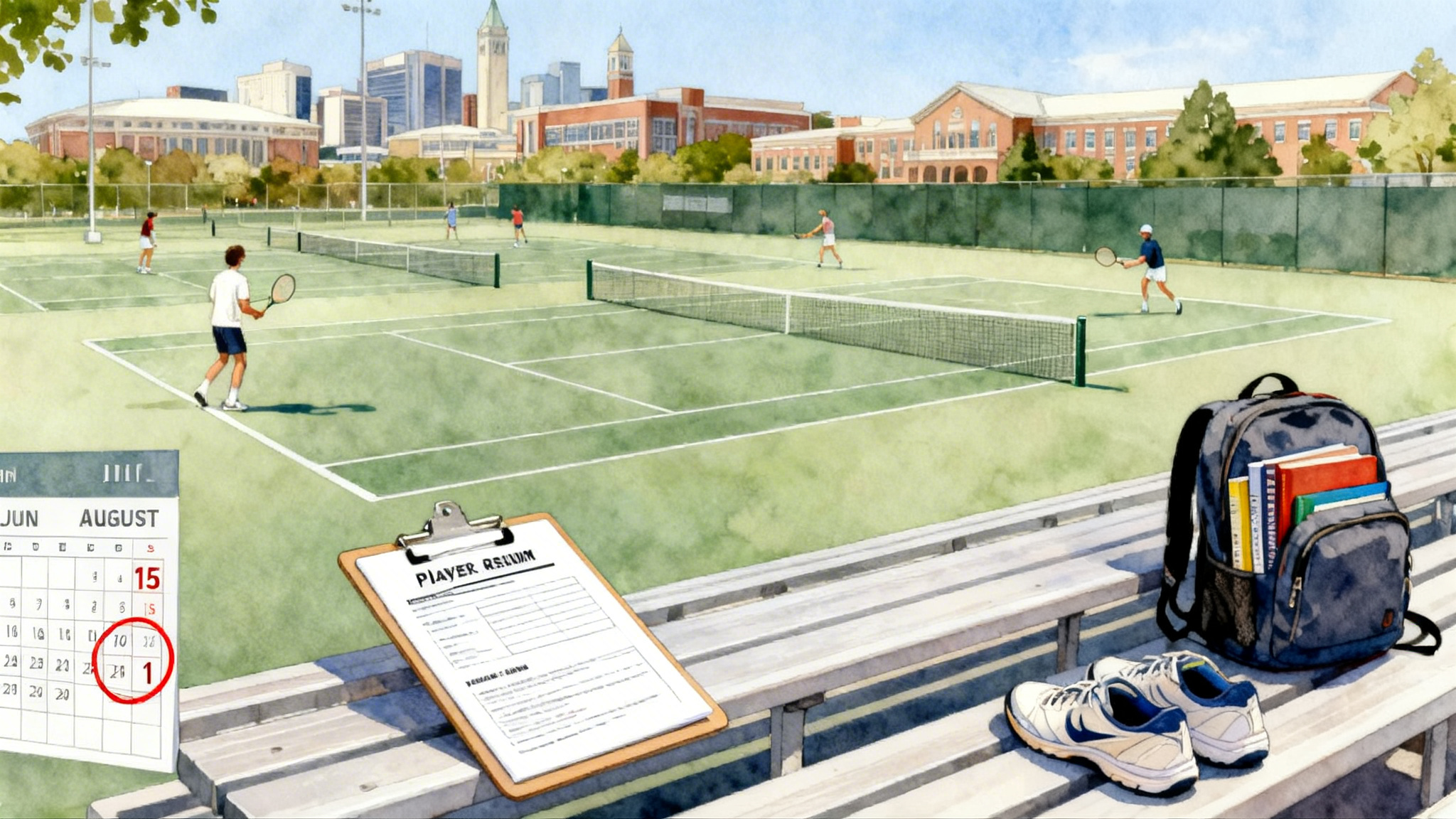
Parents can make the first outdoor weeks smooth with a box‑checked routine. Pack the following and agree on a few coordination habits.
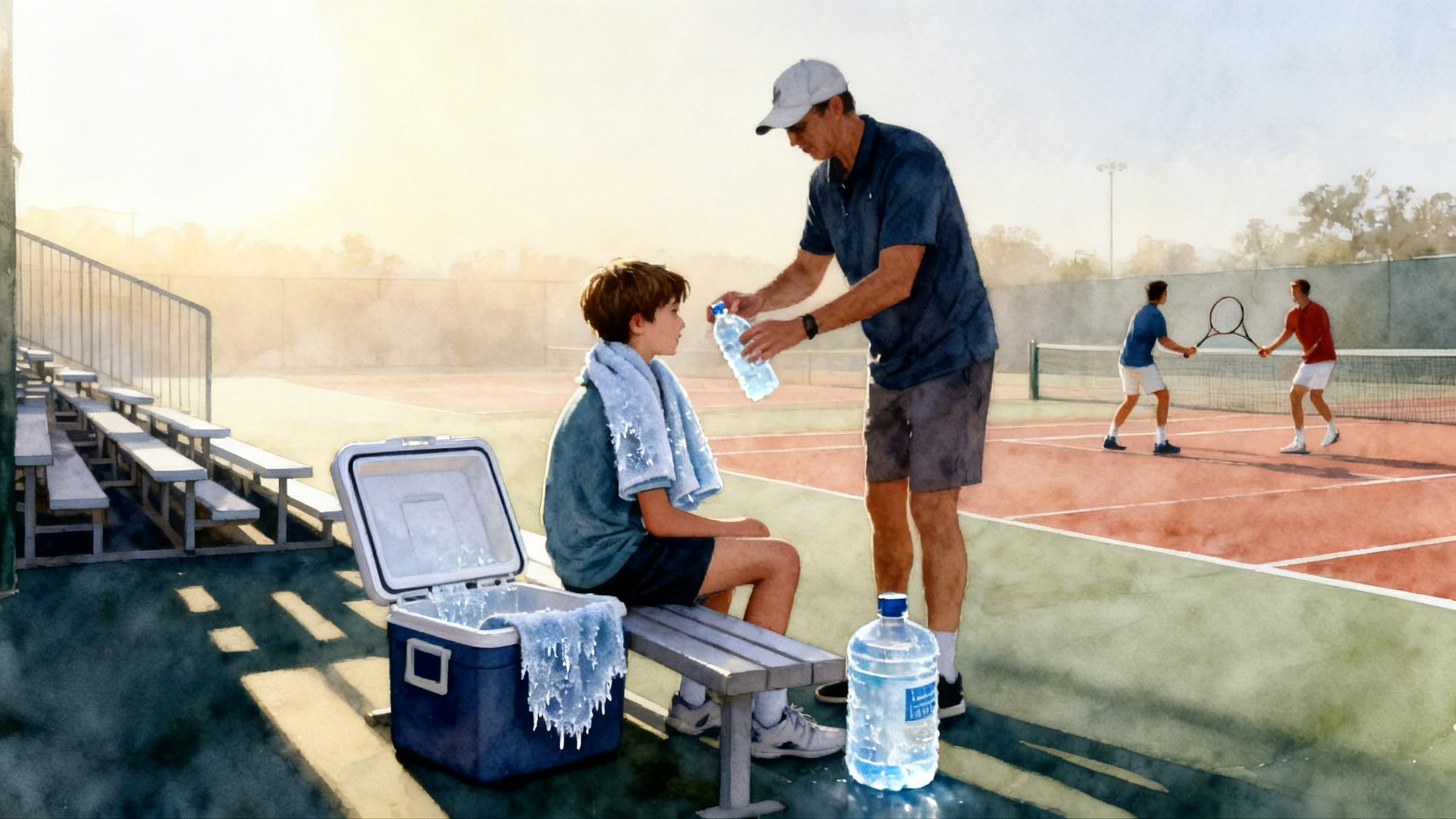
- Sun protection: Broad spectrum sunscreen of at least SPF 30, lip balm with sun protection, a brimmed hat, and sunglasses rated for ultraviolet 400. Apply sunscreen at home and reapply at changeovers.
- Hydration and fuel: Fill two bottles, one water and one with a light electrolyte mix. Pack simple snacks that tolerate heat, such as pretzels, applesauce pouches, or bananas. Avoid heavy dairy in sun.
- Extra grips and small spares: Two to three overgrips, an extra dampener, and spare laces or lace locks. A tiny roll of athletic tape for hot spots can rescue a session.
- Shoe care: A small brush or old toothbrush for clay, a plastic bag for wet socks, and a spare pair of dry socks for the ride home.
- First‑aid basics: Adhesive bandages, blister pads, and a small instant ice pack. If your player has a history of ankle tweaks, include a soft brace cleared by a clinician.
- Weather plan: Check wind and temperature the night before. If gusts exceed twenty miles per hour, consider a shorter session with a focus on footwork and serves, then add volume indoors later in the week.
- Communication rhythm: Text arrival time, court number, and pickup time. Confirm who carries the scorecard or tracks games in practice sets.
Consistency in these basics lets players focus on decisions that win points rather than on missing sunscreen or a bad grip.
Spotlight: controlled transition at Legend Tennis Academy in Spicewood
One way to shrink the chaos of spring is to stage a few controlled outdoor‑like practices before moving fully outside. Legend Tennis Academy in Spicewood offers a smart version of this with covered, lighted courts that allow coaches to dial in wind and light variables without full exposure. The canopy softens gusts while still letting air move, and lights simulate late‑day glare. Coaches can set up crosswind patterns, rehearse sun‑side serving with a shifted toss, and build the higher net clearance habits that outdoor tennis demands. When players step onto fully open courts, the environment feels familiar rather than shocking.
If you do not have covered courts, you can still mimic the effect. Practice in the late afternoon when the sun angle is similar to weekend match times. Use a ball machine or a consistent feeder to rehearse headwind and tailwind patterns on the same court by switching ends every five minutes. Add a simple rule that every rally ball must clear the net by a racket head. These choices give you the control of a covered court without the facility.
Practical scenarios and quick fixes
- The ball keeps flying long downwind: Add two feet of net clearance but aim two feet shorter. Close the racket face a few degrees and accelerate up, not forward.
- Forehand sails in crosswind: Start rallies crosscourt into the wind so the gust eats your pace, then change direction only off a short ball. If you must go down the line, add more topspin and recover earlier.
- Toss vanishes in sun: Lower your gaze by a few degrees and shift the toss a fist‑width to your hitting side. If needed, use a slice or kick that allows contact slightly to the side of your head.
- Ankles feel wobbly on gritty courts: Add the line hops matrix and single‑leg quarter squats to your warm‑up, then reduce aggressive slides until your shoes bite predictably.
- Strings feel board‑stiff: Drop tension by two pounds and replace the overgrip. If you use full polyester, test a softer cross string while you adapt to outdoor contact.
For match-day return planning that pairs well with windy and sunny conditions, browse the return of serve mastery guide.
A closing word to juniors, parents, and adults
Outdoors asks for the same strokes, only with better judgment. You do not need a new forehand; you need a higher window. You do not need a bigger serve; you need a smarter toss and a safer first‑ball target. You do not need completely new fitness; you need ten minutes of ankle and foot prep that you never skip. The ten‑day microcycle, the parent checklist, the gear tweaks, and the wind and sun patterns in this guide will hold up in March and in May. Use them to make the unknowns known.
If you want help applying this plan in your area, book a transition session with a coach and walk onto your first spring match already adapted. A small investment in margins and habits now pays off every time the wind kicks or the sun drops behind a cloud. That is how you turn the field test back into your laboratory.