Tournament Day Blueprint 2026: Warm-up, Fueling, Recovery
 Tommy
Tommy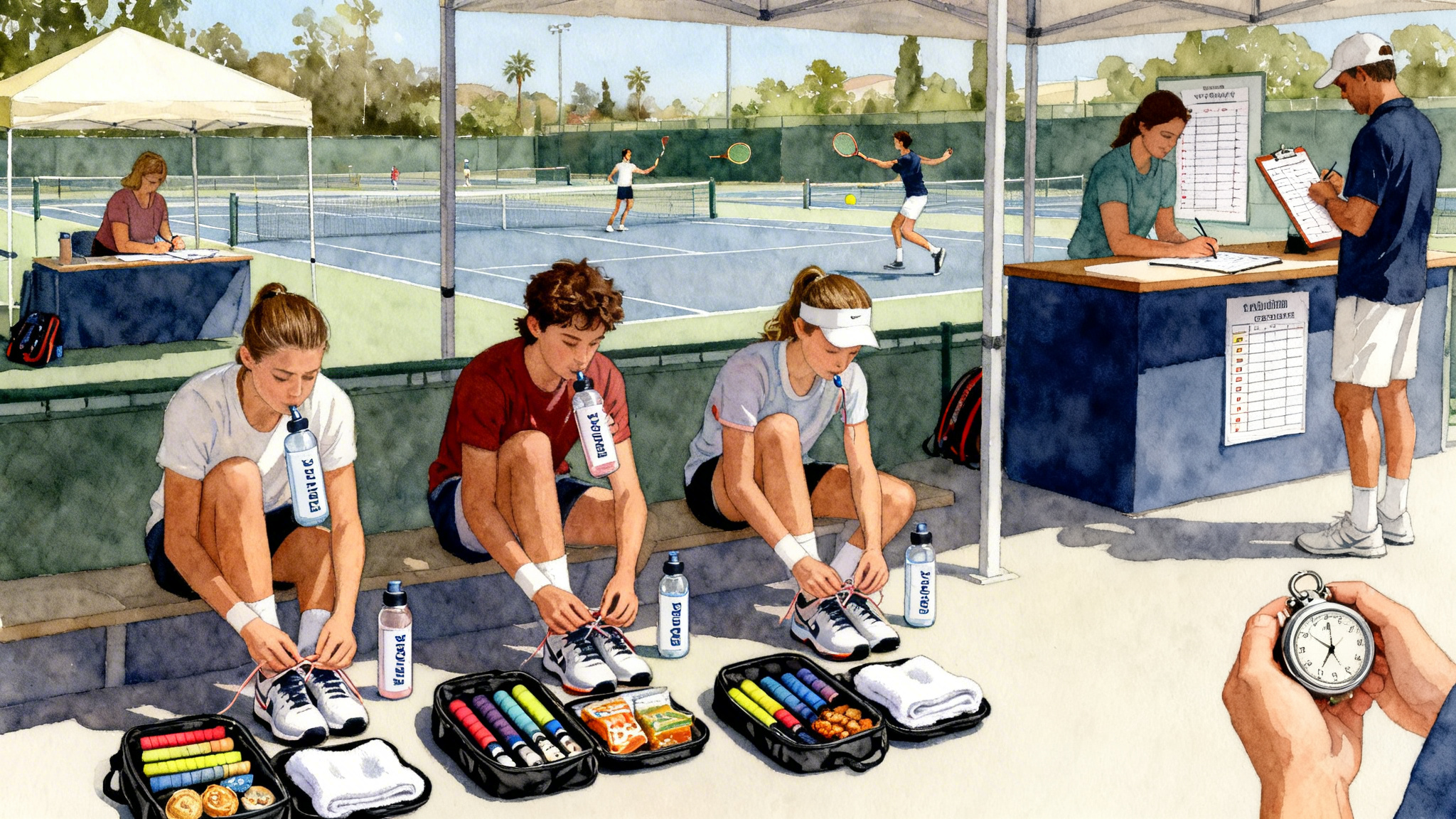
Why a blueprint beats guesswork
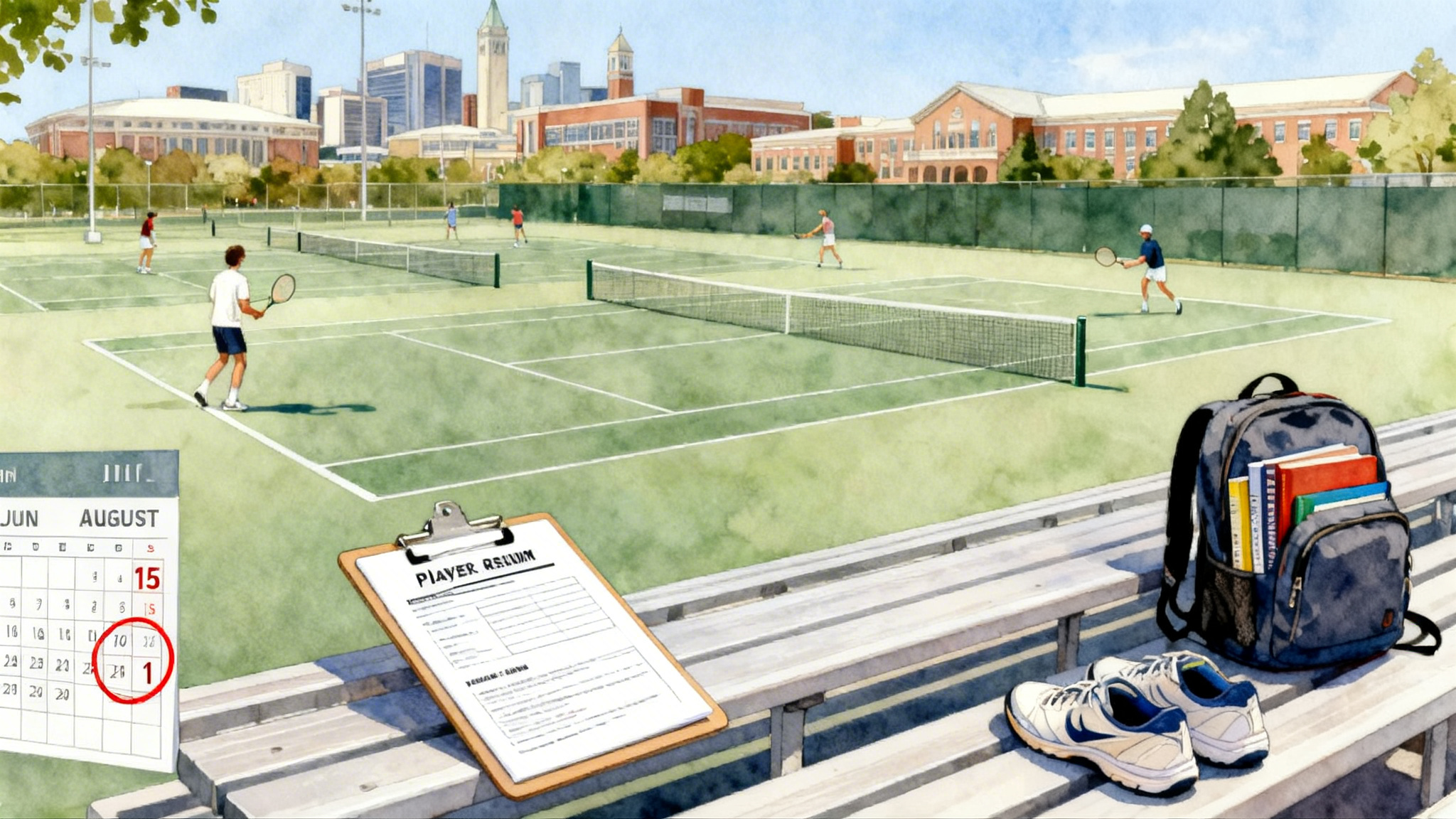
On tournament day, the best players act like pilots. They run a checklist, not a vibe. A clear flight plan lowers stress, trims decision fatigue, and protects energy for the only thing that matters once the coin flips: executing points. This blueprint gives you a clock-based routine you can trust, with precise steps for warm up, fueling, and between-match recovery. You will see variants for juniors, college-aspiring competitors, and adult players, along with printable checklists and a parent-focused pack list. We also include Legend Tennis Academy’s 15-minute court-side warm up and sample menus that funnel into the right program resources.
Your tournament timeline at a glance
Use this skeleton for any first-match start. Adjust the meals and arrivals to your posted time, and remember that tournament schedules can shift. When in doubt, arrive earlier rather than later.
- T minus 120 minutes: Arrive at the venue, check in, scout court locations, confirm balls and format, and start sipping fluids.
- T minus 90 minutes: Light snack if needed, bathroom break, first mobility block.
- T minus 60 minutes: Activation and movement prep, short dynamic stretch.
- T minus 30 minutes: Legend Tennis Academy’s court-side warm up begins if you have court access. If not, use the asphalt or a quiet area.
- T minus 10 minutes: Focus cues, strings tension check, last sips, shoes double knotted.
- Match time: Trust your patterns and manage between-changeover fueling.
- Post match, minute 0 to 15: Cool down walk, breathing, quick body scan.
- Post match, minute 15 to 40: Refuel and rehydrate, light mobility.
- Post match, minute 40 to 90: Flush work if a later match is scheduled, mindset reset, logistics for next start.
Later in the article you will find sample timelines with exact local times. For now, keep this structure in mind.
The 15-minute court-side warm up by Legend Tennis Academy
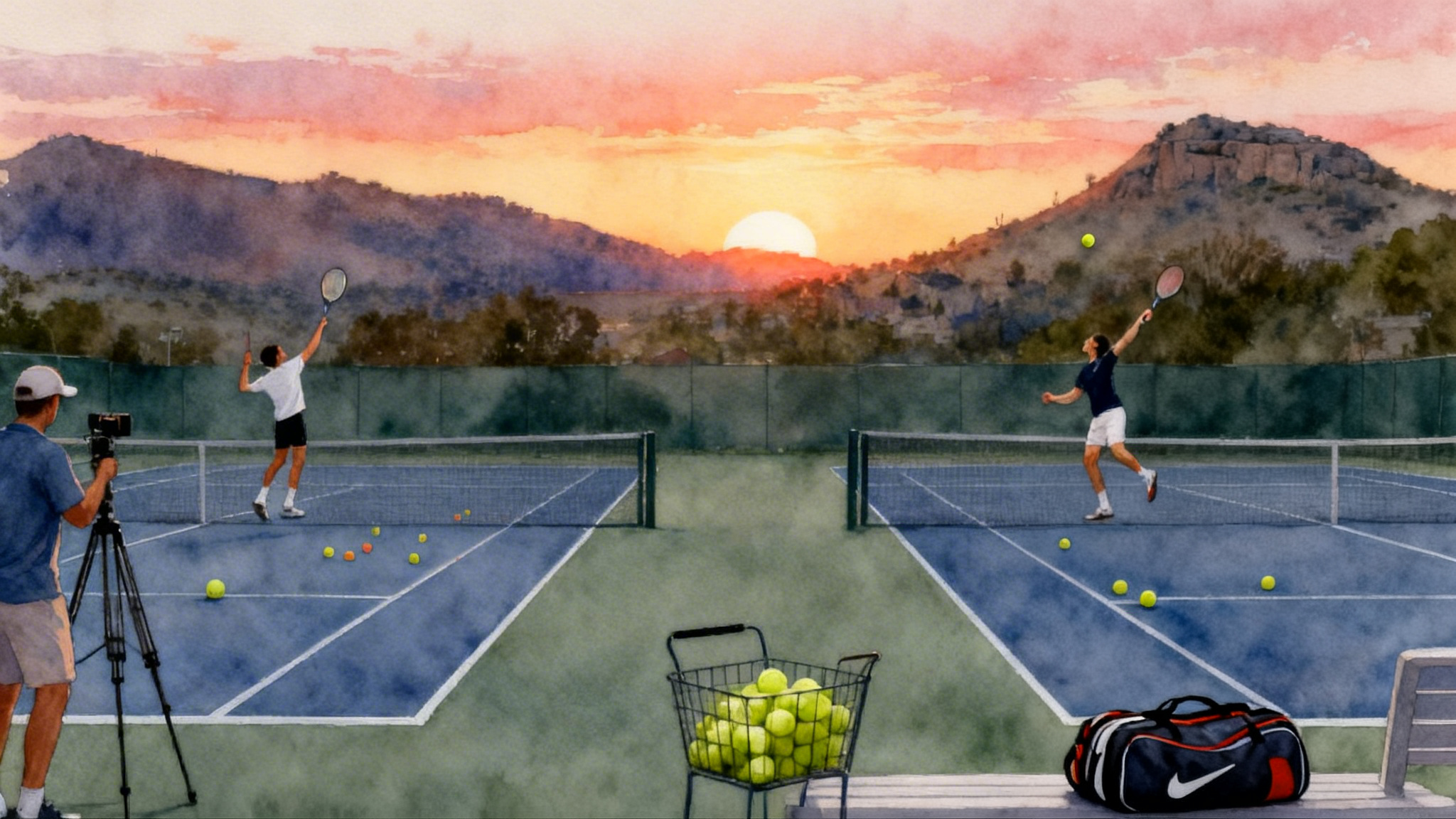
If you only remember one routine, make it this one. It is designed to fit beside any court with minimal gear. For a video walkthrough and progressions, see the Legend Tennis Academy warm-up.
- Minute 0 to 2: Breath and posture reset. Stand tall, inhale through the nose for four counts, exhale for six. Three rounds while you align ribs over hips and unlock the knees.
- Minute 2 to 4: Ankles and feet. Ten calf pumps per leg off a curb or step, ten ankle circles each way, twenty pogo hops in place.
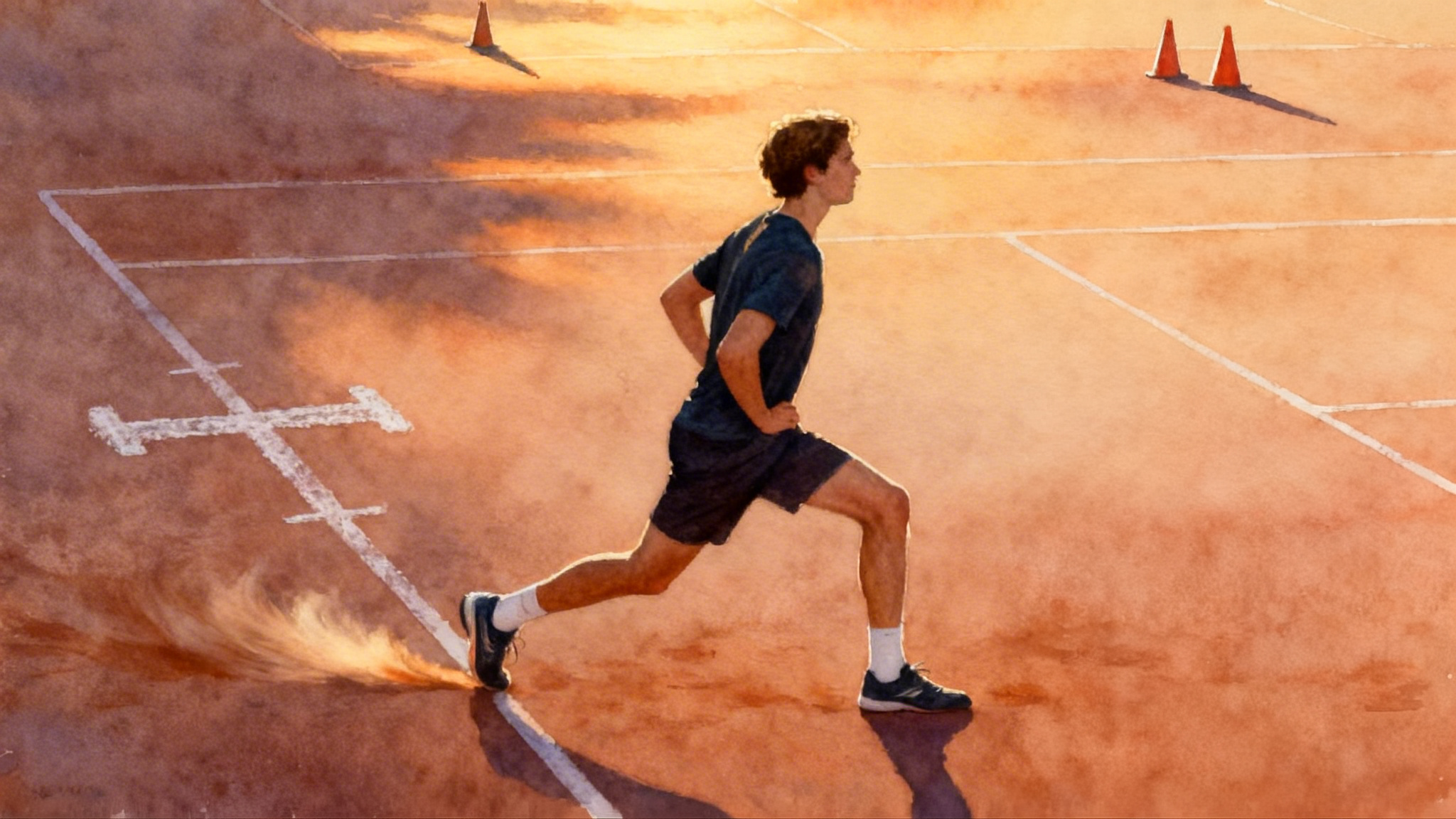
- Minute 4 to 6: Hips and thoracic spine. Ten world’s greatest lunges alternating sides, eight hip airplanes per leg, six thoracic rotations per side in a half-kneel.
- Minute 6 to 8: Tissue wake-up. Short band around knees, two sets of ten lateral steps each direction, then two sets of eight monster walks forward and back.
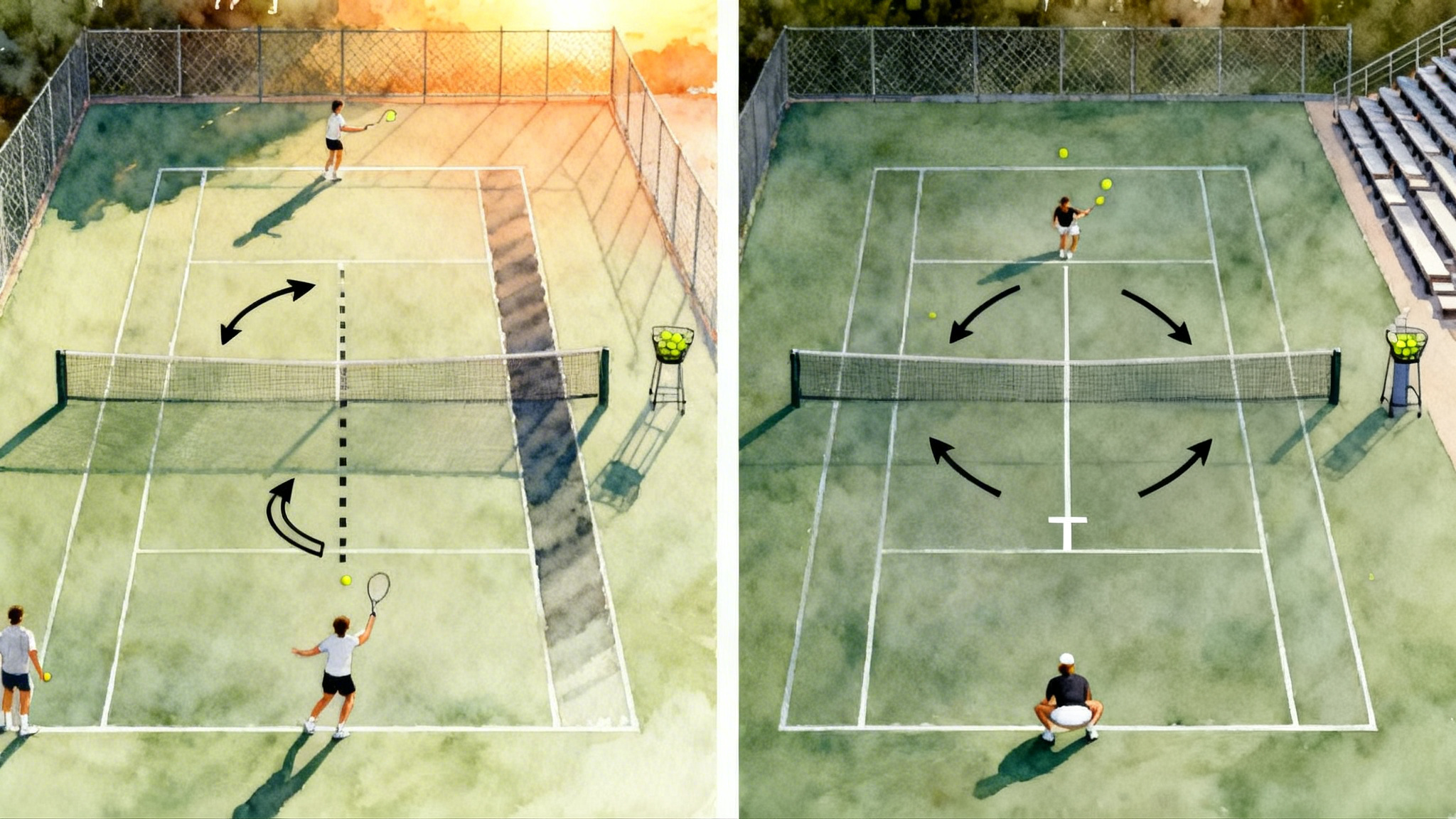
- Minute 8 to 10: Acceleration and deceleration. Two sets of 10 meters build-ups at 60 and 75 percent, then three stick-and-hold decel steps on each leg. To sharpen stops without strain, see tennis deceleration training.
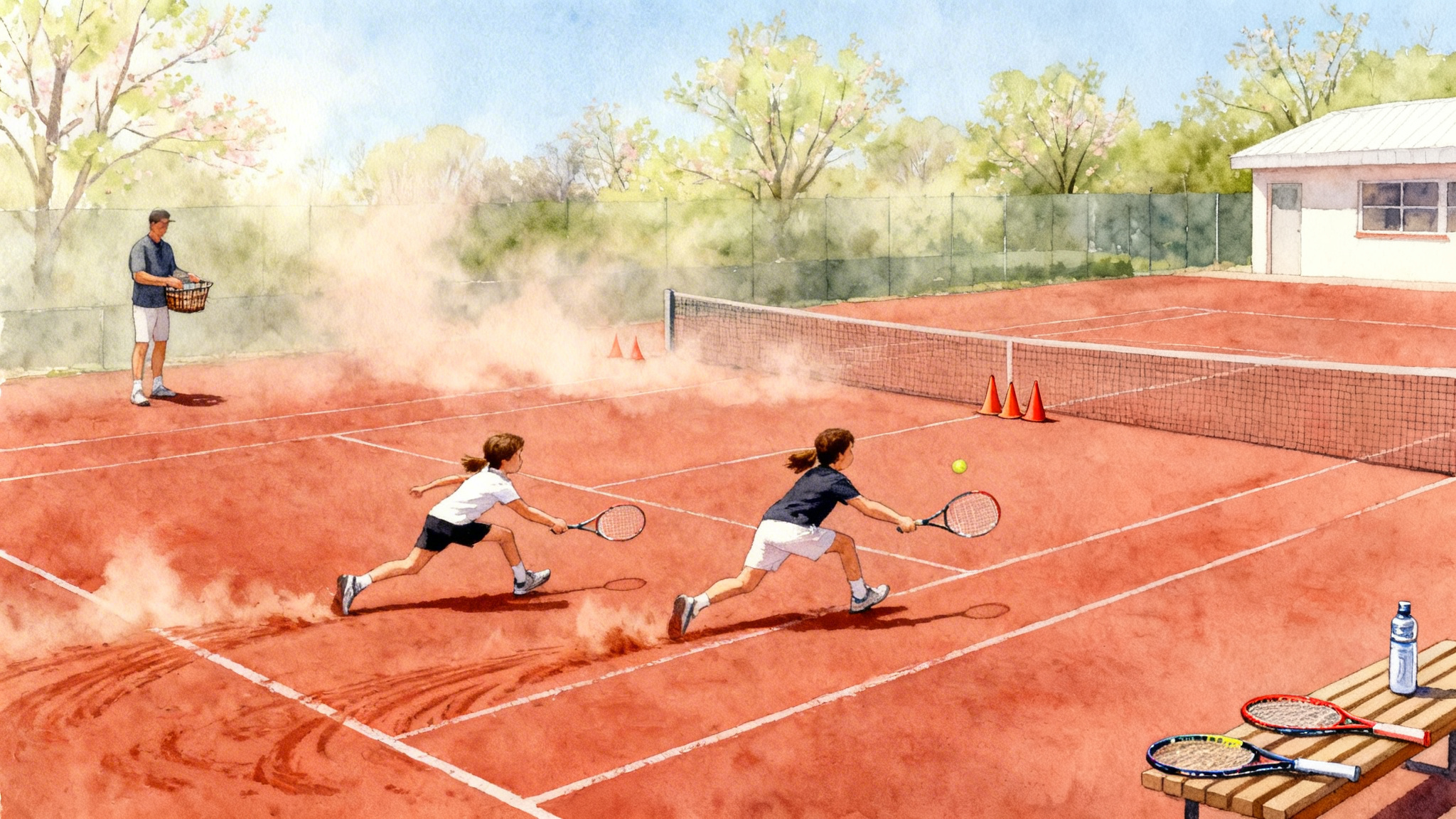
- Minute 10 to 12: Tennis-specific footwork. Two rounds of split-step to crossover shuffles, and two rounds of drop step to open stance forehand shadow swings. Five reps per side.
- Minute 12 to 15: Racket rhythm. Twenty shadow swings total: ten forehands, ten backhands, three overhead footwork patterns without hitting, five serves at half pace if you have a warm-up court.
This sequence avoids static stretching before play and builds from gentle mobility to tennis-speed movement. Keep it calm and rhythmic rather than frantic.
Fueling: what to eat and when
Your job is to arrive on court with steady blood glucose and a calm stomach. The numbers below are simple targets rather than lab rules. You can adapt them based on body size and personal tolerance. Sample menus appear below.
- Three to four hours before match: Balanced meal with a base of easy-to-digest carbohydrate, a palm of lean protein, a thumb of fat, and color from produce. Think rice or potatoes, grilled chicken or tofu, olive oil, and fruit. Hydrate with water or a low-sugar sports drink.
- Sixty to ninety minutes before match: Light top-up. Aim for a small carbohydrate portion that you know sits well, like a banana, applesauce pouch, yogurt, or a small rice bar. Sip water.
- Fifteen to thirty minutes before match: Optional micro snack if you need it, such as a few chews or a half granola bar. Stop here if you are prone to stomach upset.
- Changeovers: Small sips and simple carbs only. A few sips of sports drink and a small bite every other changeover keeps energy even without crowding the gut.
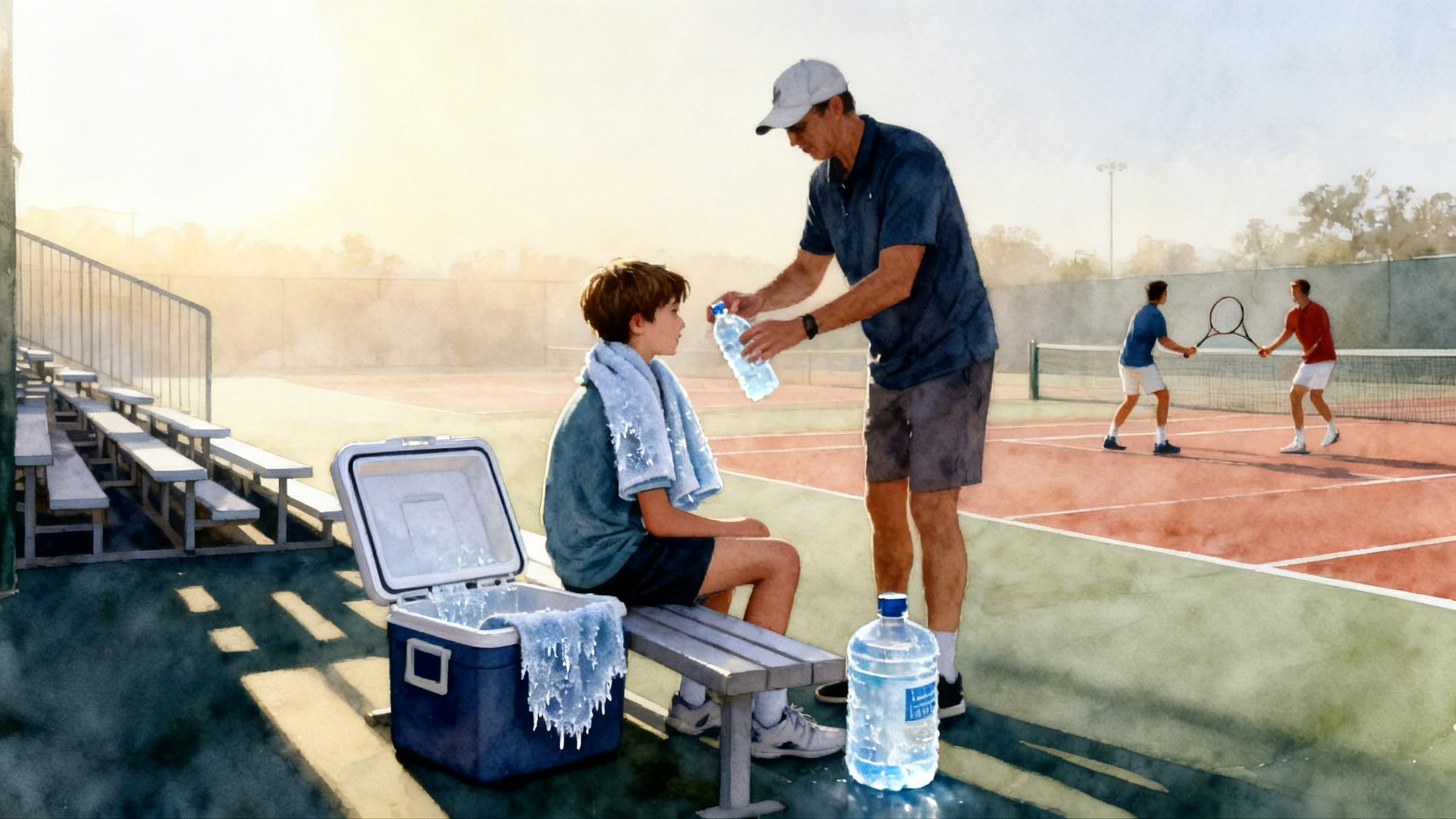
If heat is forecast, review our hot-weather tennis hydration guide and adjust fluids and cooling accordingly.
Sample menus by athlete profile
These reflect common appetites and school or work rhythms. Use them as starting points and log what works.
-
Juniors (morning first ball):
- Breakfast, three hours out: Oatmeal with milk, berries, honey, plus a scrambled egg. Water.
- Top-up, sixty minutes out: Applesauce pouch and a few pretzels. Water.
- Court bag: Water, a small sports drink, banana, and fruit chews for changeovers.
-
College-aspiring players:
- Pre-match meal, three to four hours out: Rice bowl with chicken, avocado, and mango salsa, or a turkey wrap with spinach and hummus, plus a side of roasted potatoes. Water with a pinch of salt.
- Top-up, seventy-five minutes out: Greek yogurt with a drizzle of honey and a handful of dry cereal.
- Court bag: Two bottles water, one bottle sports drink, a rice bar, and a banana. If caffeine works for you, a small coffee ninety minutes out is safer than a last-minute hit.
-
Adult competitors:
- Pre-match meal, three hours out: Plain bagel with peanut butter and jam, small omelet, and a piece of fruit. Water or tea.
- Top-up, sixty minutes out: Rice cake with honey or a small granola bar.
- Court bag: Water, an electrolyte tablet if you sweat heavily, nuts for between matches, and one small gel for a third-set tiebreak.
Hydration checkpoints
- At wake-up: One glass of water.
- Every thirty minutes until match: Four to eight ounces depending on heat.
- During match: A few sips every changeover. If sets are long or heat is high, alternate water with a sports drink.
- After match: Twelve to twenty ounces within thirty minutes, then sip steadily.
Between-match recovery: cool down, flush, refuel, reset
Multi-match days are where tournaments are won. Here is a tight sequence to bounce back without feeling heavy when you step back on court.
- Minute 0 to 5: Walk at a casual pace. Feel your breath slow. Keep the racket in hand to avoid hunching.
- Minute 5 to 8: Breathing and downshift. Three rounds: inhale quietly for four, hold one, exhale for six, hold one. This tells your nervous system that the sprint is over.
- Minute 8 to 15: Mobility triad. Ten calf pumps, ten kneeling hip flexor glides per side, ten thoracic rotations per side. Gentle, never forced.
- Minute 15 to 25: Refuel. One carbohydrate-dominant snack you trust, like a rice bar or yogurt with fruit, and a few sips of a sports drink. If you cramped, include electrolytes and saltier food.
- Minute 25 to 35: Notes and small win. Write one thing that worked and one pattern to emphasize next match. This trims mental noise. If you scouted your opponent, add two bullet points.
- Minute 35 to 45: Light flush. Five minutes of easy spin bike or a short walk, then two minutes of easy skips and two crisp accelerations at 70 percent. This keeps tissues warm without creating fatigue.
- Minute 45 to 60: Logistics. Shoes and socks check, re-tape if needed, new shirt, fresh grips installed.
- Minute 60 to 90: Quiet recovery. Shade, feet up if you can, eyes closed for five minutes. No doom scrolling. Give your brain a true reset.
Variants by athlete profile
Every athlete brings different constraints. Use these tweaks to get the same physiological result with less friction.
Juniors and the parent role
- Arrival timing: Plan to be on site at least ninety minutes before the first ball. Factor in bathroom lines and unfamiliar facilities.
- Warm up tweaks: Keep the 15-minute sequence exactly as written. If the junior is under twelve, make the footwork block a simple “split, step, swing” game and cap the accelerations at 60 percent.
- Fueling: Simplicity wins. Pack known foods. Avoid novelty items that a friend brought “for luck.”
- Hydration: Pre-fill bottles at home and label them. Teach the habit of a sip at every changeover rather than waiting for thirst.
- Mindset reset: One short phrase only, chosen the night before. Examples: “Play big to big targets” or “First step first.” Parents, do not add new cues during the event. If you must coach, ask a question: “What is your best first-serve pattern today?” This protects autonomy while steering focus.
The parent pack list is at the end of this article, and a printable version is available from our team.
College-aspiring players
- Arrival timing: Two hours before first ball if possible. Use that cushion to scout wind patterns, sun angles, and court speed. Note any courts with bad bounces and plan your toss accordingly.
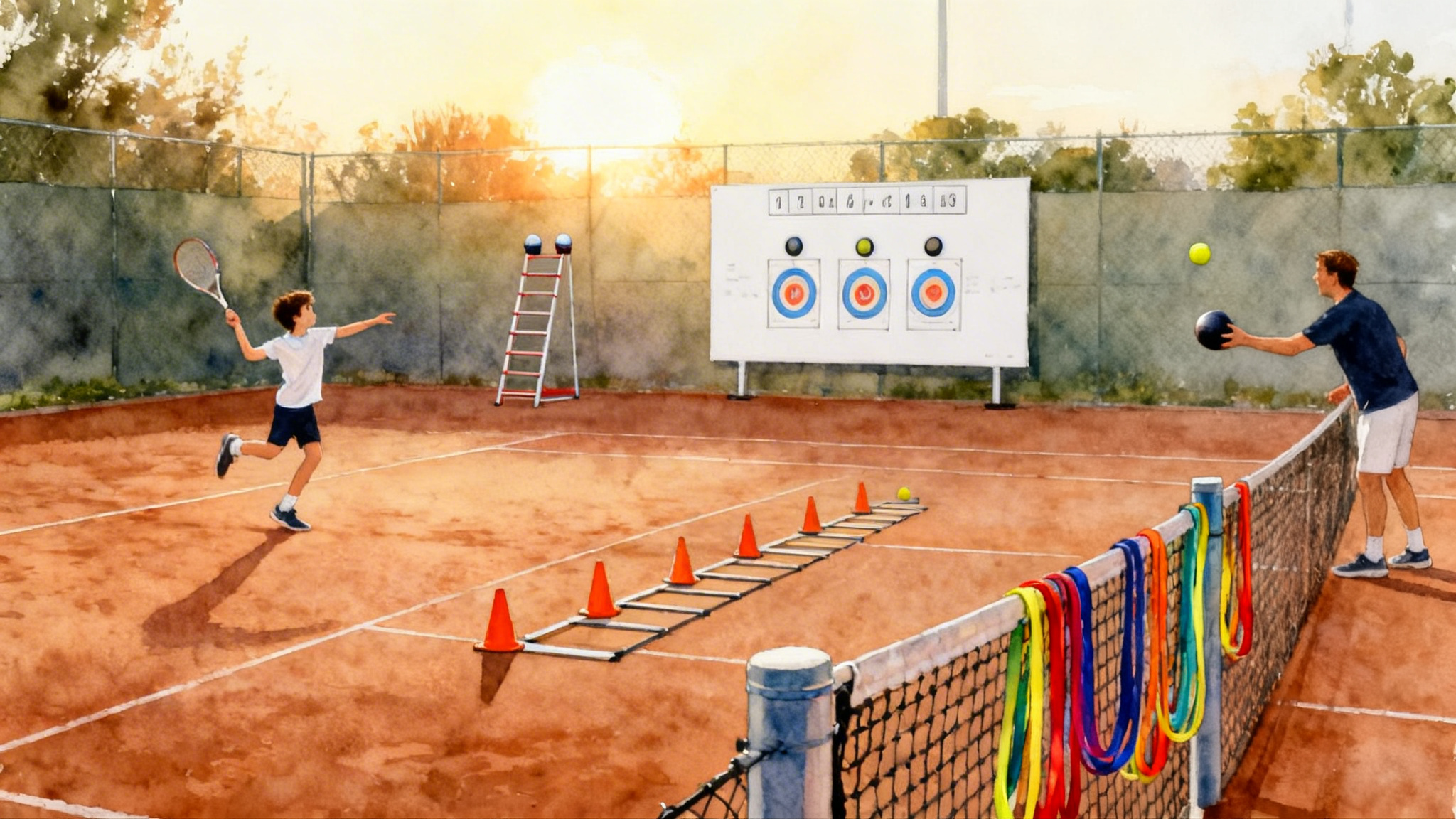
- Warm up tweaks: Add one set of medicine ball throws if you have space and time before the 15-minute block. Keep it crisp, not fatiguing.
- Fueling: Aim for a small protein serving with each top-up between matches to avoid energy dips late in the day, such as yogurt or a small shake you tolerate.
- Recovery: After each match, log three metrics in your phone notes: perceived exertion 1 to 10, calf tightness 1 to 10, and forearm tightness 1 to 10. Trends matter more than one-off spikes.
- Scouting: Write two opponent patterns and one weakness after warm-up hits if you see them. Keep it factual, not emotional.
Adult competitors
- Arrival timing: Ninety minutes works if you come from work or family duty. Trim the warm up to twelve minutes by removing one mobility set and one acceleration set.
- Joint care: Replace deep static stretches with controlled rotations. If you have cranky knees, swap pogo hops for two sets of gentle heel raises and toe walks.
- Fueling: If caffeine helps but upsets your stomach, move it to ninety minutes before play and pair with a small carbohydrate snack.
- Recovery: If you sit between matches, set a timer to stand, walk, and do ten calf pumps every fifteen minutes.
Printable checklists you can trust
A good checklist is short and testable. The items below fit on one page.
Player warm up and match-day checklist
- Arrive on site by T minus 120 minutes
- Check in and confirm court and format
- Start steady sipping, bathroom break
- Complete 15-minute court-side warm up
- Tie shoes snug, grips ready, strings checked
- Pre-match top-up snack, then stop
- During match: sip at each changeover, simple carbs as needed
- Post match: walk five minutes, breathing reset
- Mobility triad, then refuel within thirty minutes
- Flush work, logistics, and mindset reset
Parent pack list
- Two to four labeled water bottles per player
- Small cooler with known snacks and simple sandwiches
- Sunscreen, hat, sunglasses, and microfiber towel
- Two extra shirts, socks, and an extra pair of shoe laces
- Spare grips, tape, and a pre-cut blister kit
- Portable charger and printed match times
- Quiet-time items: book, shade tent, or small umbrella for sun
Common pitfalls and how to fix them
- Too much static stretching before play: Swap in dynamic prep. Use the 15-minute sequence instead.
- New foods on tournament day: Run a rehearsal the weekend before. Eat the exact menu at similar times and log how you feel two hours later.
- Overdrinking plain water: Alternate with a sports drink or add an electrolyte tablet if you tend to cramp.
- Long post-match sit with no downshift: Do the five-minute walk and breathing first, then sit. Skipping this step keeps your heart rate high and can delay recovery.
- Scattered focus: Use a one-line cue. Write it on your water bottle tape.
One-page sample schedules
Here are two real-world examples using local clock times. Copy, adjust, and tape to your bag.
Example A: Junior with 8:00 a.m. first match
- 5:00 a.m.: Wake, one glass of water.
- 5:15 a.m.: Breakfast: oatmeal with milk, berries, honey, plus one scrambled egg.
- 6:00 a.m.: Drive to venue, begin steady sipping.
- 6:30 a.m.: Arrive, check in, scout courts, bathroom break.
- 6:45 a.m.: Light top-up if needed: applesauce pouch.
- 7:00 a.m.: Activation and movement prep near the courts.
- 7:30 a.m.: Start the 15-minute court-side warm up.
- 7:50 a.m.: Focus cue, lace check, last sips.
- 8:00 a.m.: Match starts.
- 9:30 a.m.: Match ends. Walk five minutes, breathing reset.
- 9:40 a.m.: Snack and mobility triad.
- 10:00 a.m.: Light flush, logistics, shade. Ready for a noon semifinal if scheduled.
Example B: Adult with 12:30 p.m. first match
- 8:30 a.m.: Wake, one glass of water.
- 9:00 a.m.: Pre-match meal: bagel with peanut butter and jam, small omelet, fruit.
- 10:30 a.m.: Drive to venue, sip water.
- 11:00 a.m.: Arrive, check in, scouted courts.
- 11:30 a.m.: Top-up snack: rice cake with honey.
- 11:45 a.m.: Activation and movement prep.
- 12:00 p.m.: Begin 15-minute court-side warm up.
- 12:20 p.m.: Focus cue, last sips, strings and grips check.
- 12:30 p.m.: Match starts.
- 2:00 p.m.: Match ends. Walk and breathing reset.
- 2:15 p.m.: Refuel snack, electrolytes if needed.
- 2:30 p.m.: Light flush and logistics, then shade until the next match.
Gear and court-bag architecture
Think of the bag as a tidy tool box. Everything has a home, so you can reach it without thinking.
- Hydration zone: Two or three bottles. One plain water, one electrolyte, one spare.
- Fuel zone: Small zipper pouch with familiar snacks. Replace what you use before leaving the site.
- Recovery zone: Mini towel, tape, blister kit, sunscreen, and a spare shirt.
- Data zone: Notepad or phone notes with one page per match. Jot three bullet points only.
How this funnels to better training
Routines are only as strong as the habits behind them. Take what you learn in competition back to practice. If warm up felt rushed, add it to your daily session plan. If you faded late in the day, practice a two-session day with a lunch refuel in between. For structured progressions and coaching, explore training pathways with your coach.
Final checklist: what to do, why, and how
- Arrive with time to spare: It lowers stress and creates space to problem-solve weather or logistics.
- Use the 15-minute warm up: It warms tissue, primes footwork, and grooves swing tempo without draining energy.
- Eat early, top up lightly: This keeps the gut calm and the brain clear when the match begins.
- Cool down on purpose: A short walk and breathing reset flip your nervous system from sprint to recovery.
- Keep notes and one cue: It cuts noise and preserves the pattern you want to replay.
Conclusion: make the day boring so your tennis can be brilliant
Tournament days punish improvisation. The skill is not to do extraordinary things but to do ordinary things on schedule, with care. When your arrival feels calm, your warm up feels familiar, and your recovery feels automatic, you free up attention for the only creative act that matters: building points under pressure. Print the checklists, pack your bag the night before, and run the blueprint. Make the day boring so your tennis can be brilliant.