Singapore After-Dark Tennis: Covered Courts and 7 to 10 pm Play
Beat Singapore’s heat and lightning with a reliable evening tennis routine. This climate-smart guide shows travelers and families how to book covered courts, handle humidity, and tap top academies for camps or training blocks.
 Tommy
Tommy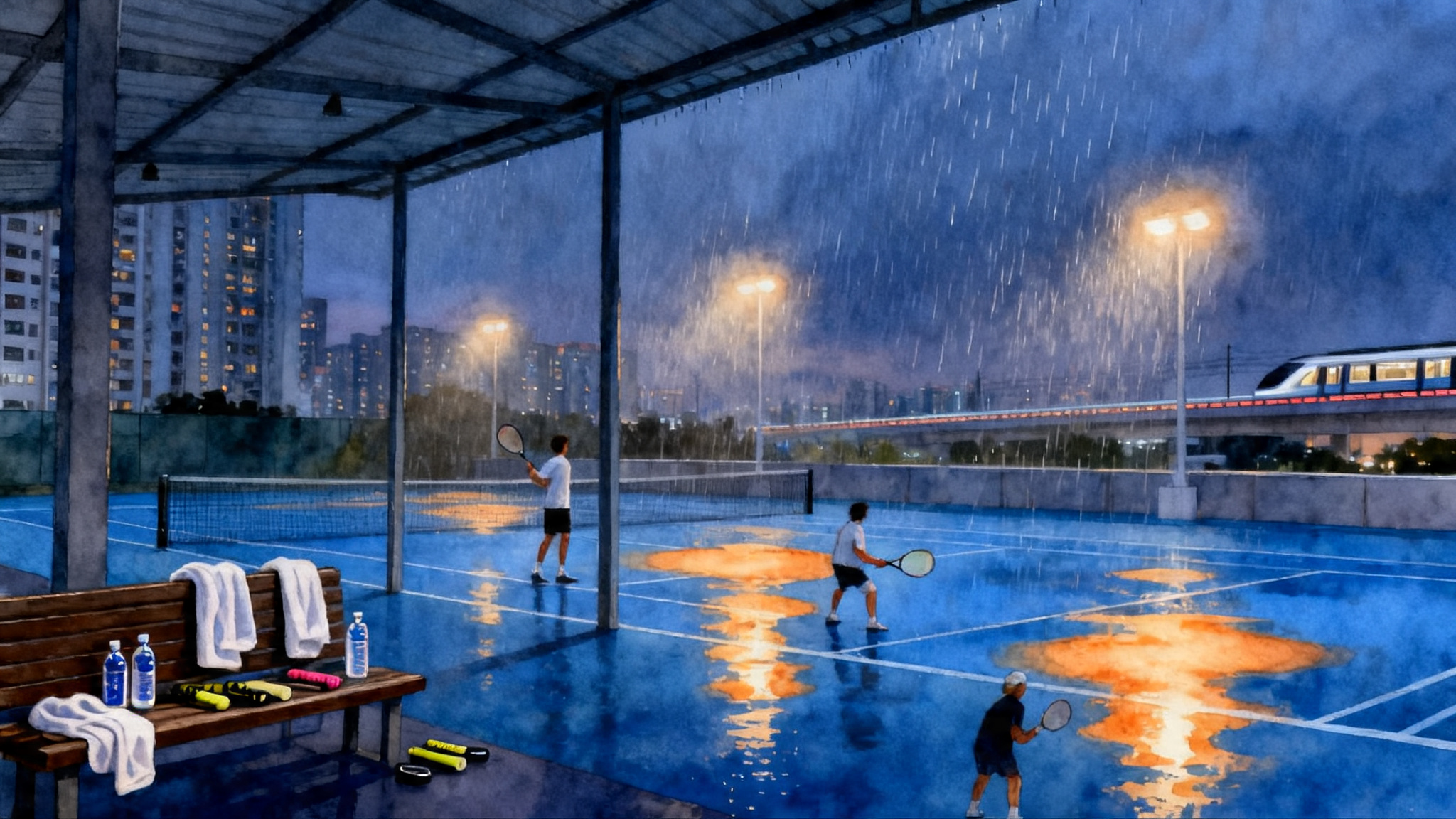
Why tennis after dark works in Singapore
Singapore rewards players who plan around the climate. Late evenings deliver the safest combination of temperature, ultraviolet exposure, and court availability. From 7 to 10 pm, the sun is gone, the asphalt has shed most of its daytime heat, and you can often train uninterrupted, even in the rainy months, by choosing all‑weather venues. If you are visiting for a week or relocating for a season, building a dependable night schedule is the smartest way to keep your tennis moving forward.
Where you can almost always play: covered and indoor courts
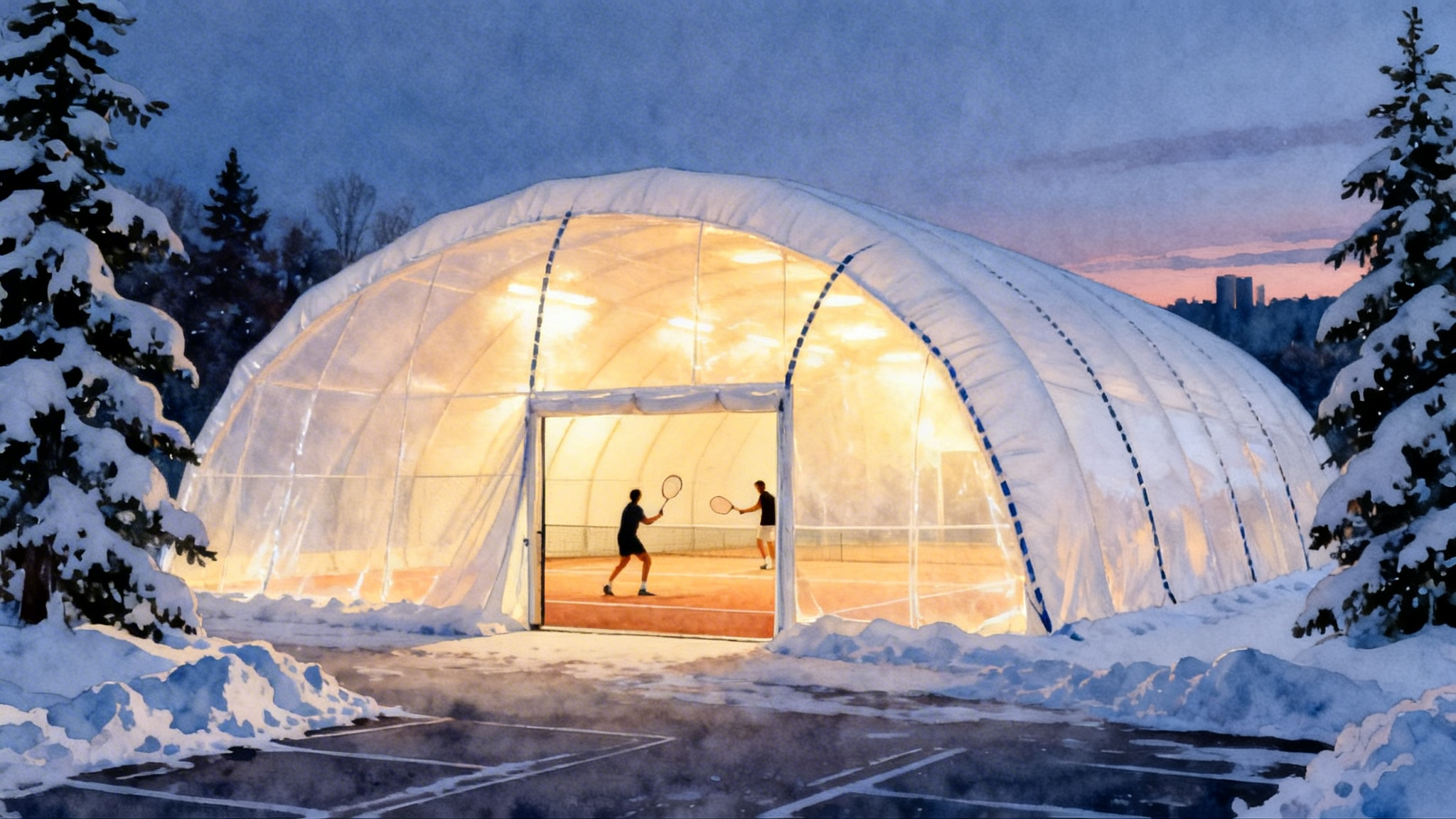
- Heartbeat@Bedok, an integrated community hub, sits on Bedok North Street with sheltered rooftop tennis courts. These courts are listed under the Heartbeat @ Bedok ActiveSG Tennis Centre, so you can check times and book through the official facility page. The roof and wind screening give you a consistent bounce and dry playing surface when the sky threatens rain, which makes it ideal for evening sessions and junior practice blocks. Start with the official listing for Heartbeat@Bedok Tennis Centre Level 7.
- Kallang Tennis Hub, part of the Kallang precinct, offers multiple indoor courts purpose built for tournament training. Evening bookings can be competitive, but this venue gives you the closest thing to European or North American indoor conditions, which is valuable for players preparing for events abroad.
- Private all‑weather sites exist across the island, including fully sheltered arenas that run late. These are often operated by academies and clubs, which means the best way to access them is to enroll in evening clinics or reserve a private slot through a coaching program.
Tip: For a first week in town, anchor your schedule around one covered public option like Heartbeat@Bedok and one indoor option like Kallang. That two‑venue plan gives you a backup if either location is fully booked or undergoing maintenance.
How to book a dependable 7–10 pm slot
Singapore’s public facilities run on the MyActiveSG system, and many private venues use their own portals. Here is a practical way to secure reliable night sessions without chasing last‑minute openings:
-
Create or sign in to your MyActiveSG account, then search by facility rather than neighborhood. Target “Heartbeat @ Bedok ActiveSG Tennis Centre” in the app search so you see only that venue’s courts and do not get distracted by distant options.
-
Filter for evening times. The sweet spot for families is 7 to 8 pm for younger players, then 8 to 9 pm for teens or adults, with 9 to 10 pm reserved for focused drilling or match play when courts start to free up.
-
If prime times are red, do two things: first, check a midweek night like Tuesday or Thursday; second, look again 10 to 15 minutes after the hour. That small window is when carts time out and held slots return to the pool, which is when consistent bookers often succeed.
-
Build a standing routine. Rather than chasing a perfect court every day, block two fixed evenings at the same venue for three weeks. Players progress faster with predictable repetitions than with scattered one offs, and this approach reduces stress for traveling families.
-
For private or academy managed covered courts, enroll in an evening clinic or secure a recurring private hour. The venue, coach, and ball supply are all arranged, and you spend your energy on footwork and patterns instead of logistics.
Lightning, rain, and how to keep momentum
Singapore is one of the most lightning active places on earth, and sport facilities take this seriously. Managers will pause play if risk climbs in your area. Before you head out, check real time risk maps and alert rings from the national meteorological service at the NEA real-time lightning map. If you see fresh clusters near your venue, switch to a covered court or pivot to a fitness micro session in the same time slot so the habit stays intact.
On site, expect two kinds of pauses:
- Preventive holds, when nearby lightning is detected. Courts may close temporarily, even if rain is light.
- Surface checks, when rain stops but the court crew needs a few minutes to squeegee and confirm traction.
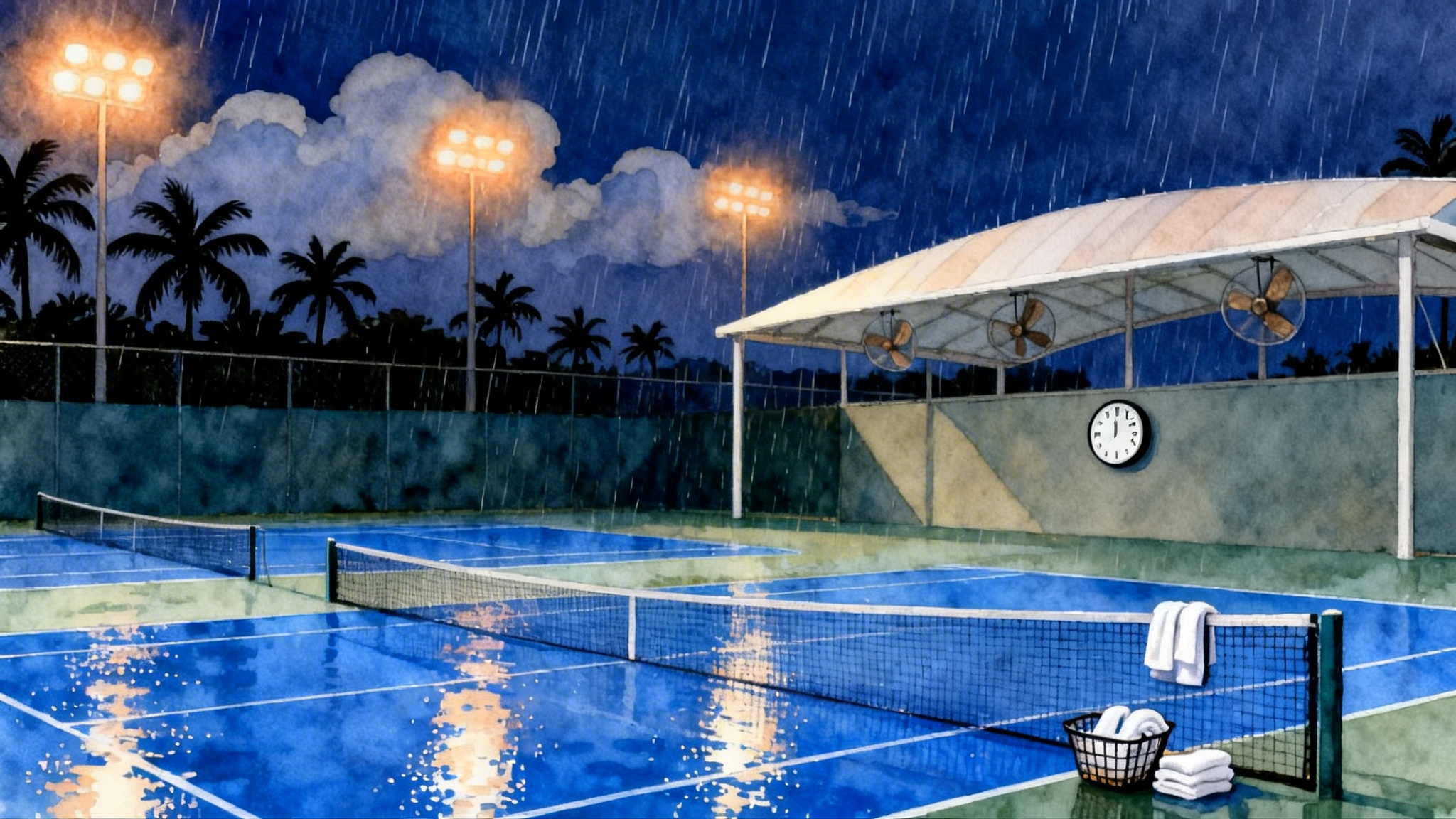
Covered and indoor courts reduce both risks. The roof keeps the surface playable during light rain, and ventilation moves humidity off the playing area. The takeaway is simple: booking a sheltered slot is not just a comfort decision. It is a training continuity decision.
Beating tropical humidity: small gear choices with big effects
Humidity is the opponent that does not leave the court. Here is a practical kit that keeps you sharp from 7 to 10 pm:
- Two towels: one for sweat, one dry for hands. Switch at the 60 minute mark.
- Three overgrips in your bag. Re grip between sets. If your palm runs wet, choose tacky overgrips and carry a rosin bag or a small bottle of liquid chalk.
- A second shirt. Change at the hour so you do not lose racket control from a soaked collar and sleeves.
- Strings two pounds looser than your dry climate setup. Tropical air is heavier, and the ball feels heavier too. A small tension drop gives you depth without extra effort.
- Electrolytes in measured packets. Mix one 500 milliliter bottle per hour of play. If you sweat heavily, add a second bottle of plain water to sip between odd game changes.
- Anti fog spray for glasses or a slim headband if you play in lenses.
The mechanism is straightforward: moisture weakens friction at the hand grip interface, which amplifies micro slips on contact. Overgrips, rosin, and a shirt change restore friction. You hit cleaner, especially on serve.
A one week after dark plan for travelers
You landed on Sunday and have seven nights. Use this template to balance skills, match play, and family time:
- Monday, 7–8 pm: Technical tune up on a covered court. Work through serve toss stability, return stance, and two footwork ladders. Keep the heart rate modest on day one.
- Tuesday, 8–9 pm: Live ball patterns. Two ball approach drill, cross court forehand depth game to 15, then transition volleys. Finish with six minutes of serves.
- Wednesday, 9–10 pm: Match play set at an indoor venue. The late slot is calmer and lets you rehearse scoreboard pressure.
- Thursday, 7–8 pm: Family hour. Orange or green ball games for kids on a half court while adults rally on the next court. Rotate every 12 minutes.
- Friday, 8–9 pm: Academy clinic with a high performance theme. Choose a session focused on first strike tennis or return plus one.
- Saturday, 7–9 pm: Two hour block. First hour for patterns, second for tiebreakers. Pack two shirts and an extra overgrip.
- Sunday, 7–8 pm: Recovery hit. Short court, volleys, serves at 70 percent, then finish with ten minutes of mobility work.
This plan uses the environment, not luck. Even if a thunderstorm rolls through, your covered bookings and late slots keep the rhythm intact.
For families: make 7–9 pm your shared lane
Evening tennis can be a family habit that survives school hours and jet lag. Here is a simple structure that works for most households:
- 7:00–7:10 pm: Warm up walk to the venue if you live nearby. If you are arriving by train, use the walk from Bedok MRT or Stadium MRT as the warm up.
- 7:10–7:40 pm: Kids drill while an adult shadows on the next court or works through agility ladders on a sideline.
- 7:40–8:00 pm: Family games. King of the court or a cooperative rally to 50. The goal is contact volume and fun, not winners.
- 8:00–9:00 pm: Adult session or match play. Kids move to cool down stretches and a light snack.
Pack a small picnic bag so you do not end up buying sugary drinks at the last minute. Water, diluted isotonic mix, and small rice balls or bananas hold up well in Singapore evenings.
Plugging into high performance options
You have three strong pathways if you want more than a casual hit.
-
Tenez Academy evening camps. Known for small ratios and individualized roadmaps, Tenez runs juniors and adult intensives that fit neatly into evening schedules. If you are in town for a week, ask about a mini block of three or four sessions clustered between 7 and 10 pm so you lock in continuity without daytime heat.
-
ActiveSG Tennis Academy. This public pathway mixes seasonal programs with school holiday camps. It is especially helpful for families that want a predictable night class at the same venue every week. The curriculum focuses on fundamentals, rally tolerance, and competition skills, and many centers schedule sessions that end by 9 pm so kids get home on time.
-
TAG International Tennis Academy. A performance oriented system with island wide coverage, TAG is a good match for stronger teens and adults who want sharper patterns, video feedback, and real match scenarios in the evening.
How to choose among them:
- Timeline: If you have one to two weeks, pick a focused evening camp or private block. For a month or more, blend an academy clinic night with two self booked covered court sessions.
- Goal: If your aim is competition, prioritize a venue with match play nights and coaches who run point construction drills under time pressure. If your aim is family play, look for programs that allow parallel junior and adult sessions.
- Venue access: Start with the academy that trains at a covered court near your lodging. Commute friction kills attendance; a short walk keeps the habit alive.
Getting there and getting home
- Heartbeat@Bedok: Five to ten minutes on foot from Bedok MRT. The sheltered walkways make rainy arrivals manageable. After your session, Bedok Mall and the hawker center next door are open late enough for a quick recovery snack.
- Kallang Tennis Hub: A short walk from Stadium MRT. If a storm is clearing out, the covered concourses in the precinct make it easy to wait five minutes before heading to the platform.
If you travel with kids, bring a compact umbrella and two lightweight ponchos. They disappear into a backpack and turn a humid drizzle into just another part of the routine.
A 7–10 pm session blueprint that works year round
- 7:00–7:10 pm: Dynamic warm up off court. Skips, hip openers, shadow swings.
- 7:10–7:40 pm: Serve plus one. Ten minutes on targets, then serve plus forehand pattern to the open court.
- 7:40–8:10 pm: Cross court depth games to 15. If you lose by 5 or more, add two push ups per point as a friendly tax to raise focus.
- 8:10–8:30 pm: Transition volleys. Feed from baseline, move through split step and first volley, finish with overhead put away.
- 8:30–9:00 pm: Return patterns. Alternate two neutral returns and one aggressive forehand to the body serve.
- 9:00–9:25 pm: Play a tiebreak set to 7, switch servers every two points. Track first serve percentage on a wrist counter.
- 9:25–9:40 pm: Serve buckets and second serve kick focus. Ten minutes only, to avoid shoulder fatigue.
- 9:40–10:00 pm: Cool down and mobility. Two minutes of diaphragmatic breathing to shift to recovery mode before you step into the humidity outside.
This outline avoids the trap of starting with match play when your body is not ready. It also respects shoulder load late at night while giving you enough serve reps to make improvements stick.
What to do when the weather derails your plan
Evening downpours still happen. Here is how to salvage the hour:
- Switch to a covered court if your original booking was open. If that is impossible, move to a nearby covered space for movement work. Lateral shuffles, split steps, and 30 second court sprints with walk back recovery let you bank footwork volume.
- Do a precision drill at home or in a hotel gym. Use resistance bands to rehearse unit turns and the first move on return. Ten minutes of correct first moves change more points than ten random minutes of groundstrokes in bad conditions.
- Keep the start time, even if you are off court. Your brain remembers the habit loop. When weather clears on the next night, you are already primed to play.
Budgeting and expectations
Public evening courts are affordable by global standards, but peak hours can go fast. Private options cost more, yet they package more certainty: a fixed court, a coach, and balls. If you are in Singapore for a short stay, it is often better value to pay for two reliable academy evenings than to lose two evenings to booking roulette. For longer stays, mix one academy night with two self booked evenings at a covered venue to keep costs down and reps high.
Final checklist for your suitcase
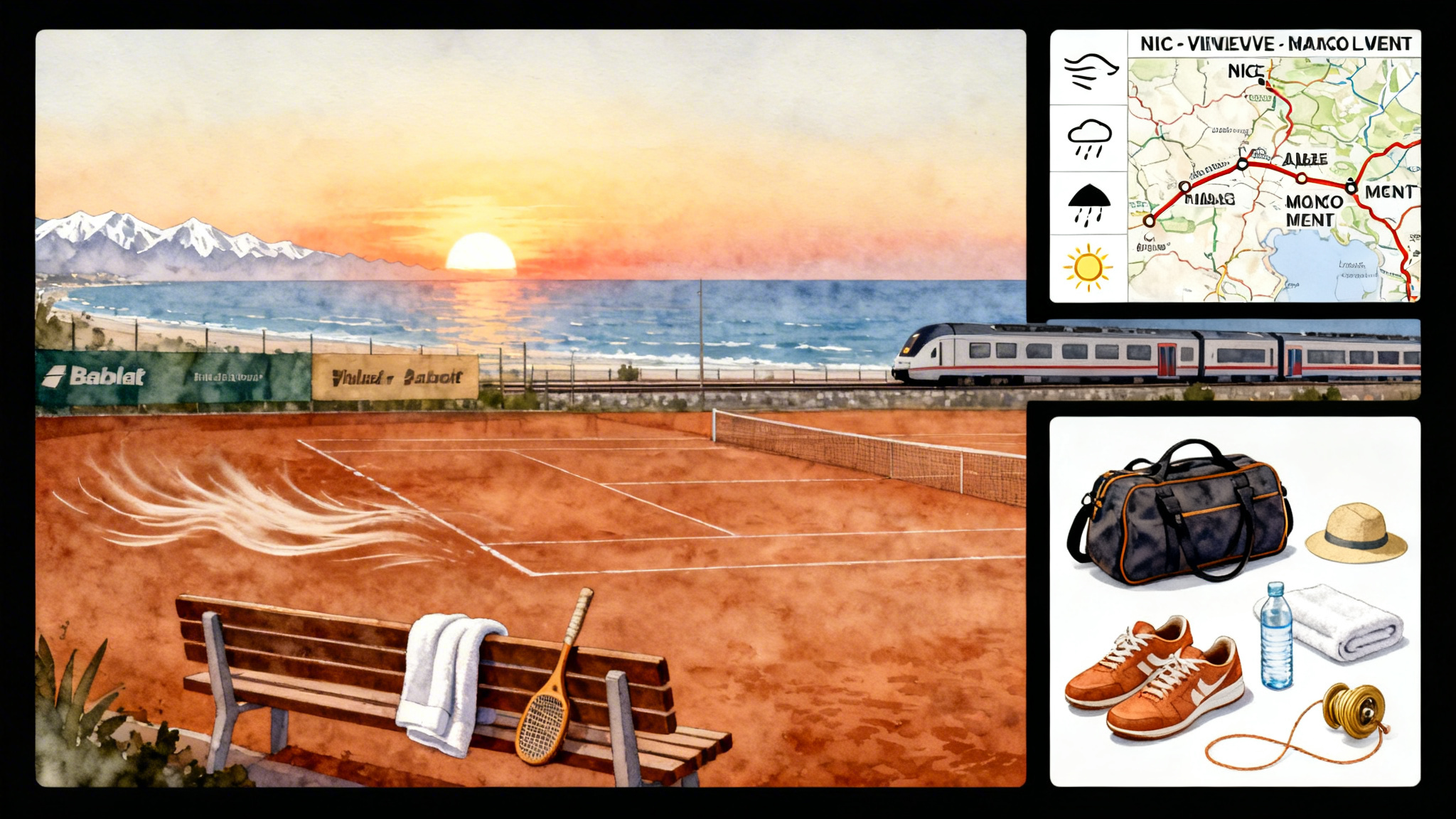
- Court shoes with breathable uppers and dry socks for the second hour
- Three overgrips and a rosin bag
- Two lightweight shirts and a small microfiber towel
- Electrolyte sachets pre measured for one bottle per hour
- A compact umbrella and ponchos for wet walks to the train
- A spare set of strings if you are picky about tension
The smart conclusion
Singapore can be steamy, stormy, and relentlessly busy. That is exactly why night tennis thrives here. Covered courts like Heartbeat@Bedok and indoor hubs at Kallang turn weather from a threat into a variable you can plan around. Book two evenings, protect them like appointments, and use the 7–10 pm window to stack high quality repetitions. Families get a shared habit that fits school nights. Travelers get a reliable rhythm that survives jet lag. Competitors get an edge born from continuity, not luck. Build your week with intention, and Singapore’s climate becomes part of your training plan, not an excuse to skip it.